Showing posts sorted by relevance for query facebook. Sort by date Show all posts

Monday, August 17, 2009

How To: Create an Organizational Facebook Page

By now, you’ve probably heard it over and over again—social media is changing the face of communication. Here at New Voices, we’ve seen social media, including Facebook, change the face of science communication and advocacy. Top science and research advocacy organizations, like the American Cancer Society and American Heart Association, have attracted large numbers of supporters using Facebook, including over 160,000 members for the American Cancer Society!

So how should a non-profit go about using Facebook to increase their reach on the internet? An informal survey of non-profits using Facebook revealed that the best pages are set up as Fan Pages, as opposed to Group Pages. Fan Pages are more interactive, and provide Facebook users with more opportunities than Group Pages. Any authorized representative of a business, non-profit, or organization can set up a Fan Page. We’ll give you a quick crash course. (Tip: before you create a Fan Page, you will need to have a personal Facebook page.)

To create a Facebook Fan Page:
  1. Visit http://www.facebook.com/pages/create.php to get started.
  2. Determine your Page category. Most New Voices readers’ organizations would probably fall under the Brand, Product, or Organization category. This is where you’ll find sub-categories like ‘non-profit,’ ‘government’ and ‘technology product / service.’
  3. Enter the name of your organization in the box and sign the authorization release. (Tip: you must sign the authorization release with the same name you used to create your personal Facebook page.)
Now it’s time to set up your page so it will set you apart from the crowd. For advice, New Voices turned to the Wild Apricot, a blog that provides tools and advice for volunteers, webmasters and administrators of associations and nonprofits. Wild Apricot suggests adding Applications to your Facebook page. Applications allow Facebook users even more opportunities to interact with your organization.

One of the most popular Applications for non-profits is Causes on Facebook, also referred to as ‘Causes.’ Causes allows your organization to recruit more Facebook users, keep them up to date with your organization’s latest information, and raise money for your organization if it is a registered U.S. or Canadian non-profit organization. The American Heart Association has raised over $10,000 for its beneficiaries! To get started with Causes, visit the Causes homepage and click ‘Start a Cause’ under the ‘Find a Cause’ tab.

When you’re on Facebook, don’t forget to visit the Your Congress-Your Health and Research!America fan pages.

See you on Facebook!


This is Part 3 of our Facebook How To Series.
Part 1: Using Facebook as an Advocacy Tool
Part 2: Using Facebook Advertising to Raise Awareness

Friday, July 24, 2009

How to: Use Facebook Advertising to Raise Awareness

Earlier this month, we talked about using Facebook as a advocacy tool. Today we'll be looking at a a different way to use Facebook to raise awareness for your cause...

Most of us who are Facebook users realize the social networking site has become an integral part of our lives. Every now and then, usually during a late-night visit to the site, you may notice an advertisement that seems particularly relevant to you. How does Facebook know I’m working in Washington, DC and probably looking for a deal on dinner?!

Facebook advertising is one of the most targeted forms of advertising on the internet. With 250 million users worldwide, advertising on Facebook is a new way to communicate to new audiences. The social networking site is an ideal way for New Voices to increase visibility, raise awareness of their cause, and drive relevant traffic to their websites—all without breaking the bank. This post provides the low-down on creating awareness for your cause by advertising on Facebook.

Foremost concern—paying for your advertising
Facebook offers two different payment structures. Each payment structure allows advertisers to set a daily maximum budget that cannot be exceeded.

Pay for Clicks (CPC) advertising allows you to specify (through a bidding process) a certain amount that we are willing to pay each time a user actually clicks on your ad. The highest-bidding advertisers are awarded ad space and pay each time the ad is clicked. The bid price will vary depending on the target market. For example, you would need to bid a higher price to advertise to the entire New York City network that you would to advertise to the New York University network because NYC has more users than NYU. Facebook provides bid price statistics (avg. price, max., min., etc.) that are specific to each ad proposal and each targeted network.

Pay for Views (CPM) advertising allows you to specify how much you are willing to pay for 1,000 views (or impressions) of your ad. CPM also utilizes a bidding process to determine who is awarded ad space. According to Facebook, CPM advertising is usually more effective for advertisers who want to raise awareness or exposure of their cause (as opposed to generating hits).

Who do I want to see my ad? Targeting your audience.
Facebook ads can be targeted to a very broad or vary narrow audience using any combination of criteria including:
  • Age (Ex: 21-25)
  • Network/Location (Ex: New York City; University of Michigan)
  • Keywords (Ex: health, research, politics, chemistry, oceans, Collins, Obama)
  • Education (Ex: political science major, biology degree in 2002)
  • Workplace (Ex: University of Chicago, US House of Representatives, Pfizer)
As you identify your audience using these criteria, Facebook will display the approximate number of users your advertising encompasses.

Facebook ads are customizable and can be changed at any time.
Ads include a title up to 25 characters and up to 135 characters in the body. An image can also be included. All Facebook ad views can be tracked, and you can make changes to the ad at anytime to increase viewership.

Now that you know the basics, all you need to do is make the decision. Who do you want to target?? What do you want to say?? And how much do you want to pay??

Facebook can walk you through the rest.

This is Part 2 in our Facebook as an Advocacy Tool series.

Thursday, July 9, 2009

Facebook: More than friends?

Image credit: Lone Wolf Librarian

If you’re reading this blog, the chances are more likely than not that you have a Facebook page. In fact, there are more than 200 million active users of Facebook; 100 million of those log on each day. If you are one of those 200 million people, it’s time to start using Facebook to as a platform to speak out to your friends (if you’re similar to the average Facebook user, you will have 120 of them).

Today we launch Part 1 of a three-part series about using Facebook as an advocacy and outreach tool.

Part 1: Using the Status Bar to Share Your Message
Part 2: Using the Causes Application to Raise Awareness (and money!!)
Part 3: Setting Up a Page that Will Set You Apart


Part 1: Using the Status Bar to Share Your Message

If you have a Facebook account, you probably already know how to use the status bar. For those without a Facebook account, the status bar allows you to type in short messages that will appear on your account as well as the home pages of all your friends’ accounts. It is common for Facebook users to type a short summery of their thoughts, activities, etc. in to the status bar.

Your status bar is an excellent place to share your thoughts about important legislation, policy issues or news items with your friends. Facebook’s new status bar allows you to share a links to encourage your friends to visit a website you direct them to. Sharing online action alerts with your friends is an especially effective advocacy opportunity.

Here’s the step-by-step for sharing a link. In this example, we use an action alert from Research!America. This is a great model for you to post action alerts from your own membership organizations.

Step 1: Click the “Attach Link” icon in the Status Bar.
Step 2: Insert the link in the text box that popped up. You can easily copy and paste a link from another browser winder. Click “Attach” to load the link. Text will automatically appear when Facebook reads the website you are linking to.

Step 3: Edit the text that appears. You can click on the blue title and the black text to edit each box. Sometimes Facebook reads the wrong section of the website you are linking to, so make sure the edit the text so it says what you want. You can also use the arrows to scroll through other pictures to appear on your status message.


Here is a finished example done by Mary McGuire Richards, a Parkinson’s disease advocate with the Parkinson’s Action Network. Mary is asking all her friends to contact their senators in support of a bill. Mary is also able to share this message directly with her friends by clicking the “Share” link.

Once the “Share” box appears, click the “Send a Message” tab. Here, you can type your friends’ names in the message box and send them a personal message with you link. To save time, you can send the same message to multiple friends by typing each name in before sending. However, the “Share” function is so easy to use that I usually send individual message to each of my friends that may act on my link. I use the same message text, but add their name into the message to make it seem more personal.


While you're using your Facebook status bar to advocate, don't forget to join the Your Congress-Your Health fan page for updates and links to share.


Stay tuned for the next part in the Facebook as an Advocacy Tool Series!

Thursday, January 21, 2010

A New Voice at ScienceOnline 2010

Allison sporting her map of the human genome t-shirt (courtesy of AAAS) after returning from ScienceOnline 2010.

For months, I had watched the Facebook event, the #scio10 hashtag on Twitter, and the Wiki. I had my hotel roommate and a Google map of directions to each conference location. But it was a couple days before leaving for ScienceOnline 2010, and I was nervous. I had experienced blogger star-strucked-ness before, and I didn’t want to clam up during such a great opportunity to learn from some of the best science communicators out there.

Fortunately, I had nothing to worry about. ScienceOnline retained the “dinner party” feel you often get on Twitter, where the person sitting next to you, shaking your hand, or leading your session could be a book author, a trained scientist, or someone from one of the many institutions and organizations in the Research Triangle Park area. All forms of participation were welcomed and rewarded, and I left feeling more connected to a community of science bloggers than I had before.

As a communication fellow at Research!America, I look through discussions about science communication through an advocacy lens. During the session “Rebooting Science Journalism in the Age of the Web,” Ed Yong of Not Exactly Rocket Science (I could listen to him talk, er, blog all day) asked whether the publication where science-related content even mattered anymore. “If it’s on the internet, people can find it,” he said.

For me, this raises issues of access: how can we create new advocates for research if the communicators aren’t pushing content to new audiences and instead pull them into a specialized community through blogs and other channels (thanks for BoraZ for this distinction)? I thought this question was answered constructively in David Kroll and Damond Nollan’s session on engaging underrepresented groups in online science media, where the discussion turned to using mobile phones and Facebook at historically black colleges and universities.

Who will be the next voice for research? There was so much potential among the ScienceOnline participants. I thought Anil Dash made a convincing case for Expert Labs, a new initiative supported by the American Association for the Advancement of Science which would serve as a filter for policymakers who seek answers from scientists and other experts, but may not know the right questions to ask.

Additionally, Michael Specter, Friday’s keynote speaker and author of Denialism: How Irrational Thinking Hinders Scientific Progress, Harms the Planet, and Threatens Our Lives, ignited the conference with his impatience for misleading information about science, but reminded us throughout the weekend that he was dedicated to promoting scientific interest through his journalism. “Science is much bigger than special interest stories,” he responded to Ed Yong’s question above.

The diversity of the body of ScienceOnline made for lively sessions and informal conversations, and there are many themes not considered here. Based on the amount of content created during ScienceOnline--video, Twitter, blogs, images and Slideshare--I think you could spend a couple days sifting through it and feel as if you experienced the conference firsthand. All content should be marked with the #scio10 hashtag, so keep that in mind in your searching and posting.

Next up: ScienceOnline 2011!


Allison Bland is a communications fellow at Research!America and a graduate of McGill University with degrees in English and history of science. She has previously contributed to New Voices with posts on science education and how-to effectively use Twitter.

Tuesday, July 7, 2009

Coolest Scientist Ever: Sweet Sixteen

Update: Clickable poll now available in the sidebar!

New Voices
Coolest Scientist Ever Tournament

Here at New Voices, we can find something cool about all science. Sadly, scientists around the world fight against stereotypes that cast them as the anti-cool. So, for the next month, we'll be highlighting the coolest scientists (thanks for your suggestions!) and pitting them against each other in a March Madness style competition for the title of Coolest Scientist Ever.

Here are the two divisions:


(Full bracket with biographical links)

Each week, we'll narrow it down until we reach an ultimate champion. Of course, we all have our own definitions of cool, which is why your votes are really going to help move each of these fabulous scientists along in the competition.

Each week, vote in the comments and tell us who SHOULD be the Coolest Scientist Ever! You can vote for the winners of any/all match-ups; and if you're feeling especially passionate, tell us why these scientists should win.

Since this is about science, we do have some objective means to weight the competitors:

1. This is, in fact, a popularity contest. If you look at polling data, 74% of Americans can’t name a living scientist (slide 19). That’s a completely unacceptable number. Which is why it’s so important to have science advocates in the public eye showing people the importance of scientific research to their lives. There are any number of incredible scientific discoveries, but what separates the Coolest Scientist from the others is that they’re out there making sure that the public is aware of discovery and of science in general. *Bonus points awarded for appearing on a TV show that people watch in large numbers.

2. Ok, so it’s not ONLY a popularity contest. We also have to evaluate these scientists on the quality of their work and its importance to the world. A record of significant accomplishment is an absolute necessity to being the ideal science advocate.

3. Other random bits of coolness that strike our fancy. Do they have a Facebook page? Have they appeared on The Simpsons (posthumously counts!)? Do they have outstanding hair? Are they the person who made you want to be scientist? Did they stand up to the Catholic Church in 17th century? All of these things contribute to a scientist’s relative coolness.

In addition to these factors each round will have a specific extra weight given to it.
  • The Sweet 16 will be weighted based on which scientist was named most often by Americans.
  • The Elite 8 will be weighted based on the impact of their particular research.
  • The Final 4 will be weighted based on external popularity factors (Google search data/Facebook fans/Time Magazine 100s/etc.) and
  • The Championship Match-up will be decided based on all of the above factors, with your votes carrying the most weight.
Vote today and encourage your friends and family to do the same. May the Coolest Scientist win!

Friday, July 8, 2011

New Voices is Now on Facebook

As some of you may know, New Voices began as a private online community. It had the same mission - to empower early-career researchers to become advocates for research - that we have here in the public spaces today. However, the idea was that some scientists might feel uncomfortable talking about issues in places their advisors might have access too, and that communicating about science and advocating for research were a bit taboo in the scientific community.

As that trend changes, and more and more young scientists are interested in communicating about research to their communities and elected officials, we're breaking out of our shells and going public with the New Voices for research community. First with the blog in December 2008, then with Twitter in March 2010, and now with Facebook in 2011.

We hope you'll become a fan and join us in our quest to become advocates for research!

Bookmark and Share

Wednesday, November 10, 2010

Meet Allison Bland, Communications Program Assistant

Welcome to New Voice Allison Bland, Communications Program Assistant at the American Society of Clinical Oncology (ASCO).

NV: What do you do?

Allison: I help maintain ASCO's patient website, Cancer.Net, by working with oncologists to review and update the latest information on cancer treatment and care. I also work with Cancer.Net's social media on Twitter and Facebook.

NV: What is the most challenging part of what you do?

Allison: Another part of my job is to help answer phone calls, emails, and letters from people with cancer and their families. People turn to ASCO looking for resources at any point during their cancer treatment. I help these people by directing them towards the best resources and information, but it can be difficult because I'm not able to give medical advice. Many times, patients are very educated about their diagnosis and come to us looking for the next step. It's challenging to explain complex medical information to someone who is dealing with a cancer diagnosis over the phone.

NV: When did you first become interested in science?

Allison: My dad is a physicist, but he never pushed me towards a career in science. I have always been a writer, and dabbled in science because I was interested in how new discoveries can make the world better. Combining the two led me to science communication, and I'm following that track now.

NV: What’s the most common misconception about scientists?

Allison: I think one of the most common misconceptions about scientists is that there is a single-track, vaguely defined career for a "scientist." The reality is that there are many kinds of jobs in the science field, and these types of jobs are becoming more important all the time.

NV: What advice would you give to someone who wants to get involved in advocacy and/or outreach?

Allison: Take full advantage of online tools. The communities that form around online platforms like blogging networks or Twitter attract people who know the issues and have similar interests in science outreach and advocacy. I think the best way to get involved is through participation in online communities and then finding face-to-face events -- conferences, science cafes, happy hours -- to take the next step.

Some of you may remember that Allison was a contributor to the New Voices blog. We thank Allison for sharing her experience and advice about science communications and advocacy. This is part of the ongoing Profiling New Voices series.


Bookmark and Share

Bookmark and Share

Friday, August 5, 2011

The (Impossible) Assignment

It is with a heavy heart that I share my final post as a regular New Voices blogger and hand over the management of the New Voices community to my co-bloggers. From the first post in December of 2008 to now, this community has evolved considerably and I can say without reservation that writing for you and working with you will be the thing I miss the most as I transition to a career in education.

Not surprisingly, it looks like I was blogging when
this picture was taken.
As each blogger has moved on from New Voices, I've asked them to say their good byes and reflect on what they've learned or share their advice for the community. Now that it's my turn, I'm beginning to understand what they found so difficult about this assignment. So first, let me start with some thank yous.


Of course, many thanks go to those at Research!America who have stood by New Voices over the years as well as our first outside financial benefactor, the Howard Hughes Medical Institute.

More than any other New Voice, it was the dedication and drive of Stacie Propst - a PhD scientist herself - that made the New Voices for Research community a reality. It was also her patience and guidance with my incredibly "audacious goals" that helped launch this blog, and later, our Twitter feed. Special thanks also goes to many of my Research!America colleagues who have contributed their words, thoughts, ideas, and time to build this resource for anyone interested in becoming an advocate for research.

To all of the interns and fellows over the years who have researched and developed posts, striven to improve their writing skills, and thought creatively about how to approach topics and issues here: my heartfelt thanks. Even when I was marking some of your posts with what seemed like endless track-changes you always kept a great attitude and pushed yourself to become better science communicators. Moreover, you taught me how to be a kind (but firm) editor, to let go of some conventions in favor of more dynamic ones, and most of all, what it really means to teach. I would not be on my way to a classroom next year if it weren't for the positive experiences I had working with each of you.

Readers, oh darling readers. You are the reason we post each day. When I was out of the office I would fret about whether or not the scheduled post went up, knowing you were out there reading it. You are the motivation for New Voices and the greatest hope research and science communication have for tomorrow. It has been an honor, truly.

My parting advice is what it has always been: take every opportunity you can to share what you do with others (including Congress), and in doing so, be yourself. You are your own best advocate, so raise your voice.

As for me, advocacy will remain a major part of my life as I transition to the front lines of the STEM education issue. I'll be active in the New Voices Facebook community, and you'll be seeing some of my older posts pop-up in the From the Vault series.

Don't forget to keep commenting, offering to guest post, and otherwise being the great New Voices you've always been! New Voices for Research has been an amazing initiative to lead and I look forward to seeing what comes next.

Thank you for (almost) four years of inspiration. Best wishes.

~Heather

Bookmark and Share

Thursday, October 15, 2009

Share the Survey


Thank you to the many of you who have already taken the scientist survey.

As you know, for all of the data to be useful, we have to have a significant number of responses. So please help Ilse (who has been working diligently on this project for months) by sharing the link to her survey with anyone you know who has some level of scientific training.

It only takes a moment to share in your Reader, add the link to your Facebook profile, or to email it to a friend. Please help us get the word out about this survey!

http://www.surveymonkey.com/s.aspx?sm=cyqeCib8QxZO2Dj6a5OvSw_3d_3d

Wednesday, September 29, 2010

Meet Joe Hanson, Molecular Biologist

Today we're introducing you to Joe Hanson, a graduate student in Dr. Lambowitz's lab at The University of Texas at Austin.

NV: What do you do?

Joe: I’m a graduate student, getting my PhD in cell and molecular biology. I like to say the world of molecular biology is 50% work and 50% waiting. I tell people it’s long periods of boredom interspersed with intense excitement. In between those times you have to occupy your brain while you’re waiting.

NV: How did you get started in advocacy?

Joe: In 2008, during the election, being a young politically-minded person, I found out on Facebook about a group called Scientists and Engineers for America. They were working on a science-related survey for the candidates. They wanted us to focus in on local races. I became the Texas state captain.

Through my unsuccessful attempts dealing with the press and [candidate’s] offices I realized how little the people outside of the science buildings we work in realize how these issues affect them. So now I help put on layperson-friendly Science Pub seminars and I blog and microblog about science research issues.

NV: What motivates you to do outreach/advocacy?

Joe: From a grad student perspective I have a unique approach to this. A desire to educate people outside science. For younger scientists like me, especially in the biological sciences - and there are a lot of us out there - I think it’s important for people to develop these skills, to reach outside the science world. As our job evolves in the future, it won’t involve just the bench. It will involve a lot more of these skills - outreach, communication, advocating for solid science. We need the communication with our elected officials to come from other perspectives like post-doctoral fellows, young professors, and graduate students. Not a lot of young people [are doing that] yet.

NV: What limits your ability to do advocacy?

Joe: Certainly trying to graduate. There’s not a system that really rewards young scientists for doing this kind of thing. These are things we feel are valuable, but we're limited by time. It’s not expected for this to be part of our professional life. There are a lot of demands on our time. We give it a lot of value but it doesn’t translate to our day-to-day work.

NV: Do your colleagues do advocacy and outreach? Why or why not?

Joe: I see very few of them doing it. If anything, among graduate students the echo chamber effect is accentuated. It’s such an insular community, and it gets worse when they talk only to each other. Graduate students are nervous to use any of their time outside of lab for efforts like these. It’s very rare. There are people who attend pub nights, seminars, things like that, but in terms of reaching out beyond scientists it’s unfortunately rare. There’s no reward for people taking part in those things.

NV: What advice would you give to a scientist who is interested in doing outreach or advocacy?

Joe: Get in touch with as many other people who have been doing it as possible in the medium you want to be doing it in. If you want to be online, the worst thing you can do it start a lonely blog that no one knows exists.

If you want to start a seminar or science-for-kids series, there are resources where people have done it before and they’re willing to share ideas. They’re not just faces on the internet, they are willing to share and help. Lots of books and publications by the National Academies and AAAS (like Rising Above the Gathering Storm, Unscientific America, and Don’t be Such a Scientist) lay out what the problems are. It pays to study what people need.

Thank you to Joe for giving his time via phone so we could learn more about him and his advocacy work. Be sure to check out his new blog!

This is part of the ongoing Profiling New Voices series.


Bookmark and Share

Tuesday, March 23, 2010

Advocating Outside the Box (Or Outhouse?)

Photo Credit: NRDC

Think back to a time that you were so concerned about an issue that you took action. What did you do to make your opinion heard?

As a kid, I always felt the word advocate carried a connotation that made it only applicable to people who took significant action to fight for a cause, like Martin Luther King Jr., for civil rights, or Rachel Carson, for the environment. However, I now understand that advocacy is simply taking action to promote change no matter how simple the action may seem.

Advocacy includes a wide range of actions from the classics - such as lobbying, protests, and civil disobedience - to newer actions that are developing alongside technology. As the internet became a fixture of everyday life, we saw a rise of electronic advocacy, which can include spreading news on social-networking sites or using the internet to organize collective actions like email campaigns.

Increasingly, events are being organized through viral marketing, which takes advantage our tendency to post information to sites like Twitter to disperse information through a self-replicating process similar to how viruses spread.

A recent example of viral marketing includes mass actions organized for World Water Day. March 22nd was designated in 1992 by the United Nations as an international day to raise awareness about the world’s water crisis.

This year, a large number of people celebrated World Water Day as advocates by participating in a global mass action. Thousands of people in over 72 countries stood up for clean water and sanitation by lining up behind a toilet. The purpose of this event, aptly called the World’s Longest Toilet Queue, was to bring people together to voice their support for international government action to fight the water crisis.

This international event was organized promoted using social sites like Facebook and Twitter. A queue was even formed near New Voices neighborhood today, on Capitol Hill in Washington, DC!

More pictures across the globe can be seen at the World’s Longest Toilet Queue’s Flickr page.

The Toilet Queue wasn’t the only event held for World Water Day. Did any of you, our readers, participate in events? We’d love to hear about it!

Bookmark and Share


Wednesday, July 14, 2010

Scientific Babbel Fish

Scientists are not typically masters of communicating the importance of their work to those outside their field. Normal procedure is to quietly slip a scientific paper into a highly specialized journal, guaranteeing that it will be completely ignored by the general public. A publication in even one of the best journals like Science or Nature might, at most, garner a five second mention on National Public Radio. Sure, the physicist Neil DeGrasse Tyson has been on the Colbert Report 15 times, but for the most part, there is little attempt from scientists to expose mainstream America to what they do. Working in Washington has opened my eyes to the fact that other fields operate differently.

On June 14th I was invited to attend to a press release on Capitol Hill of A RESEARCH PAPER! Two economists analyzed how woefully sluggish the FDA regulatory process is and wrote a report demonstrating that huge sums of money are lost by slowly bringing new medicines to market. It is a well designed and written study, but what was most impressive was the level at which these researchers publicized their work. The paper release was loaded with reporters, photographers, staffers from Congressional offices…there was even decent food. Could that be more different from science?

The publicity worked as well as Barry Bonds after a visit to his special "muscle trainer". A Google search for “The Cost of Caution”, the title of the report, produces 205 hits. The study received major attention from multiple fields. Journalists and bloggers from investors.com, medicalprogresstoday.com, Bloomberg's Businessweek, and Forbes magazine, all wrote pieces on the report. There are even facebook posts and tea party websites that covered the paper release.

Science researchers would be smart to try and replicate this formula. Far too little effort is exerted on the public outreach side of science. Imagine a world where a paper from the Journal of Molecular Ecology is explained in normal terminology to a group of interested reporters. It is not impossible but will only start with greater outreach from the researchers themselves.


Bookmark and Share

Wednesday, September 8, 2010

Meet Lisan Parker, PhD, Scientific Liaison

Today we're profiling Lisan Parker, PhD, who works as a Scientific Liaison.

NV: What do you do?

Lisan: My most current role has been Scientific Liaison between the Global Alliance for Tuberculosis Drug Development (TB alliance) and the WHO Stop TB Partnership Working Group on New Drugs. I serve as secretariat for the Working Group on New Drugs. I help with our mission… my goal is to increase collaboration & networking between industry, academia, and government, and at the same time to increase TB drug research and development (R&D) awareness by tracking and TB R&D.

This is different for me because I have a background in neuroscience. However, entering into global health has been an exciting and great experience. I’ve learned a lot, in terms of what are the needs and advocacy plays a big role in that.

NV: How did you get started in outreach/advocacy?

Lisan: I started doing outreach when I was in graduate school. I realized that there was and is a lack of understanding or appreciation in the general community of what scientists do and there is a lack of scientists trying to explain to the general community and gain that understanding.

In Tennessee I worked with other graduate and medical students to provide the HIV education component to the school curriculum in Nashville junior high and high schools. It was a lot of fun and a good learning experience. It was an opportunity for us to be involved in the community and show kids what they can be and at same time give them information on their health and help them learn.

When I was a post doctorate I was involved in an outreach mentoring program with Rhodes College and St. Judes Children’s Hospital. That was a science based outreach program and its goal was to increase science learning and science excellence, particular for minority students.

When I went into industry, apart from my regular duties, I became co-director for our community outreach program. We partnered with Citizen Schools in Boston. My work colleagues and I created a science discovery class for junior high students called CSI (Citizen Schools Investigators) that taught them how to use science to solve a crime. Our goal was to help young students realize science is understandable, approachable, and that they can do it. And also to provide scientists an opportunity to get out of the lab and make an impact in the community.

NV: What motivates you to do advocacy?

Lisan: Wanting the general public to understand why they should care. Why what we do is important and how it affects them. The reverse is also important. Scientists need to understand what the public needs and how to communicate that.

NV: How much time do you spend doing outreach and advocacy?

Lisan: As Secretariat, I do more advocacy utilizing our new TB drugs website, in January of this year when I started, my predecessor had laid ground work for a blog to be used to increase scientific discussion for TB R&D. The mission is to bring everyone to the table. We hoped to increase/jumpstart that communication. We post to the website twice a week and I go out and send emails to people or contact scientists to do face to face interviews and we intend to also provide future podcasts through our website. There are lots of different ways to collect the message of why we need TB drugs and the impact of current regiments and we attempt to capture that on our blog. We also use other social media outlets such as linked-in and a Facebook causes page to spread our message and increase awareness of TB.


Thank you to Lisan for giving us her time via phone so we could learn more about her and her career.

This is part of the ongoing Profiling New Voices series.

Bookmark and Share

Thursday, July 28, 2011

Discouraging Self-Confidence?

From the vault on May 6, 2008
Perhaps the epitome of self-confidence, fictional Dr. Gregory House said,
"If you're right and you doubt yourself, it doesn't help anybody."
I read this piece on smart kids who over estimate their intelligence which included, among other things, the following quote:
"I'd like to caution especially my younger readers that you may be very smart, but you should assume that you are making a mistake if you find yourself thinking you are smarter than every scientist in the world put together. A feeling like that is wrong a million times for every time it's even half right."
I'm not sure I agree with this author's tone toward young people. It is hard enough to get smart kids through schools and into the world of science (or any advanced realm) without discouraging them. Although there are clearly times when young people will be wrong, there are other times when they are right.

And I know it is movie-esque to imagine that there is this solution that a student reads about purely as theory and then toils over, confronts barriers of adults who blindly believe in the impossibility of them understanding, and then eventually discover something genius. But there are countless examples of young people today doing just that. Popular online applications like YouTube and Facebook are both products of garage-style ingenuity, for one.

It is a bit precocious (arrogant?) to assume that, as a teenager, you are such a rockstar that you are smarter than everyone else on the planet (and are telling the press about it!). But, it will be true that teachers are wrong - or that students will be more accomplished in a subject than they are. There are textbooks with mistakes and calculations with errors.

In my humble opinion, some kid who wants to spend their spare time calculating the difference between the orders of magnitude of anything should be encouraged to do so. In my limited experience, it seems that even if they are eventually wrong, they will have learned something valuable.

Where is the line between teaching limitations and asking students to stay in line and hampering brilliance? Science may be a team sport, but every sport has rookie all-stars.

Thoughts?

Bookmark and Share

Friday, July 15, 2011

New Series: From the Vault

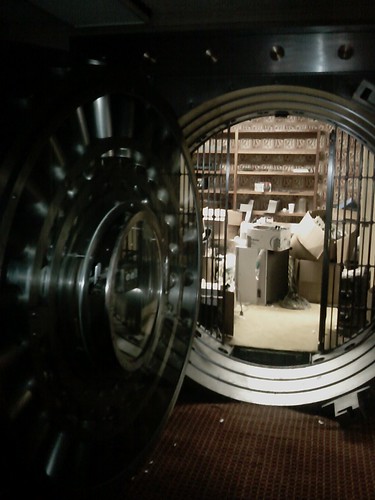
The Vault
Photo credit: aconoway1 on Flickr


As I mentioned last Friday, New Voices for Research existed as a private online community long before this blog or any of our other social media tools were available to anyone who wants to become an advocate for research. As we transition the community to Facebook (are you a fan yet?), we're also cleaning out the archives of discussion board posts and activities we developed for the private community.

Though a lot has changed in the past few years, there are a lot of advocacy and science communication basics as well as culture of science issues that are still relevant today. So we're breaking open the vault door on those posts* and sharing them here in a new occasional series, From the Vault.

We hope you'll join us in discussions regarding the posts' relevance today, advocacy, and- as always - how these issues affect you.


*Privacy and respect for members of the New Voices community is incredibly important to us. Comments or posts generated by members of the New Voices community will not be shared without their express approval.

Bookmark and Share

Monday, July 6, 2009

Your Congress - Your Health


There will be no bigger topic on the political agenda this summer than health reform. The decisions that Congress makes will have long lasting effects for all of us - which makes it even more important for us to be proactive citizens. For this reason, Research!America is relaunching its constituent education initiative Your Congress - Your Health for the 111th Congress.

Every member of Congress has been invited to complete a brief questionnaire about research and other issues that affect our health. Help us achieve our goal of getting everyone on the record by visiting www.yourcongressyourhealth.org and sending them a message urging them to participate.

Just put in your zip code and all of your elected officials will appear. Check out their responses, and if they haven't already responded, click the link (it will redirect you) to send them a quick message. It took me less than 5 minutes, and I personalized the message that went to both my senators and my representative.

We'll be talking about Your Congress - Your Health on the blog from time to time, but for regular updates (including alerts when your members of Congress respond), join us on Facebook.

Wednesday, March 30, 2011

Do You Know Your Members of Congress?

Either way, today is the day to get in touch with your member in the House of Representatives.

The House is currently crafting a spending bill that may include unprecedented funding cuts to NIH, NSF, CDC, AHRQ and FDA. These cuts represent a major threat to the nation’s health, job growth and competitiveness.

It is critical that you contact your representatives TODAY so they know that cuts to American research are unacceptable.

It's about your job. Your health and the future well-being of your family. It takes 30 seconds to send a message and another 30 seconds to share with your contacts via email or Facebook.

Your minute could be the constituent voice that convinces Congress to protect research.

Bookmark and Share

Friday, September 2, 2011

The End of the Road


When New Voices for Research began back in 2008, the idea was to create an online community for early career researchers and science enthusiasts who were interested in becoming advocates for scientific research. We wanted to empower people to communicate effectively about science, to engage the public and policymakers in their passion. Thanks to all of you, it’s been a great run. I want to thank everyone who has participated in New Voices over the years. This includes the many bloggers who have made this a rich and rewarding resource. I also want to express gratitude to all of the scientists, policy experts and advocates we profiled on these pages. Finally, I want to thank our readers! Your comments and insights made this experience exciting and showed us that people who care about science are interested in becoming better advocates.

Research!America has decided that while New Voices has developed into a wonderful community, it’s time to consolidate our advocacy efforts. You’ll still be able to find our archived blog posts right here, but I would like to direct all of you to the Research!America blog and Facebook page where you can stay up to date on all of our latest advocacy and outreach programs. You should also sign up for our advocacy network where we keep people informed about the latest news in science and research policy and provide them with tools they need to get involved.

If you have any questions, please contact Max Bronstein, Manager of Science Policy at Research!America (mbronstein@researchamerica.org)

Bookmark and Share

Wednesday, July 20, 2011

Tell Congress: No More NIH Budget Cuts

Photo credit: Heather Benson
The recent budget deal for fiscal year 2011 reduced the National Institutes of Health (NIH) budget by over $300M. The NIH director has reported that grant funding rates are at an all time low.

On July 26, the House of Representatives is scheduled to make their funding recommendation for NIH. Let them know that NIH is critical to our nation’s health, competitiveness, and economic vitality. Our nation needs robust support for health research now more than ever.

In addition to sending a message to your members of Congress, pass this alert on to others who will speak out in support of health research. 'Like' this alert on Facebook and share it with your networks.

Our federal budget will continue to be a critical issue and we need every willing voice to send our message loud and clear to our elected officials in Washington. Act now to support research.

Bookmark and Share

Wednesday, January 26, 2011

State of the Union, 2011

For those of you who may have missed it last night, what follows is a complete transcript of President Obama's second State of the Union address. The noted applause is that of Congress. Although we wholeheartedly applaud many of the same issues they did, New Voices will be sharing their perspectives tomorrow. Have something you want to share? Add it to the comments of email hbenson at researchamerica.org to be part of the post.


THE PRESIDENT: Mr. Speaker, Mr. Vice President, members of Congress, distinguished guests, and fellow Americans:

Tonight I want to begin by congratulating the men and women of the 112th Congress, as well as your new Speaker, John Boehner. (Applause.) And as we mark this occasion, we’re also mindful of the empty chair in this chamber, and we pray for the health of our colleague -- and our friend -– Gabby Giffords. (Applause.)

It’s no secret that those of us here tonight have had our differences over the last two years. The debates have been contentious; we have fought fiercely for our beliefs. And that’s a good thing. That’s what a robust democracy demands. That’s what helps set us apart as a nation.

But there’s a reason the tragedy in Tucson gave us pause. Amid all the noise and passion and rancor of our public debate, Tucson reminded us that no matter who we are or where we come from, each of us is a part of something greater -– something more consequential than party or political preference.

We are part of the American family. We believe that in a country where every race and faith and point of view can be found, we are still bound together as one people; that we share common hopes and a common creed; that the dreams of a little girl in Tucson are not so different than those of our own children, and that they all deserve the chance to be fulfilled.

That, too, is what sets us apart as a nation. (Applause.)

Now, by itself, this simple recognition won’t usher in a new era of cooperation. What comes of this moment is up to us. What comes of this moment will be determined not by whether we can sit together tonight, but whether we can work together tomorrow. (Applause.)

I believe we can. And I believe we must. That’s what the people who sent us here expect of us. With their votes, they’ve determined that governing will now be a shared responsibility between parties. New laws will only pass with support from Democrats and Republicans. We will move forward together, or not at all -– for the challenges we face are bigger than party, and bigger than politics.

At stake right now is not who wins the next election -– after all, we just had an election. At stake is whether new jobs and industries take root in this country, or somewhere else. It’s whether the hard work and industry of our people is rewarded. It’s whether we sustain the leadership that has made America not just a place on a map, but the light to the world.

We are poised for progress. Two years after the worst recession most of us have ever known, the stock market has come roaring back. Corporate profits are up. The economy is growing again.

But we have never measured progress by these yardsticks alone. We measure progress by the success of our people. By the jobs they can find and the quality of life those jobs offer. By the prospects of a small business owner who dreams of turning a good idea into a thriving enterprise. By the opportunities for a better life that we pass on to our children.

That’s the project the American people want us to work on. Together. (Applause.)

We did that in December. Thanks to the tax cuts we passed, Americans’ paychecks are a little bigger today. Every business can write off the full cost of new investments that they make this year. And these steps, taken by Democrats and Republicans, will grow the economy and add to the more than one million private sector jobs created last year.

But we have to do more. These steps we’ve taken over the last two years may have broken the back of this recession, but to win the future, we’ll need to take on challenges that have been decades in the making.

Many people watching tonight can probably remember a time when finding a good job meant showing up at a nearby factory or a business downtown. You didn’t always need a degree, and your competition was pretty much limited to your neighbors. If you worked hard, chances are you’d have a job for life, with a decent paycheck and good benefits and the occasional promotion. Maybe you’d even have the pride of seeing your kids work at the same company.

That world has changed. And for many, the change has been painful. I’ve seen it in the shuttered windows of once booming factories, and the vacant storefronts on once busy Main Streets. I’ve heard it in the frustrations of Americans who’ve seen their paychecks dwindle or their jobs disappear -– proud men and women who feel like the rules have been changed in the middle of the game.

They’re right. The rules have changed. In a single generation, revolutions in technology have transformed the way we live, work and do business. Steel mills that once needed 1,000 workers can now do the same work with 100. Today, just about any company can set up shop, hire workers, and sell their products wherever there’s an Internet connection.

Meanwhile, nations like China and India realized that with some changes of their own, they could compete in this new world. And so they started educating their children earlier and longer, with greater emphasis on math and science. They’re investing in research and new technologies. Just recently, China became the home to the world’s largest private solar research facility, and the world’s fastest computer.

So, yes, the world has changed. The competition for jobs is real. But this shouldn’t discourage us. It should challenge us. Remember -– for all the hits we’ve taken these last few years, for all the naysayers predicting our decline, America still has the largest, most prosperous economy in the world. (Applause.) No workers -- no workers are more productive than ours. No country has more successful companies, or grants more patents to inventors and entrepreneurs. We’re the home to the world’s best colleges and universities, where more students come to study than any place on Earth.

What’s more, we are the first nation to be founded for the sake of an idea -– the idea that each of us deserves the chance to shape our own destiny. That’s why centuries of pioneers and immigrants have risked everything to come here. It’s why our students don’t just memorize equations, but answer questions like "What do you think of that idea? What would you change about the world? What do you want to be when you grow up?"

The future is ours to win. But to get there, we can’t just stand still. As Robert Kennedy told us, “The future is not a gift. It is an achievement.” Sustaining the American Dream has never been about standing pat. It has required each generation to sacrifice, and struggle, and meet the demands of a new age.

And now it’s our turn. We know what it takes to compete for the jobs and industries of our time. We need to out-innovate, out-educate, and out-build the rest of the world. (Applause.) We have to make America the best place on Earth to do business. We need to take responsibility for our deficit and reform our government. That’s how our people will prosper. That’s how we’ll win the future. (Applause.) And tonight, I’d like to talk about how we get there.

The first step in winning the future is encouraging American innovation. None of us can predict with certainty what the next big industry will be or where the new jobs will come from. Thirty years ago, we couldn’t know that something called the Internet would lead to an economic revolution. What we can do -- what America does better than anyone else -- is spark the creativity and imagination of our people. We’re the nation that put cars in driveways and computers in offices; the nation of Edison and the Wright brothers; of Google and Facebook. In America, innovation doesn’t just change our lives. It is how we make our living. (Applause.)

Our free enterprise system is what drives innovation. But because it’s not always profitable for companies to invest in basic research, throughout our history, our government has provided cutting-edge scientists and inventors with the support that they need. That’s what planted the seeds for the Internet. That’s what helped make possible things like computer chips and GPS. Just think of all the good jobs -- from manufacturing to retail -- that have come from these breakthroughs.

Half a century ago, when the Soviets beat us into space with the launch of a satellite called Sputnik, we had no idea how we would beat them to the moon. The science wasn’t even there yet. NASA didn’t exist. But after investing in better research and education, we didn’t just surpass the Soviets; we unleashed a wave of innovation that created new industries and millions of new jobs.

This is our generation’s Sputnik moment. Two years ago, I said that we needed to reach a level of research and development we haven’t seen since the height of the Space Race. And in a few weeks, I will be sending a budget to Congress that helps us meet that goal. We’ll invest in biomedical research, information technology, and especially clean energy technology -– (applause) -- an investment that will strengthen our security, protect our planet, and create countless new jobs for our people.

Already, we’re seeing the promise of renewable energy. Robert and Gary Allen are brothers who run a small Michigan roofing company. After September 11th, they volunteered their best roofers to help repair the Pentagon. But half of their factory went unused, and the recession hit them hard. Today, with the help of a government loan, that empty space is being used to manufacture solar shingles that are being sold all across the country. In Robert’s words, “We reinvented ourselves.”

That’s what Americans have done for over 200 years: reinvented ourselves. And to spur on more success stories like the Allen Brothers, we’ve begun to reinvent our energy policy. We’re not just handing out money. We’re issuing a challenge. We’re telling America’s scientists and engineers that if they assemble teams of the best minds in their fields, and focus on the hardest problems in clean energy, we’ll fund the Apollo projects of our time.

At the California Institute of Technology, they’re developing a way to turn sunlight and water into fuel for our cars. At Oak Ridge National Laboratory, they’re using supercomputers to get a lot more power out of our nuclear facilities. With more research and incentives, we can break our dependence on oil with biofuels, and become the first country to have a million electric vehicles on the road by 2015. (Applause.)

We need to get behind this innovation. And to help pay for it, I’m asking Congress to eliminate the billions in taxpayer dollars we currently give to oil companies. (Applause.) I don’t know if -- I don’t know if you’ve noticed, but they’re doing just fine on their own. (Laughter.) So instead of subsidizing yesterday’s energy, let’s invest in tomorrow’s.

Now, clean energy breakthroughs will only translate into clean energy jobs if businesses know there will be a market for what they’re selling. So tonight, I challenge you to join me in setting a new goal: By 2035, 80 percent of America’s electricity will come from clean energy sources. (Applause.)

Some folks want wind and solar. Others want nuclear, clean coal and natural gas. To meet this goal, we will need them all -- and I urge Democrats and Republicans to work together to make it happen. (Applause.)

Maintaining our leadership in research and technology is crucial to America’s success. But if we want to win the future -– if we want innovation to produce jobs in America and not overseas -– then we also have to win the race to educate our kids.

Think about it. Over the next 10 years, nearly half of all new jobs will require education that goes beyond a high school education. And yet, as many as a quarter of our students aren’t even finishing high school. The quality of our math and science education lags behind many other nations. America has fallen to ninth in the proportion of young people with a college degree. And so the question is whether all of us –- as citizens, and as parents –- are willing to do what’s necessary to give every child a chance to succeed.

That responsibility begins not in our classrooms, but in our homes and communities. It’s family that first instills the love of learning in a child. Only parents can make sure the TV is turned off and homework gets done. We need to teach our kids that it’s not just the winner of the Super Bowl who deserves to be celebrated, but the winner of the science fair. (Applause.) We need to teach them that success is not a function of fame or PR, but of hard work and discipline.

Our schools share this responsibility. When a child walks into a classroom, it should be a place of high expectations and high performance. But too many schools don’t meet this test. That’s why instead of just pouring money into a system that’s not working, we launched a competition called Race to the Top. To all 50 states, we said, "If you show us the most innovative plans to improve teacher quality and student achievement, we’ll show you the money."

Race to the Top is the most meaningful reform of our public schools in a generation. For less than 1 percent of what we spend on education each year, it has led over 40 states to raise their standards for teaching and learning. And these standards were developed, by the way, not by Washington, but by Republican and Democratic governors throughout the country. And Race to the Top should be the approach we follow this year as we replace No Child Left Behind with a law that’s more flexible and focused on what’s best for our kids. (Applause.)

You see, we know what’s possible from our children when reform isn’t just a top-down mandate, but the work of local teachers and principals, school boards and communities. Take a school like Bruce Randolph in Denver. Three years ago, it was rated one of the worst schools in Colorado -- located on turf between two rival gangs. But last May, 97 percent of the seniors received their diploma. Most will be the first in their families to go to college. And after the first year of the school’s transformation, the principal who made it possible wiped away tears when a student said, "Thank you, Ms. Waters, for showing that we are smart and we can make it." (Applause.) That’s what good schools can do, and we want good schools all across the country.

Let’s also remember that after parents, the biggest impact on a child’s success comes from the man or woman at the front of the classroom. In South Korea, teachers are known as “nation builders.” Here in America, it’s time we treated the people who educate our children with the same level of respect. (Applause.) We want to reward good teachers and stop making excuses for bad ones. (Applause.) And over the next 10 years, with so many baby boomers retiring from our classrooms, we want to prepare 100,000 new teachers in the fields of science and technology and engineering and math. (Applause.)

In fact, to every young person listening tonight who’s contemplating their career choice: If you want to make a difference in the life of our nation; if you want to make a difference in the life of a child -- become a teacher. Your country needs you. (Applause.)

Of course, the education race doesn’t end with a high school diploma. To compete, higher education must be within the reach of every American. (Applause.) That’s why we’ve ended the unwarranted taxpayer subsidies that went to banks, and used the savings to make college affordable for millions of students. (Applause.) And this year, I ask Congress to go further, and make permanent our tuition tax credit –- worth $10,000 for four years of college. It’s the right thing to do. (Applause.)

Because people need to be able to train for new jobs and careers in today’s fast-changing economy, we’re also revitalizing America’s community colleges. Last month, I saw the promise of these schools at Forsyth Tech in North Carolina. Many of the students there used to work in the surrounding factories that have since left town. One mother of two, a woman named Kathy Proctor, had worked in the furniture industry since she was 18 years old. And she told me she’s earning her degree in biotechnology now, at 55 years old, not just because the furniture jobs are gone, but because she wants to inspire her children to pursue their dreams, too. As Kathy said, "I hope it tells them to never give up."

If we take these steps -– if we raise expectations for every child, and give them the best possible chance at an education, from the day they are born until the last job they take –- we will reach the goal that I set two years ago: By the end of the decade, America will once again have the highest proportion of college graduates in the world. (Applause.)

One last point about education. Today, there are hundreds of thousands of students excelling in our schools who are not American citizens. Some are the children of undocumented workers, who had nothing to do with the actions of their parents. They grew up as Americans and pledge allegiance to our flag, and yet they live every day with the threat of deportation. Others come here from abroad to study in our colleges and universities. But as soon as they obtain advanced degrees, we send them back home to compete against us. It makes no sense.

Now, I strongly believe that we should take on, once and for all, the issue of illegal immigration. And I am prepared to work with Republicans and Democrats to protect our borders, enforce our laws and address the millions of undocumented workers who are now living in the shadows. (Applause.) I know that debate will be difficult. I know it will take time. But tonight, let’s agree to make that effort. And let’s stop expelling talented, responsible young people who could be staffing our research labs or starting a new business, who could be further enriching this nation. (Applause.)

The third step in winning the future is rebuilding America. To attract new businesses to our shores, we need the fastest, most reliable ways to move people, goods, and information -- from high-speed rail to high-speed Internet. (Applause.)

Our infrastructure used to be the best, but our lead has slipped. South Korean homes now have greater Internet access than we do. Countries in Europe and Russia invest more in their roads and railways than we do. China is building faster trains and newer airports. Meanwhile, when our own engineers graded our nation’s infrastructure, they gave us a "D."

We have to do better. America is the nation that built the transcontinental railroad, brought electricity to rural communities, constructed the Interstate Highway System. The jobs created by these projects didn’t just come from laying down track or pavement. They came from businesses that opened near a town’s new train station or the new off-ramp.

So over the last two years, we’ve begun rebuilding for the 21st century, a project that has meant thousands of good jobs for the hard-hit construction industry. And tonight, I’m proposing that we redouble those efforts. (Applause.)

We’ll put more Americans to work repairing crumbling roads and bridges. We’ll make sure this is fully paid for, attract private investment, and pick projects based [on] what’s best for the economy, not politicians.

Within 25 years, our goal is to give 80 percent of Americans access to high-speed rail. (Applause.) This could allow you to go places in half the time it takes to travel by car. For some trips, it will be faster than flying –- without the pat-down. (Laughter and applause.) As we speak, routes in California and the Midwest are already underway.

Within the next five years, we’ll make it possible for businesses to deploy the next generation of high-speed wireless coverage to 98 percent of all Americans. This isn’t just about -- (applause) -- this isn’t about faster Internet or fewer dropped calls. It’s about connecting every part of America to the digital age. It’s about a rural community in Iowa or Alabama where farmers and small business owners will be able to sell their products all over the world. It’s about a firefighter who can download the design of a burning building onto a handheld device; a student who can take classes with a digital textbook; or a patient who can have face-to-face video chats with her doctor.

All these investments -– in innovation, education, and infrastructure –- will make America a better place to do business and create jobs. But to help our companies compete, we also have to knock down barriers that stand in the way of their success.

For example, over the years, a parade of lobbyists has rigged the tax code to benefit particular companies and industries. Those with accountants or lawyers to work the system can end up paying no taxes at all. But all the rest are hit with one of the highest corporate tax rates in the world. It makes no sense, and it has to change. (Applause.)

So tonight, I’m asking Democrats and Republicans to simplify the system. Get rid of the loopholes. Level the playing field. And use the savings to lower the corporate tax rate for the first time in 25 years –- without adding to our deficit. It can be done. (Applause.)

To help businesses sell more products abroad, we set a goal of doubling our exports by 2014 -– because the more we export, the more jobs we create here at home. Already, our exports are up. Recently, we signed agreements with India and China that will support more than 250,000 jobs here in the United States. And last month, we finalized a trade agreement with South Korea that will support at least 70,000 American jobs. This agreement has unprecedented support from business and labor, Democrats and Republicans -- and I ask this Congress to pass it as soon as possible. (Applause.)

Now, before I took office, I made it clear that we would enforce our trade agreements, and that I would only sign deals that keep faith with American workers and promote American jobs. That’s what we did with Korea, and that’s what I intend to do as we pursue agreements with Panama and Colombia and continue our Asia Pacific and global trade talks. (Applause.)

To reduce barriers to growth and investment, I’ve ordered a review of government regulations. When we find rules that put an unnecessary burden on businesses, we will fix them. (Applause.) But I will not hesitate to create or enforce common-sense safeguards to protect the American people. (Applause.) That’s what we’ve done in this country for more than a century. It’s why our food is safe to eat, our water is safe to drink, and our air is safe to breathe. It’s why we have speed limits and child labor laws. It’s why last year, we put in place consumer protections against hidden fees and penalties by credit card companies and new rules to prevent another financial crisis. (Applause.) And it’s why we passed reform that finally prevents the health insurance industry from exploiting patients. (Applause.)

Now, I have heard rumors that a few of you still have concerns about our new health care law. (Laughter.) So let me be the first to say that anything can be improved. If you have ideas about how to improve this law by making care better or more affordable, I am eager to work with you. We can start right now by correcting a flaw in the legislation that has placed an unnecessary bookkeeping burden on small businesses. (Applause.)

What I’m not willing to do -- what I’m not willing to do is go back to the days when insurance companies could deny someone coverage because of a preexisting condition. (Applause.)

I’m not willing to tell James Howard, a brain cancer patient from Texas, that his treatment might not be covered. I’m not willing to tell Jim Houser, a small business man from Oregon, that he has to go back to paying $5,000 more to cover his employees. As we speak, this law is making prescription drugs cheaper for seniors and giving uninsured students a chance to stay on their patients’ -- parents’ coverage. (Applause.)

So I say to this chamber tonight, instead of re-fighting the battles of the last two years, let’s fix what needs fixing and let’s move forward. (Applause.)

Now, the final critical step in winning the future is to make sure we aren’t buried under a mountain of debt.

We are living with a legacy of deficit spending that began almost a decade ago. And in the wake of the financial crisis, some of that was necessary to keep credit flowing, save jobs, and put money in people’s pockets.

But now that the worst of the recession is over, we have to confront the fact that our government spends more than it takes in. That is not sustainable. Every day, families sacrifice to live within their means. They deserve a government that does the same.

So tonight, I am proposing that starting this year, we freeze annual domestic spending for the next five years. (Applause.) Now, this would reduce the deficit by more than $400 billion over the next decade, and will bring discretionary spending to the lowest share of our economy since Dwight Eisenhower was President.

This freeze will require painful cuts. Already, we’ve frozen the salaries of hardworking federal employees for the next two years. I’ve proposed cuts to things I care deeply about, like community action programs. The Secretary of Defense has also agreed to cut tens of billions of dollars in spending that he and his generals believe our military can do without. (Applause.)

I recognize that some in this chamber have already proposed deeper cuts, and I’m willing to eliminate whatever we can honestly afford to do without. But let’s make sure that we’re not doing it on the backs of our most vulnerable citizens. (Applause.) And let’s make sure that what we’re cutting is really excess weight. Cutting the deficit by gutting our investments in innovation and education is like lightening an overloaded airplane by removing its engine. It may make you feel like you’re flying high at first, but it won’t take long before you feel the impact. (Laughter.)

Now, most of the cuts and savings I’ve proposed only address annual domestic spending, which represents a little more than 12 percent of our budget. To make further progress, we have to stop pretending that cutting this kind of spending alone will be enough. It won’t. (Applause.)

The bipartisan fiscal commission I created last year made this crystal clear. I don’t agree with all their proposals, but they made important progress. And their conclusion is that the only way to tackle our deficit is to cut excessive spending wherever we find it –- in domestic spending, defense spending, health care spending, and spending through tax breaks and loopholes. (Applause.)

This means further reducing health care costs, including programs like Medicare and Medicaid, which are the single biggest contributor to our long-term deficit. The health insurance law we passed last year will slow these rising costs, which is part of the reason that nonpartisan economists have said that repealing the health care law would add a quarter of a trillion dollars to our deficit. Still, I’m willing to look at other ideas to bring down costs, including one that Republicans suggested last year -- medical malpractice reform to rein in frivolous lawsuits. (Applause.)

To put us on solid ground, we should also find a bipartisan solution to strengthen Social Security for future generations. (Applause.) We must do it without putting at risk current retirees, the most vulnerable, or people with disabilities; without slashing benefits for future generations; and without subjecting Americans’ guaranteed retirement income to the whims of the stock market. (Applause.)

And if we truly care about our deficit, we simply can’t afford a permanent extension of the tax cuts for the wealthiest 2 percent of Americans. (Applause.) Before we take money away from our schools or scholarships away from our students, we should ask millionaires to give up their tax break. It’s not a matter of punishing their success. It’s about promoting America’s success. (Applause.)

In fact, the best thing we could do on taxes for all Americans is to simplify the individual tax code. (Applause.) This will be a tough job, but members of both parties have expressed an interest in doing this, and I am prepared to join them. (Applause.)

So now is the time to act. Now is the time for both sides and both houses of Congress –- Democrats and Republicans -– to forge a principled compromise that gets the job done. If we make the hard choices now to rein in our deficits, we can make the investments we need to win the future.

Let me take this one step further. We shouldn’t just give our people a government that’s more affordable. We should give them a government that’s more competent and more efficient. We can’t win the future with a government of the past. (Applause.)

We live and do business in the Information Age, but the last major reorganization of the government happened in the age of black-and-white TV. There are 12 different agencies that deal with exports. There are at least five different agencies that deal with housing policy. Then there’s my favorite example: The Interior Department is in charge of salmon while they’re in fresh water, but the Commerce Department handles them when they’re in saltwater. (Laughter.) I hear it gets even more complicated once they’re smoked. (Laughter and applause.)

Now, we’ve made great strides over the last two years in using technology and getting rid of waste. Veterans can now download their electronic medical records with a click of the mouse. We’re selling acres of federal office space that hasn’t been used in years, and we’ll cut through red tape to get rid of more. But we need to think bigger. In the coming months, my administration will develop a proposal to merge, consolidate, and reorganize the federal government in a way that best serves the goal of a more competitive America. I will submit that proposal to Congress for a vote –- and we will push to get it passed. (Applause.)

In the coming year, we’ll also work to rebuild people’s faith in the institution of government. Because you deserve to know exactly how and where your tax dollars are being spent, you’ll be able to go to a website and get that information for the very first time in history. Because you deserve to know when your elected officials are meeting with lobbyists, I ask Congress to do what the White House has already done -- put that information online. And because the American people deserve to know that special interests aren’t larding up legislation with pet projects, both parties in Congress should know this: If a bill comes to my desk with earmarks inside, I will veto it. I will veto it. (Applause.)

The 21st century government that’s open and competent. A government that lives within its means. An economy that’s driven by new skills and new ideas. Our success in this new and changing world will require reform, responsibility, and innovation. It will also require us to approach that world with a new level of engagement in our foreign affairs.

Just as jobs and businesses can now race across borders, so can new threats and new challenges. No single wall separates East and West. No one rival superpower is aligned against us.

And so we must defeat determined enemies, wherever they are, and build coalitions that cut across lines of region and race and religion. And America’s moral example must always shine for all who yearn for freedom and justice and dignity. And because we’ve begun this work, tonight we can say that American leadership has been renewed and America’s standing has been restored.

Look to Iraq, where nearly 100,000 of our brave men and women have left with their heads held high. (Applause.) American combat patrols have ended, violence is down, and a new government has been formed. This year, our civilians will forge a lasting partnership with the Iraqi people, while we finish the job of bringing our troops out of Iraq. America’s commitment has been kept. The Iraq war is coming to an end. (Applause.)

Of course, as we speak, al Qaeda and their affiliates continue to plan attacks against us. Thanks to our intelligence and law enforcement professionals, we’re disrupting plots and securing our cities and skies. And as extremists try to inspire acts of violence within our borders, we are responding with the strength of our communities, with respect for the rule of law, and with the conviction that American Muslims are a part of our American family. (Applause.)

We’ve also taken the fight to al Qaeda and their allies abroad. In Afghanistan, our troops have taken Taliban strongholds and trained Afghan security forces. Our purpose is clear: By preventing the Taliban from reestablishing a stranglehold over the Afghan people, we will deny al Qaeda the safe haven that served as a launching pad for 9/11.

Thanks to our heroic troops and civilians, fewer Afghans are under the control of the insurgency. There will be tough fighting ahead, and the Afghan government will need to deliver better governance. But we are strengthening the capacity of the Afghan people and building an enduring partnership with them. This year, we will work with nearly 50 countries to begin a transition to an Afghan lead. And this July, we will begin to bring our troops home. (Applause.)

In Pakistan, al Qaeda’s leadership is under more pressure than at any point since 2001. Their leaders and operatives are being removed from the battlefield. Their safe havens are shrinking. And we’ve sent a message from the Afghan border to the Arabian Peninsula to all parts of the globe: We will not relent, we will not waver, and we will defeat you. (Applause.)

American leadership can also be seen in the effort to secure the worst weapons of war. Because Republicans and Democrats approved the New START treaty, far fewer nuclear weapons and launchers will be deployed. Because we rallied the world, nuclear materials are being locked down on every continent so they never fall into the hands of terrorists. (Applause.)

Because of a diplomatic effort to insist that Iran meet its obligations, the Iranian government now faces tougher sanctions, tighter sanctions than ever before. And on the Korean Peninsula, we stand with our ally South Korea, and insist that North Korea keeps its commitment to abandon nuclear weapons. (Applause.)

This is just a part of how we’re shaping a world that favors peace and prosperity. With our European allies, we revitalized NATO and increased our cooperation on everything from counterterrorism to missile defense. We’ve reset our relationship with Russia, strengthened Asian alliances, built new partnerships with nations like India.

This March, I will travel to Brazil, Chile, and El Salvador to forge new alliances across the Americas. Around the globe, we’re standing with those who take responsibility -– helping farmers grow more food, supporting doctors who care for the sick, and combating the corruption that can rot a society and rob people of opportunity.

Recent events have shown us that what sets us apart must not just be our power -– it must also be the purpose behind it. In south Sudan -– with our assistance -– the people were finally able to vote for independence after years of war. (Applause.) Thousands lined up before dawn. People danced in the streets. One man who lost four of his brothers at war summed up the scene around him: "This was a battlefield for most of my life," he said. "Now we want to be free." (Applause.)

And we saw that same desire to be free in Tunisia, where the will of the people proved more powerful than the writ of a dictator. And tonight, let us be clear: The United States of America stands with the people of Tunisia, and supports the democratic aspirations of all people. (Applause.)

We must never forget that the things we’ve struggled for, and fought for, live in the hearts of people everywhere. And we must always remember that the Americans who have borne the greatest burden in this struggle are the men and women who serve our country. (Applause.)

Tonight, let us speak with one voice in reaffirming that our nation is united in support of our troops and their families. Let us serve them as well as they’ve served us -- by giving them the equipment they need, by providing them with the care and benefits that they have earned, and by enlisting our veterans in the great task of building our own nation.

Our troops come from every corner of this country -– they’re black, white, Latino, Asian, Native American. They are Christian and Hindu, Jewish and Muslim. And, yes, we know that some of them are gay. Starting this year, no American will be forbidden from serving the country they love because of who they love. (Applause.) And with that change, I call on all our college campuses to open their doors to our military recruiters and ROTC. It is time to leave behind the divisive battles of the past. It is time to move forward as one nation. (Applause.)

We should have no illusions about the work ahead of us. Reforming our schools, changing the way we use energy, reducing our deficit –- none of this will be easy. All of it will take time. And it will be harder because we will argue about everything. The costs. The details. The letter of every law.

Of course, some countries don’t have this problem. If the central government wants a railroad, they build a railroad, no matter how many homes get bulldozed. If they don’t want a bad story in the newspaper, it doesn’t get written.

And yet, as contentious and frustrating and messy as our democracy can sometimes be, I know there isn’t a person here who would trade places with any other nation on Earth. (Applause.)

We may have differences in policy, but we all believe in the rights enshrined in our Constitution. We may have different opinions, but we believe in the same promise that says this is a place where you can make it if you try. We may have different backgrounds, but we believe in the same dream that says this is a country where anything is possible. No matter who you are. No matter where you come from.

That dream is why I can stand here before you tonight. That dream is why a working-class kid from Scranton can sit behind me. (Laughter and applause.) That dream is why someone who began by sweeping the floors of his father’s Cincinnati bar can preside as Speaker of the House in the greatest nation on Earth. (Applause.)

That dream -– that American Dream -– is what drove the Allen Brothers to reinvent their roofing company for a new era. It’s what drove those students at Forsyth Tech to learn a new skill and work towards the future. And that dream is the story of a small business owner named Brandon Fisher.

Brandon started a company in Berlin, Pennsylvania, that specializes in a new kind of drilling technology. And one day last summer, he saw the news that halfway across the world, 33 men were trapped in a Chilean mine, and no one knew how to save them.

But Brandon thought his company could help. And so he designed a rescue that would come to be known as Plan B. His employees worked around the clock to manufacture the necessary drilling equipment. And Brandon left for Chile.

Along with others, he began drilling a 2,000-foot hole into the ground, working three- or four-hour -- three or four days at a time without any sleep. Thirty-seven days later, Plan B succeeded, and the miners were rescued. (Applause.) But because he didn’t want all of the attention, Brandon wasn’t there when the miners emerged. He’d already gone back home, back to work on his next project.

And later, one of his employees said of the rescue, "We proved that Center Rock is a little company, but we do big things." (Applause.)

We do big things.

From the earliest days of our founding, America has been the story of ordinary people who dare to dream. That’s how we win the future.

We’re a nation that says, "I might not have a lot of money, but I have this great idea for a new company." "I might not come from a family of college graduates, but I will be the first to get my degree." "I might not know those people in trouble, but I think I can help them, and I need to try." "I’m not sure how we’ll reach that better place beyond the horizon, but I know we’ll get there. I know we will."

We do big things. (Applause.)

The idea of America endures. Our destiny remains our choice. And tonight, more than two centuries later, it’s because of our people that our future is hopeful, our journey goes forward, and the state of our union is strong.

Thank you. God bless you, and may God bless the United States of America. (Applause.)


Transcript courtesy of the White House.

Bookmark and Share