Friday, February 27, 2009

Unofficial State of the Union

Then Democratic presidential-nominee Barack Obama in Concord, NH. Photo by Emily Norton.

President Obama's unofficial State of the Union on Tuesday had multiple mentions of issues important to the science, health, technology and research communities (including an early shout out to labs and universities!) What stuck out to those of us here at New Voices?
"The answers to our problems don't lie beyond our reach. They exist in our laboratories and our universities; in our fields and our factories; in the imaginations of our entrepreneurs and the pride of the hardest-working people on Earth."
Emily's response to President Obama's speech to Congress as she reads through the transcripts.

The President's speech to Congress Tuesday night was reminiscent of his hope-infused eloquence during the election campaign. He laid out a strong message for Americans, acknowledging the challenges that the country must face, but also a strong willingness to confront the problems head-on. It seemed like he understands what average Americans are experiencing, with statements like “I promise you -- I get it” and “[m]y job -- our job -- is to solve the problem.” His commitment to advancing science and reforming health care was evident throughout the speech. The full transcript is available here.
"We've also made the largest investment in basic research funding in American history — an investment that will spur not only new discoveries in energy, but breakthroughs in medicine and science and technology."
FlyGal’s take is untainted by TV pundits because FlyGal watches speeches on C-SPAN!

The speech managed to be sobering and inspiring – not an easy thing to do. The president managed to quell everyone’s (well- at least my) fears about the economy while steeling us for the hard work ahead. His focus on the long-term instead of immediate goals and his plans on reforming health-care and investing in education are hugely encouraging.

He was right on target when he talked about the current economy being knowledge based. Not only is it knowledge based, it is also intensely science and tech. oriented. Having a strong foundation in the sciences is, as he mentioned, no longer an option but an imperative. This hopefully bodes well for a renewed focus on the state of science and science education, especially in K-12. Our future as a prosperous society depends on the investments we make in the next generation of scientists and engineers.

It is heartening to hear that his recovery plan is just step one. Policy wonks on the left have been clamoring for just this kind of government intervention for a while now.

Science
isn’t a dirty word in the White House anymore.
"Our recovery plan will invest in electronic health records and new technology that will reduce errors, bring down costs, ensure privacy, and save lives. It will launch a new effort to conquer a disease that has touched the life of nearly every American, including me, by seeking a cure for cancer in our time. And—it makes the largest investment ever in preventive care, because that's one of the best ways to keep our people healthy and our costs under control."
Heather's take on the Republican response from her rather comfy couch.

I want to say up front that I like Bobby Jindal. He was a solid representative in the House and is doing as good a job as anyone could cleaning up the political situation in Louisiana. When I saw he was giving the response to President Obama's speech, I was pretty pumped.

His oratory aside (and to be fair, it is hard to follow someone with the oratorical skills of the president), the thing that struck me most was his attacks on "wasteful spending" like monitoring volcanoes. With all due respect Gov. Jindal, I wasn't even born in May of 1980, but I know why we monitor volcanoes. Not to mention one of our 50 states is entirely made of volcanoes. That funding might be wasteful in Louisiana, but hurricane tracking technology is pretty wasteful to most states.

Can't we all agree that developing technology to help reduce deaths and injuries due to natural disasters is a national priority?

Thursday, February 26, 2009

How To: Subscribe to Your Favorite Websites

To stay informed takes a LOT of time. Reading, watching, and listening to news, scanning blogs, being aware of pop culture ... we know how important it is to be "in the know," but finding the time to fit it into our schedule - that's something else altogether. Luckily, technology has a solution: RSS aggregators.

Aggregators bring all the news that's important to you TO YOU. No more visiting 10, 20, 30 sites a day. See everything new, at once, in one place. Worried about finding the key items? Almost all aggregators have filters.

But wait, what's RSS? This video, courtesy of Common Craft, shows you what RSS is, how it works, and how to get started.


Let us know if you have any questions and remember to subscribe to New Voices!


This is Part 1 in the New Voices series on helpful technology for science communicators and advocates.

Wednesday, February 25, 2009

Scientific Spokespeople


On Monday, John Tierney of the New York Times had an interesting piece on scientists as advocates. I've included some commentary below, but would really like to hear what you think of this piece. Full article available here.
Most researchers ... like to think of themselves in one of two roles: as a pure researcher who remains aloof from messy politics, or an impartial arbiter offering expert answers to politicians’ questions. Either way, they believe their research can point the way to correct public policies, and sometimes it does — when the science is clear and people’s values aren’t in conflict.
Neither of those two roles mentions scientists as proactive advocates, which seems remiss since we know they exist.
“Some scientists want to influence policy in a certain direction and still be able to claim to be above politics,” Dr. Pielke says. “So they engage in what I call ‘stealth issue advocacy’ by smuggling political arguments into putative scientific ones.”
Which can be an easy trap to fall into, especially when one political group tends to be more receptive to scientific arguments than another. All the same, I don't believe the majority of scientists intentionally do this.
... scientists could do more good if, instead of discrediting rivals’ expertise, they acknowledge political differences and don’t expect them to be resolved by science. Instead of steering politicians to a preferred policy, [they] would use their expertise to expand the array of technically feasible options.
This is a huge issue. Scientists themselves fight progress when they push against positions or ideas that aren't 100% proven. It reminds me of an episode of the West Wing (The Hubbert Peak) where representatives from different alternative energy industries meet with Josh and basically debunk the value of each other's energy sources (solar, water, wind, etc.). I appreciate that good research involves proving what things don't work as often as proving what does, but from time to time, finding common ground and agreeing on something (anything!) would be better for the greater scientific community.
Yet research into this strategy has received little financing in past budgets or the new stimulus package because it doesn’t jibe with the agenda of either side in the ...debate.
There will always be some level of politics in funding (and publication of research for that matter), because any governing body is going to have priorities. Anyone who has a brilliant plan for fixing that structure should definitely let the world know!

For a different take on this article, check out the Knight Science Journalism Tracker post.


This is Part 1 of the New Voices series on being a spokesperson for science. In Part 2 of this series, we'll cover some gold standards for being a successful spokesperson for any issue.

Tuesday, February 24, 2009

Upcoming Town Hall Meetings

Old Town Alexandria Town Hall, by Tom Harris

We want to thank those of you who are regularly reading New Voices with great local opportunities to get out and advocate. So we narrowed down the upcoming town hall meetings based on some states with high readership this month. If your representative isn't mentioned below, let us know and we'll see if we can find upcoming events in your district.

California
Representative Pete Stark (CA-13th)
Telephone Town Hall
9 - 11 a.m. Saturday, February 28
Call-in information available here

Connecticut
Representative Joe Courtney (CT-2nd)
Asnuntuck Community College in Enfield
2 p.m. Saturday, February 28
More information

Florida
Representative Alan Grayson (FL-8th)
District Office in Orlando
11 a.m. Saturday, February 28
(this is an open house, not a town hall meeting)

Pennsylvania
Representative Charlie Dent (PA-15th)
Roseto Borough Hall in Roseto
10 a.m. Friday, February 27

Virginia
Representative Moran (VA-8th)
TONIGHT 7:30 - 8:30 p.m. Tuesday, February 24
To participate in this town hall meeting, call (877) 229-8493+12765

Representative Rick Boucher (VA-9th)
Five upcoming March meetings

Monday, February 23, 2009

Tickets, Popcorn, Science?

In honor of the Oscars, we thought we’d do a little shout-out to science in the movies.

Hmmm, that’s odd you might think, since so often science is portrayed heinously wrong by Hollywood. Not to mention Hollywood “scientists”, with images ranging from evil and calculating to the stereotypical geek to weak and easily manipulated by business interests.

Good news! In an attempt to decrease scientific bumbles in films, the National Academy of Sciences has partnered with Hollywood to offer the services of scientists and engineers through the Science & Entertainment Exchange.

The Science & Entertainment Exchange pairs writers, directors, producers, and set designers with science, medical, and engineering experts so that technical details are accurately portrayed in movies, TV shows, and even video games. (What a neat job opportunity for all you scientists out there!) This collaboration is important, because movies and TV programs reach a broad audience that is able to learn from what they view.

And a random little factoid: winning an Oscar is not only about the prestige, Professor Donald Redelmeier ran a study that found Oscar winners actually live longer!

Congratulations to all of last night's winners!

Friday, February 20, 2009

The Value of Congressional Champions

The value of a congressional champion is often immeasurable, but this week we can say without a doubt that it is at least 10 billion dollars for research. That's right, $10 billion.

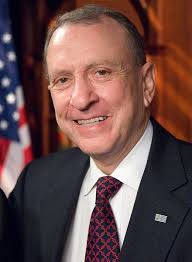
In this case, Senator Arlen Specter (R-PA) led the effort to increase funding for the National Institutes of Health in the the American Recovery and Reinvestment Act, which was signed into law by President Barack Obama Tuesday. Gardiner Harris of the New York Times wrote an excellent piece on how Sen. Specter was able to secure funding that could create as many as 70,000 jobs. Some key points:
...After money intended for highways, schools and states, it is the largest of chunk of financing in the budget and is almost three times the $3.5 billion first approved by the House.

... But for now, [Specter] said, future budget discussions for N.I.H. will begin at $40 billion, not $30 billion

... “I think it’s scandalous that we haven’t done more to cure cancer,” Mr. Specter said.
Definitely check out the full article.

Thursday, February 19, 2009

Research Funding Highlights

A crowd and Vice President Biden look on as President Obama signs the American Recovery and Reinvestment Act

We know many of you have been following the research funding highlights from the American Recovery and Reinvestment Act. Here is a simple breakdown of the legislation.
  • NIH - $10 billion, including $7.4 billion for distribution to the institutes and centers, $1.3 billion for extramural construction and equipment, $800 million for the Office of the Director for trans-NIH initiatives, and $500 million for improvements to the NIH campus
  • AHRQ - $1.1 billion for comparative effectiveness research
  • NSF - $3 billion, including $2.5 billion for research, $400 million for construction and equipment, and $100 million for education and human resources
  • Prevention and wellness fund - $1 billion, of which some portion will be allocated to CDC
Thank your elected officials for their support!

Wednesday, February 18, 2009

Reason Over Rote?

We all learn differently. Some people need maps drawn in the dirt for them and others would rather you just tell them how to get there. What you're learning can also make a difference in how you learn it. Science is no exception.

Recently I came across two similar pieces talking about science education theory. The first was a piece by Ed Yong on how teaching scientific knowledge doesn't improve scientific reasoning and the other was an editorial in The Scientist by Steven Wiley on didactic learning. The pieces conclude that scientific reasoning is not learned, it is either something that comes naturally or evolves from an interest and base of scientific knowledge (respectively).

Communication and advocacy both take a lot of reasoning skills. There are certainly methods and models to follow (relatively easy to memorize), but there are much more subjective elements to consider as well.

Here at New Voices, we're trying to take both approaches to developing the best spokespeople for science: fact-based pieces on science communication supplemented by examples of advocates along with opportunities to try it for yourselves. What works best for you? What style or method is the most appealing?

If you had to choose, would it be reasoning or rote memorization?

Tuesday, February 17, 2009

Scientists on Both Sides of the Aisle

Today’s advocate profile is a two-for-one. In the interest of fair play I wanted to profile both a Republican and a Democrat in Congress who, in their former lives, were scientists. What better example of a scientist advocate than one currently serving on Capitol Hill?

Representative Vernon Ehlers [R-MI]
Representing Michigan’s 3rd Congressional District, Rep. Ehlers is a physicist. Rep. Ehlers has served in Congress since 1993, and before that spent 11 years in the Michigan legislature.

Rep. Ehlers received a PhD in physics from UC Berkeley in 1960. He moved back to Michigan and taught at Calvin College, in Grand Rapids, eventually acting as chairman of the physics department. During that time Rep. Ehlers also served as a volunteer science advisor to then-Congressman Gerald Ford! Today Rep. Ehlers puts his scientific background to work on the Science and Technology Committee and in the STEM Ed Caucus.

Representative Rush Holt [D-NJ]
Representing New Jersey’s 12th Congressional District, Rep. Holt is a physicist as well. He has served in Congress since 1999. Some of his supporters during the 2008 re-election campaign sported bumper stickers boasting “My Congressman IS a rocket scientist!”

Rep. Holt’s parents were both public servants, and he was a Congressional Science Fellow and a nuclear weapons expert at the U.S. State Department before serving as Congressman. He uses his background in physics and his experience at the State Department as chairman of the Select Intelligence Oversight Panel on the Intelligence Committee.

Monday, February 16, 2009

President's Day

New Voices is off today in honor of all 43 of our great American presidents. We've collected some of our favorite quotes to commemorate the day; some are about science and others just remind us of scientific things. Plus, it's always good to have a stock of quotes you can throw into a written piece or speech. Without further ado, the words of our presidents.

He who knows best knows how little he knows.
— Thomas Jefferson (1801-1809)

I am a firm believer in the people. If given the truth, they can be depended upon to meet any national crisis. The great point is to bring them the real facts.
— Abraham Lincoln (1861-1865)

We grow great by dreams. All big men are dreamers.
— Woodrow Wilson (1913-1921)

Don't hesitate to be as revolutionary as science. Don't hesitate to be as reactionary as the multiplication table.
— John Calvin Coolidge (1923-1929)

It is common sense to take a method and try it. If all fails, admit it frankly and try another. But above all, try something.
— Franklin Delano Roosevelt (1933-1945)

Men make history, and not the other way around. In periods where there is no leadership, society stands still. Progress occurs when courageous, skillful leaders seize the opportunity to change things for the better.
— Harry Truman (1945-1953)

Don't join the book burners. Do not think you are going to conceal thoughts by concealing evidence that they ever existed.
— Dwight D. Eisenhower (1953-1961)

Let both sides seek to invoke the wonders of science instead of its terrors. Together let us explore the stars, conquer the deserts, eradicate disease, tap the ocean depths, and encourage the arts and commerce.
— John F. Kennedy (1961-1963)

The awareness that health is dependent upon habits that we control makes us the first generation in history that to a large extent determines its own destiny.
— Jimmy Carter (1977-1981)