

Showing posts with label science. Show all posts
Showing posts with label science. Show all posts
Tuesday, August 2, 2011
Science vs. Faith?
One of the biggest challenges for many advocates is encountering the science versus faith "controversy." Neil deGrasse Tyson explains the reality of the situation:


Monday, July 18, 2011
Working Together on HIV/AIDS: Scientists
 |
| Photo courtesy of the NIH |
This year marks the 30th anniversary of two mysterious outbreaks in America. One was of a form of pneumonia called Pneumocystis carinii pneumonia (PCP) and the second was a skin cancer called Kaposi’s sarcoma. Both diseases were quite rare, especially considering the patients were all young men in their 20's. These outbreaks actually marked the beginning of our awareness of a new disease we now know as AIDS.
Today’s post is the first in a series about HIV/AIDS, including where we were and how far we’ve come in treating this devastating disease. However, I’m not planning on focusing on the science behind HIV/AIDS since others have already done a great job of explaining this.
Instead, I want to talk about the different groups that were involved in the amazing progress we’ve made in our understanding and treatments. In just 30 years, HIV/AIDS has gone from a death sentence to a manageable chronic disease. Who made that possible?
The first answer that probably comes to mind is scientists and physicians who had to figure out what caused the symptoms they were seeing in clinics and how the disease was spreading. This was a daunting challenge, but with the support of the US government as well as governments around the world, they identified the Human Immunodeficiency Virus and figured out how it was transmitted.
Almost two decades before the emergence of HIV/AIDS, scientists had the idea that cancers might be caused by a special type of virus called a retrovirus. They developed a drug against retroviruses in the hopes that is would cure these cancers. Unfortunately it didn’t work. But, HIV is a retrovirus, so they were able to revisit their old drug. The drug, AZT, appeared to slow the progression from HIV infection to AIDS and represented the first major breakthrough for infected individuals. Not bad for a failed experiment!
Since then, science has produced several other drugs to treat HIV/AIDS and many people are living long and symptom-free lives as a result. But scientists didn’t work alone. In my next post in this series, I’ll discuss the crucial role advocacy groups played in fighting this epidemic.
Tuesday, May 3, 2011
Science is Real
Today's Tuneage Tuesday is brought to you from neither Istanbul nor Constantinople (despite being a featured location for They Might Be Giants).
Thursday, March 10, 2011
Eye of the Tired
 |
| Photo credit: flickrPrince on Flickr |
-----
There. Don’t your eyes feel better?
It’s “Save Your Vision” week in the US, and while most of us turn a blind eye to our health for the sake of computer screens, TVs, and smartphones, it’s time to take a step back – literally and figuratively.
Take a look at these facts:
- The average American adult spends more than eight hours in front of a computer, TV or other screen.
- Nearly 90% of people who spend three hours or more in front of a screen report problems related to eye strain.
- Optometrists report more than 10 million eye exams are done each year because of computer-related problems.
If those numbers make you perk up in your chair, good. The American Optometric Association recommends good posture as part of maintaining an eye-healthy environment at your computer. The AOA also recommends keeping the screen 20-28 inches away from your eyes, and 4-5 inches below horizontal eye level. As you did a few seconds ago, take breaks, too. For every two continuous hours of computer use, get away for 15 minutes, or try the 20-20-20 rule: 20 seconds of looking at something 20 feet away, every 20 minutes.
There are, of course, other ways to be kind to your eyes. Researchers have long recommended a diet rich in beta-carotene, which means orange-colored fruits and vegetables (carrots – it’s not a myth!), as well as certain dark green vegetables, like spinach and kale. You should also protect your eyes from UV rays by wearing sunglasses, and avoid developing chronic diseases like diabetes, which can affect your eyes. One other recommendation that’s gaining ground is taking omega-3 fatty acids, which are found in fish and fish oil supplements. A study published in Science Translational Medicine found that mice ingesting omega-3 fatty acids showed less abnormal blood vessel growth, which could be a factor in worsening eyes.
Whatever changes you might make in your daily habits, those small changes could make a big difference in your eye health. Risking one more lame pun, I’d say the facts are clear for all to see.
Friday, February 11, 2011
New Voice Sheril Kirshenbaum on the Today Show!
In the lead up to one of Hallmark's favorite holidays, there's no doubt that kissing will be on the minds and lips of lots of people around the world. Which is perfect for New Voice Sheril Kirshenbaum; her new book The Science of Kissing explores the history and science of kissing. We'll be reviewing the book later this month, but we're offering congratulations this afternoon since Sheril's book tour included a segment on NBC's Today show this morning. Here it is in case you missed it:
Congratulations Sheril!
(I'm only on Chapter 3, but it's a great read so far and definitely worth picking up for some sweet reading.)
Congratulations Sheril!
(I'm only on Chapter 3, but it's a great read so far and definitely worth picking up for some sweet reading.)
Friday, February 4, 2011
Show Me the Money

As we saw yesterday, the biosciences can benefit a state’s economy. Thus, states should take the initiative to attract biosciences. There are several avenues that should be explored in order to develop a bioscience industry, which have been nicely laid out in the BIO report “State Legislative Best Practices in Support of Bioscience Industry Development” and summarized here:

- Technology Transfer:
- Specialized Facilities:
- Venture Capital/Discovery Funds:
- Bioscience Workforce Initiatives:
- Supportive Business Climate Incentives:
Many states have begun bioscience initiatives that cover one or more of these enterprises. What is your state doing to support biosciences and bolster the economy?
This is Part 4 of 4 in our Economic Impact of R&D series.
Part 1 - Economic Impact of Research & Development
Part 2 - Biosciences: Where the Jobs Are
Part 3 - Economic Impact of R&D Ranked by State
Part 4 - Show Me the Money
Thursday, February 3, 2011
Economic Impact of R&D Ranked by State
We saw earlier that R&D investment has far-reaching economic effects. This is true in individual states as well as across the nation.
To understand the economic impact of R&D in each state, I gathered the numbers in every state reflecting:

To find information about R&D investment and jobs in your state, take a look at Research!America's website.
In the next post in this series, see what a state can do to garner the economic benefits of R&D.
This is Part 3 of 4 in our Economic Impact of R&D series.
Part 1 - Economic Impact of Research & Development
Part 2 - Biosciences: Where the Jobs Are
Part 3 - Economic Impact of R&D Ranked by State
Part 4 - Show Me the Money
To understand the economic impact of R&D in each state, I gathered the numbers in every state reflecting:
- the amount of money each state has invested in R&D
- the number of jobs in the bioscience sector
- the average salary in the biosciences
- a score encompassing societal factors that reflect the health of each state’s economy, such as unemployment and underemployment rates.

To find information about R&D investment and jobs in your state, take a look at Research!America's website.
In the next post in this series, see what a state can do to garner the economic benefits of R&D.
This is Part 3 of 4 in our Economic Impact of R&D series.
Part 1 - Economic Impact of Research & Development
Part 2 - Biosciences: Where the Jobs Are
Part 3 - Economic Impact of R&D Ranked by State
Part 4 - Show Me the Money
Wednesday, February 2, 2011
Biosciences: Where The Jobs Are

As the National Commission on Fiscal Responsibility and Reform understands, smart spending is beneficial and will ultimately jumpstart the economy. Investment in R&D actually creates well-paying jobs in a time of record unemployment, thus strengthening the economy.
- In 2008, the first year of the recession, the bioscience industry was able to support a 1.4% growth in employment while total private sector employment fell by 0.7 percent.
- There are over 1.3 million Americans employed in the bioscience sector, where jobs pay about $22,000 more than average private sector wages.
- Earnings for workers in the bioscience sector have increased by 10.1 percent since 2001, whereas earnings for private sector employees have increased by only 3.2 percent in the same time period.
The biosciences have an even larger impact outside of their own industry.
- For every new job in the biosciences, another 5.8 jobs are created, employing even more Americans.
- Funding R&D boosts business activity: Every dollar invested by the NIH - a large funder of medical research in the US - generates more than 2 dollars in state economic output, for a total of over $50 billion in new business activity generated in the US in 2007.
This is Part 2 of 4 in our Economic Impact of R&D series.
Part 1 - Economic Impact of Research & Development
Part 2 - Biosciences: Where the Jobs Are
Part 3 - Economic Impact of R&D Ranked by State
Part 4 - Show Me the Money
Tuesday, February 1, 2011
Economic Impact of Research and Development

Research is a noble pursuit. There are long hours of work, sometimes with no results to show for it; yet, researchers persist. Most scientists I know enter the field because they want to do something that positively affects society. Often, we think of the health impact that research has—treating diseases and saving lives—but there’s more to it than that. Research supports scores of well-paying jobs, which keeps the regional economy strong, even in difficult economic times.
 Like others, one reason I pursued research was to help people and society. After graduate school, I realized I wanted to effect change from a broader perspective than my graduate work was allowing, so I accepted this position as a science policy fellow at Research!America.
I have learned a lot about government, advocacy and science policy at Research!America - things I couldn’t have learned in the lab. One of the messages that Research!America focuses on that really interested me was the economic impact of research. It’s been eye-opening to understand the positive effects research can have beyond the health aspects that we typically think of.
It is the right time to get the message out that research and development can bolster the economy. The US is currently in a difficult position. The economy has slowed considerably, unemployment is through the roof, and you can’t listen to the news without hearing how large the country’s debt is. Many of members of the new Congress have vowed to cut spending to ameliorate the debt. But, according to others, we can’t jump-start the economy without spending.
 The recent report by the bipartisan National Commission on Fiscal Responsibility and Reform clearly stated its opinion on the matter, “…we must invest in education, infrastructure, and high-value research and development to help our economy grow, keep us globally competitive, and make it easier for businesses to create jobs.” Let’s hope our legislators understand this point.
The next post in this series describes some of the economic benefits of research and development.
This is Part 1 of 4 in our Economic Impact of R&D series.
Part 1 - Economic Impact of Research & Development
Part 2 - Biosciences: Where the Jobs Are
Part 3 - Economic Impact of R&D Ranked by State
Part 4 - Show Me the Money
Thursday, January 27, 2011
Thoughts on the State of the Union Address
Now that it's had a bit of time to sink in, here are our thoughts on the State of the Union address made Tuesday evening.
The following passages are the opinions of the authors alone and do not necessarily represent those of any affiliated organizations.
Max's Take:
Science in the SOTU
Innovation is the light at the end of the tunnel for Obama. In his State of the Union speech, he spent an unprecedented amount of time discussing the role of science and research in leading the nation toward renewed prosperity. His remarks were undergirded by a fundamental belief in the societal benefits of science and pursuit of basic knowledge.
Even in the face of shifting national priorities and at a time when both sides of the isle are talking about cuts, Obama has been resolute in his support of science. This is especially striking given that many of the scientific investments being made today may not bear fruit in the short term, and probably not in time for the coming Presidential election.
Obama specifically mentioned the role of government support in the creation of the Internet, GPS, and computer chips. What other groundbreaking innovations should be included here? This is a tremendous opportunity for you to share how research has improved our world.
Heather's Impressions
Structural Integrity
By now you've read all of the promises about investing in biomedical research. Word is spreading far and wide about President Obama's call for innovation and more simply regulated salmon. Our Sputnik moment is upon us. And while others are discussing the verbage, I can't stop thinking about the construct.
I have a bit of a background in speechwriting and oral communications, so much of my time watching speeches is paying attention to rhetorical devices and style. Structurally, the president started with formalities and then led his content sections with science and education. Although I believe it is a priority for him - and that should be reflected in the upcoming budget as promised - I don't think that's why he led with it.
Science and education paved the way in the SOTU because they are topics everyone can get behind (as evidenced by years of public opinion data). No one wants America to be left behind. But it was more than just a warm-up; a unifying set of topics to bring on the applause.
Investment in research and innovation are about to face an epic fight for funding, and by framing it his way first, the president was attempting to counter early attacks. The position in the speech is just as important as the words he used.
As contradictions in the text of the speech already show, not everything mentioned on Tuesday night is going to happen. (I challenge anyone to find a SOTU where everything mentioned was actually accomplished as laid out in the speech.) However, that isn't the point of the SOTU. It's about goals, a vision, an ideal look at the future.
Beyond the structure of the speech is the structural integrity of its vision. Will the president be able to make his vision reality in the face of the worst economic situation since the Great Depression and a Congress with other plans? For the sake of science, I hope so.
The following passages are the opinions of the authors alone and do not necessarily represent those of any affiliated organizations.
Max's Take:
Science in the SOTU
Innovation is the light at the end of the tunnel for Obama. In his State of the Union speech, he spent an unprecedented amount of time discussing the role of science and research in leading the nation toward renewed prosperity. His remarks were undergirded by a fundamental belief in the societal benefits of science and pursuit of basic knowledge.
Even in the face of shifting national priorities and at a time when both sides of the isle are talking about cuts, Obama has been resolute in his support of science. This is especially striking given that many of the scientific investments being made today may not bear fruit in the short term, and probably not in time for the coming Presidential election.
Obama specifically mentioned the role of government support in the creation of the Internet, GPS, and computer chips. What other groundbreaking innovations should be included here? This is a tremendous opportunity for you to share how research has improved our world.
Heather's Impressions
Structural Integrity
By now you've read all of the promises about investing in biomedical research. Word is spreading far and wide about President Obama's call for innovation and more simply regulated salmon. Our Sputnik moment is upon us. And while others are discussing the verbage, I can't stop thinking about the construct.
I have a bit of a background in speechwriting and oral communications, so much of my time watching speeches is paying attention to rhetorical devices and style. Structurally, the president started with formalities and then led his content sections with science and education. Although I believe it is a priority for him - and that should be reflected in the upcoming budget as promised - I don't think that's why he led with it.
Science and education paved the way in the SOTU because they are topics everyone can get behind (as evidenced by years of public opinion data). No one wants America to be left behind. But it was more than just a warm-up; a unifying set of topics to bring on the applause.
Investment in research and innovation are about to face an epic fight for funding, and by framing it his way first, the president was attempting to counter early attacks. The position in the speech is just as important as the words he used.
As contradictions in the text of the speech already show, not everything mentioned on Tuesday night is going to happen. (I challenge anyone to find a SOTU where everything mentioned was actually accomplished as laid out in the speech.) However, that isn't the point of the SOTU. It's about goals, a vision, an ideal look at the future.
Beyond the structure of the speech is the structural integrity of its vision. Will the president be able to make his vision reality in the face of the worst economic situation since the Great Depression and a Congress with other plans? For the sake of science, I hope so.
Monday, January 24, 2011
The Science of Beer

With the Super Bowl just around the corner you can bet that beer sales will get a major boost. This year, I urge you take a moment and think about where beer comes from and how it’s made.
All beer includes four basic ingredients: water, malt, hops, and yeast. Beer is mostly water and for that reason, it is important to start with high quality water, but brewers have a variety of standards. Some breweries use filtered water - several Belgian microbreweries even use spring water! The Brooklyn Brewery in New York prides itself on using New York City tap water.
The first step in brewing involves bringing water to a boil and combining it with malt extract, which is a monosaccharide. Malts come in dozens of varieties and can impart a diverse set of flavors from almonds, to coffee, to chocolate.
Hops are also added into the wort (unfermented beer) during the boiling process. It turns out that hops are actually flowers and are in the same family as Cannabis sativa. Like malt, hops come in wide variety of flavors, but are used to add bitterness, which is measured using the alpha acid (AA) scale. Milder beers typically have an AA of 3-5% whereas stronger ales like India Pale Ale’s may use hops with AA ratings as high as 14%.
Many people are surprised to learn that yeast is actually fungus and for every style of beer, there is a variety of yeast that is perfectly adapted to it. Yeast is really the workhorse of beer as it converts the malt sugars into alcohol and carbon dioxide. But the yeast can also add flavor and complexity to beer. For example, when wheat beer is fermented at lower temperatures (60 degrees F) the yeast will impart a distinct clove flavor. But raise the fermentation temperature to 70 degrees, and the yeast adds a banana overtone.
So the next time you enjoy a cold one, remember all the science behind beer. Cheers!
Want to read more?
Check out these posts from the New Voices archives: Draft Beer, Not People and St. Patrick's Day Special: Beer.
Want to read more?
Check out these posts from the New Voices archives: Draft Beer, Not People and St. Patrick's Day Special: Beer.
Wednesday, January 5, 2011
Women in Science
 We all know of some amazing women in science: Marie Curie, known for her work on radioactivity, Rosalind Franklin for identifying the structure of DNA, and Barbara McClintock who described gene transposition. So why is there always a fuss about not enough women in science?
 Women have historically been underrepresented in the sciences, though there are certainly more women in science now than there have been in the past. In 1996, 35% of doctorate degrees in STEM fields went to women; in 2006, that number jumped to 46%. But the numbers are still grim in the workforce. In 2006, only 28% of tenured or tenure-track academicians were women. Of course, we can’t compare that to the number of doctoral degrees awarded to women in the same year, so I’ll walk through time.
In 1988, women earned 41% of bachelor’s degrees in science and engineering. By 1990, when those students would be earning their next degree, only 34% of master’s degrees went to women. In 1996, women earned 34% of doctorate degrees, and ten years later women represent only 28% of tenured or tenure-track faculty. There is a continued decrease in the percentage of women at these milestones.
Some may argue that women are “choosing” to drop out of science to have a family, but why should women have to make that choice? Surely, there are men in science who have families, and they aren’t leaving the field. There are still still factors above and beyond life choices that are making it difficult for women to attain the highest levels in science.
My point is certainly not to discourage women from entering the sciences. Quite the opposite. Women are valuable employees and can bring strong and important perspectives to their jobs. A recent study showed that groups that include women are better at problem-solving, and with the renewed focus on scientific collaboration, group problem solving will be integral.
 Marie Curie once said, “Life is not easy for any of us. But what of that? We must have perseverance and above all confidence in ourselves. We must believe that we are gifted for something, and that this thing, at whatever cost, must be attained.”
Great strides have been made in diminishing the gender gap, but this issue must remain at the forefront so the gap will continue to improve.
Statistics from National Science Foundation's Science and Engineering Indicators: 2010 and 2000
Tuesday, January 4, 2011
Science of Pop Music
On the surface, science and music don't seem to have much in common. However, from solving musical mysteries by studying frequencies to technology programs that break down what makes a song popular, it's evident that there's plenty of crossover. So why do we like the music we do? The race is on between scientists and musical artists to crack the code of great music. Some comedians have also gotten into the act...
Hat tip to GrrlScientist for her post on the Axis of Awesome last spring.
**This clip contains some explicit language**
Hat tip to GrrlScientist for her post on the Axis of Awesome last spring.
Friday, December 3, 2010
New Life!
New Voices would be terribly remiss to not focus today's post on new life! This is quite a scientific discovery and people are talking about it far and wide. An arsenic-based life form. Here's how that breaks down (lego style):
Sort of makes me wonder if the classic Arsenic and Old Lace is going to be re-done in the style of Pride and Prejudice and Zombies or Sense and Sensibility and Sea Monsters.
 |
| Graphic courtesy of the Washington Post |
Sort of makes me wonder if the classic Arsenic and Old Lace is going to be re-done in the style of Pride and Prejudice and Zombies or Sense and Sensibility and Sea Monsters.
Tuesday, November 30, 2010
Monday, November 8, 2010
Books to Inspire Young Scientists
I have always been interested in learning how things work, particularly the biology in the world around me, which is why it wasn't surprising for me to major in Biology. I don't know when I picked up this curiosity in living things, but it could have started with my love of reading and the books I chose. I've compiled a list of books, both fictional and true, that will stimulate young adults' interest in learning about science.

Death Be Not Proud by John Gunther. A touching true story following the author’s son’s battle with a brain tumor at 17. John Gunther describes Johnny’s selflessness and courage as he struggles with the transition from a curious, budding scientist to clinical research subject.
 The Scent of Desire: Discovering Our Enigmatic Sense of Smell by Rachel Herz. This book explores the sense of smell and its importance to our lives. The author is able to clearly describe neurobiological principles and make them interesting. This book is sure to stimulate your curiosity in psychology and neuroscience.

A Night Without Stars by James Howe. A young girl must undergo open-heart surgery, but no one will tell her what’s going on. This story explores her fear and her friendship with another patient at the hospital.
 Welcome to Your Brain: Why You Lose Your Car Keys But Never Forget How to Drive and Other Puzzles of Everyday Life by Sandra Aarnodt and Sam Wang. An “owner’s manual” for your brain, this book covers a wide range of everyday topics helping describe how the brain works. Welcome to Your Brain manages to be informative, interesting and easy-to-read.
 Too Young to Die by Lurlene McDaniel. A talented high school student learns new lessons when she is diagnosed with leukemia. This is a touching story of friendship and life that also describes the diagnosis of cancer and the treatment process. A moving and informative story for all young adults learning about life.

Death Be Not Proud by John Gunther. A touching true story following the author’s son’s battle with a brain tumor at 17. John Gunther describes Johnny’s selflessness and courage as he struggles with the transition from a curious, budding scientist to clinical research subject.
 The Scent of Desire: Discovering Our Enigmatic Sense of Smell by Rachel Herz. This book explores the sense of smell and its importance to our lives. The author is able to clearly describe neurobiological principles and make them interesting. This book is sure to stimulate your curiosity in psychology and neuroscience.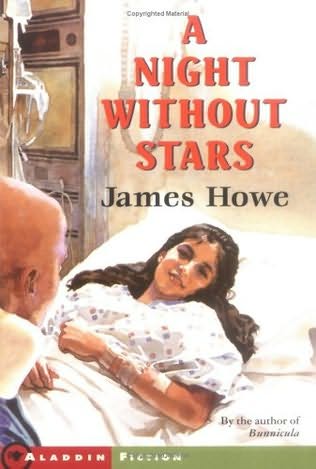
A Night Without Stars by James Howe. A young girl must undergo open-heart surgery, but no one will tell her what’s going on. This story explores her fear and her friendship with another patient at the hospital.
Welcome to Your Brain: Why You Lose Your Car Keys But Never Forget How to Drive and Other Puzzles of Everyday Life by Sandra Aarnodt and Sam Wang. An “owner’s manual” for your brain, this book covers a wide range of everyday topics helping describe how the brain works. Welcome to Your Brain manages to be informative, interesting and easy-to-read. Too Young to Die by Lurlene McDaniel. A talented high school student learns new lessons when she is diagnosed with leukemia. This is a touching story of friendship and life that also describes the diagnosis of cancer and the treatment process. A moving and informative story for all young adults learning about life.
Thursday, November 4, 2010
Next Steps to Understanding Blood Cancer

Last week, we started talking about the different types of blood cancer: leukemia, lymphoma and myeloma and the importance of research into them. I hope you are gaining an understanding of some of the distinguishing characteristics.
Hang on, though; we're not done yet! We saw last week that the different blood cancers can be distinguished partly based on the type of cell involved, myeloid or lymphoid. In addition, leukemia is broken down by growth characteristics. There is fast-growing leukemia, called acute leukemia, or slower-growing leukemia, called chronic leukemia. This means the general classifications of leukemia are:
- acute myeloid leukemia (AML)
- acute lymphoid leukemia (ALL)
- chronic myeloid leukemia (CML)
- chronic lymphoid leukemia (CLL)
 Furthermore, lymphomas are classified as Hodgkin lymphoma and non-Hodgkin lymphoma.
- Hodgkin lymphoma is defined by the presence of a certain type of large, malignant (cancerous) cell, called a Reed-Sternberg cell, in the lymphoma tissue.
- Non-Hodgkin lymphoma is a diverse group of cancers containing the remaining types of lymphoma.

I only go through all this because, as I mentioned last week, these are each very distinct diseases.
- Hodgkin lymphoma is more common in children and young adults. In contrast, the risk for developing non-Hodgkin lymphoma increases with age and typically appears between the ages of 40 and 70.
- The median age of a myeloma patient is 70-years-old, and it rarely occurs in anyone under the age of 45.
- Of the leukemias, children most often develop ALL, whereas adults most often develop AML.
- Gleevec is a successful treatment for CML patients with a particular mutation, called BCR-Abl, but it is not used to treat CLL.
- The five-year survival rates for each type of leukemia are dramatically different:
- AML: 24.2%
- ALL: 66.4%
- CML: 54.6%
- CLL: 79.7%
One area under investigation is understanding the different genetic changes that cause the cancer. The next step would be to identify which genetic change, or mutation, each patient has, and then they can receive the best treatment for their disease, called personalized medicine.
For instance, a patient with the BCR-Abl mutation can be given Gleevec, and a patient who does not have that mutation can be given a different treatment, because Gleevec won't work for them.
Researchers are working hard to identify cancer-causing mutations as well as therapies targeted to those mutations. This type of innovative research will help increase the five-year survival rates for all cancers.
Wednesday, November 3, 2010
The Power of a Lame Duck

We had an election yesterday, and, as you've no-doubt heard, many members of Congress lost their seats. Interestingly, they haven't yet lost their jobs. The newly elected members of Congress don't take their seats until January 3, 2011, and, because the exiting Congress was unable to finish some important matters on their agenda before leaving for campaign season, they will have to return after the election. This is commonly referred to as a lame duck session.
There is a lot of fear of the lame duck session, particularly of the lame duck members who lost their seats in the election, because they are thought to no longer be accountable. There is whispering that these members might pass bills that wouldn't have been debated during the campaign season or that won't get passed in the next Congress. This fear is especially rampant in years that a congressional house changes party, such as this year.
However, Norman Ornstein argues that many of these fears are unfounded. Besides, it’s perennially the incoming party that is fearful of a lame duck Congress…until it’s their turn. Most of the whispering is just hot air.
In fact, the lame duck session is incredibly important, not something to fear. Any bills that are still pending at the end of this session are considered dead and will have to be reintroduced in the new Congress and go through the whole process all over again—what a waste of time! The lame duck session will allow many of the pending issues one last chance to be debated before going to the graveyard.
An incredibly important piece of legislation that we hope this lame duck Congress will take up is the Stem Cell Research Advancement Act (H.R. 4808 and S. 3766), which would allow federal funding of embryonic stem cell research (ESCR). As we've seen in the past few months, the funding for this important area of investigation is volatile, with a single judge able to gridlock the country’s research.
Fixing this problem is time-sensitive because we cannot afford to have these gridlocks occur over and over again. Research cannot be stopped and started intermittently, particularly when working with sensitive materials like embryonic stem cells. It can take researchers weeks or months to prepare for important experiments--that time is lost when research is halted, and doubled when research is restarted. Furthermore, if these experiments are discontinued prematurely, all the data can be lost.
 ESCR legislation has been passed by both houses of Congress twice before, only to be vetoed by President Bush. In addition, Research!America polls show that a majority of Americans think that the government should fund ESCR. So why don’t we have a law to reflect how the people feel?
Please, urge your representative and senator to pass the Stem Cell Research Advancement Act (H.R. 4808 in the House and S. 3766 in the Senate) this year. Let’s put those lame ducks to work.
Thursday, October 28, 2010
Breaking Down Blood Cancer

A few days ago we talked about how blood cancer research is important for understanding other cancers as well. To help all of that make sense, today I’ll go through the basics of blood cancer.
Cancer is characterized by the uncontrolled growth of cells. Although they have this growth characteristic in common, different types of cancer, such as lung cancer, breast cancer, and skin cancer, are actually separate diseases. To make things even more complex, blood cancer is itself comprised of several different diseases.
Blood cancers are characterized by the uncontrolled growth of cells in the bone marrow and lymphatic system, often called white blood cells. Let’s start at the beginning. All blood cells originate in the bone marrow. They develop along very particular paths into two major lineages called myeloid cells and lymphoid cells.
 Both myeloid and lymphoid cells are part of the immune system. Myeloid cells, like granulocytes, fight disease-causing agents non-specifically. In contrast, lymphoid cells, B- and T-cells, are immune cells that each recognize a specific substance as foreign.
 Any of these cell types can be involved in cancer if they are induced to grow uncontrollably (for instance, by mutations in the DNA). Leukemia, lymphoma and myeloma are the most common blood cancers, distinguished by the origin and type of cell involved.
Leukemia originates in the bone marrow and can involve either myeloid or lymphoid cells.
In contrast, lymphomas originate in the lymphatic tissue, particularly the lymph nodes. In addition, lymphomas are lymphoid in origin, involving B- or T-cells. Unlike leukemia, where the cancer cells circulate in the blood, lymphomas actually form a solid tumor.
Myeloma, like leukemia, originates in the bone marrow, but it involves a very particular cell called a plasma cell, which comes from a B-cell, a lymphoid cell.
This table might help to keep it all straight:
 By studying and understanding normal blood development, researchers can better understand what is occurring in cancer. And, as we saw a couple days ago, understanding blood cancer can lead to breakthroughs in other cancers as well. The beauty of research is you never know what you're going to learn, which just illustrates the importance of supporting all types of research.
Wednesday, October 27, 2010
Meet Jackie Maffucci, PhD, Human Protections Research Scientist

Today we’re introducing you to New Voice, Jackie Maffucci, Human Protections Research Scientist who is working as a contractor for the military.
NV: What do you do?
Jackie: I am a contractor for the military. I work for an independent agency to supplement the government workforce. I have worked on three different contracts since starting here.
First, I worked in a policy office where I was focused on the policies providing health and medical support for the troops.
Then I was part of a project in which I worked directly with service members, helping to get them compensation for traumatic injuries.
Now I am working to provide oversight to the institutions within the Army that perform research using human subjects. I help ensure that the use of human subjects follows Department of Defense and Army regulations. Some of this work includes reviewing assurances (agreements between the research institutions and our office stating that they will follow these regulations) and human research protections plans (which outline how they are going to follow these regulations).
NV: What is the most exciting part of what you do?
Jackie: I like that I am helping service members on a daily basis. I really enjoy interacting with people because I feel in “real time” that I’m making a difference. When I correspond on a screen or on paper, I can’t vary my message to make sure that my audience is receiving it, but when I am directly interacting with someone, I can. There is an inherent reward in that.
NV: Who’s your role model?
Jackie: Mrs. Krueger, my eighth grade science teacher. She really encouraged me to pursue science even though I was leaning toward English. She helped me realize that a lot of what I loved about the humanities can carry over into science, like creativity. Science isn’t boring; it’s interactive and creative! Mrs. Krueger really made me recognize my potential.
NV: What advice would you give to someone who wants to get involved in advocacy and/or outreach?
Jackie: Just do it. Find a way to do it. There are some small things you can start with like writing a blog, or even making comments on other blogs. You can write an article about a subject you care about and submit it to a journal or a local newspaper. You can get involved with a scientific society; most have a policy board. Or you can get in touch with a member of Congress and volunteer to be involved in their science advising. There are plenty of opportunities out there, just find the time.
NV: What one thing would you change about the culture of science?
Jackie: I get the impression from my interactions with scientists that they think their role is to make the discoveries, but not necessarily to describe those discoveries to the public. But, if the scientists don’t take the time to explain the work, then the usefulness of their research gets lost in translation. Publishing is not where their job ends, it’s where their job begins. It’s the scientist’s duty to talk about the importance of their work and represent it honestly to the public and policy makers, as well as their colleagues.
Some of you may remember that Jackie was a regular blogger for New Voices from September 2009 through January 2010 - including the excellent From Ideas to Treatments series on clinical research. We thank Jackie for giving us some time to learn more about her current position and her passion for science and outreach.
This is part of the ongoing Profiling New Voices series.
Subscribe to:
Posts (Atom)