The Food and Drug Administration (FDA) goes through an enormous amount of work to ensure that our pharmaceuticals are safe and effective. It also, however, has to ensure that they’re real.
A recent 60 Minutes report examined the growing problem of counterfeit and poor-quality medicines. The story is yet another reminder that the FDA needs better financial support for its research and monitoring efforts, and that Congressional budget cuts to the agency could have a direct effect on you and your medicine cabinet.
For more on FDA’s regulatory work abroad, check out this Nature Medicine story, written by myself.
Showing posts with label Food for Thought. Show all posts
Tuesday, April 5, 2011
Monday, January 24, 2011
The Science of Beer

With the Super Bowl just around the corner you can bet that beer sales will get a major boost. This year, I urge you take a moment and think about where beer comes from and how it’s made.
All beer includes four basic ingredients: water, malt, hops, and yeast. Beer is mostly water and for that reason, it is important to start with high quality water, but brewers have a variety of standards. Some breweries use filtered water - several Belgian microbreweries even use spring water! The Brooklyn Brewery in New York prides itself on using New York City tap water.
The first step in brewing involves bringing water to a boil and combining it with malt extract, which is a monosaccharide. Malts come in dozens of varieties and can impart a diverse set of flavors from almonds, to coffee, to chocolate.
Hops are also added into the wort (unfermented beer) during the boiling process. It turns out that hops are actually flowers and are in the same family as Cannabis sativa. Like malt, hops come in wide variety of flavors, but are used to add bitterness, which is measured using the alpha acid (AA) scale. Milder beers typically have an AA of 3-5% whereas stronger ales like India Pale Ale’s may use hops with AA ratings as high as 14%.
Many people are surprised to learn that yeast is actually fungus and for every style of beer, there is a variety of yeast that is perfectly adapted to it. Yeast is really the workhorse of beer as it converts the malt sugars into alcohol and carbon dioxide. But the yeast can also add flavor and complexity to beer. For example, when wheat beer is fermented at lower temperatures (60 degrees F) the yeast will impart a distinct clove flavor. But raise the fermentation temperature to 70 degrees, and the yeast adds a banana overtone.
So the next time you enjoy a cold one, remember all the science behind beer. Cheers!
Want to read more?
Check out these posts from the New Voices archives: Draft Beer, Not People and St. Patrick's Day Special: Beer.
Want to read more?
Check out these posts from the New Voices archives: Draft Beer, Not People and St. Patrick's Day Special: Beer.
Labels:
Food for Thought,
science
Tuesday, December 28, 2010
Thursday, December 23, 2010
Gluten-Free Baking
For all of those struggling with food allergy this holiday season, here are some tips on gluten-free baking that are also good for those who want to try something new and healthy.
Labels:
Food for Thought
Friday, December 10, 2010
Moving Beyond the Waistline
Digging into the New Voices archives today, we found this great unpublished post by New Voice Takao Yamada written in summer 2009. The question at hand is timely as we head into new-year-resolution-making season.
I’m 6’2” tall. I weigh 200 pounds. I exercise 5 times a week for about 45+ minutes. I generally watch what I eat, but I cheat every now and then. All in all I lead a pretty healthy life, but by the standard BMI calculation I need to drop about ten pounds because I’m overweight.
But apparently that means that I’m going to live longer. So I got that going for me.
A June 2009 study published in the journal Obesity, found that those in the category of overweight showed 17% lower risk of dying that those in the bracket for normal weight. People who were underweight had a 73% higher risk of dying. The study accounted for any of the conflating life style impacts (smoking, age, gender, alcohol, etc.) This comes on top of studies showing that obesity was a protection against tuberculosis and other diseases suggest that what we think of as optimal weight may be incorrect.
Before this goes further, let me clarify one important point. I am not talking about obesity. I am not suggesting that obesity is not a serious problem for adults or children. I’m talking about people, like myself, who are active but above their “optimal” weight.
It seems likely that some of this is due to the fact that so much of our conception of weight related health is focused on heart problems. Heart attacks and high blood pressure are the concepts we most associate with being overweight, but perhaps in focusing too much on heart health we have lost sight of a more holistic approach to what constitutes a healthy body. It could be that activity level and metabolic health are far better markers in determining what constitutes a normal healthy body.
I’m not about to join Health at Every Size or start reading Fatshonista, but I do think it’s worthwhile to consider that we have focused too much on pure BMI without considering whether or not there are other health risks we have conflated with BMI. When we see studies that declare that higher body weights are linked clearly to “all-cause” mortality, maybe it’s an issue of the life style that often surrounds being overweight and not being overweight itself.
I'm not saying that obesity is healthy or that we shouldn't focus on healthy life style choices. I'm just suggesting we consider expanding our definition of healthy weight. This may just be an excuse for me to eat the occasional donut, but I still think these questions are worth asking.
I’m 6’2” tall. I weigh 200 pounds. I exercise 5 times a week for about 45+ minutes. I generally watch what I eat, but I cheat every now and then. All in all I lead a pretty healthy life, but by the standard BMI calculation I need to drop about ten pounds because I’m overweight.
But apparently that means that I’m going to live longer. So I got that going for me.
A June 2009 study published in the journal Obesity, found that those in the category of overweight showed 17% lower risk of dying that those in the bracket for normal weight. People who were underweight had a 73% higher risk of dying. The study accounted for any of the conflating life style impacts (smoking, age, gender, alcohol, etc.) This comes on top of studies showing that obesity was a protection against tuberculosis and other diseases suggest that what we think of as optimal weight may be incorrect.
Before this goes further, let me clarify one important point. I am not talking about obesity. I am not suggesting that obesity is not a serious problem for adults or children. I’m talking about people, like myself, who are active but above their “optimal” weight.
It seems likely that some of this is due to the fact that so much of our conception of weight related health is focused on heart problems. Heart attacks and high blood pressure are the concepts we most associate with being overweight, but perhaps in focusing too much on heart health we have lost sight of a more holistic approach to what constitutes a healthy body. It could be that activity level and metabolic health are far better markers in determining what constitutes a normal healthy body.
I’m not about to join Health at Every Size or start reading Fatshonista, but I do think it’s worthwhile to consider that we have focused too much on pure BMI without considering whether or not there are other health risks we have conflated with BMI. When we see studies that declare that higher body weights are linked clearly to “all-cause” mortality, maybe it’s an issue of the life style that often surrounds being overweight and not being overweight itself.
I'm not saying that obesity is healthy or that we shouldn't focus on healthy life style choices. I'm just suggesting we consider expanding our definition of healthy weight. This may just be an excuse for me to eat the occasional donut, but I still think these questions are worth asking.
Labels:
Food for Thought,
health
Tuesday, November 23, 2010
Diabetic Thanksgiving: Delicious & Nutritious
Continuing our look at healthy Thanksgiving fare, here are a few recipes geared for a most delicious & nutritious national holiday. Don't let the lack of added sugar fool you - these diabetic-friendly recipes are great for everyone.!
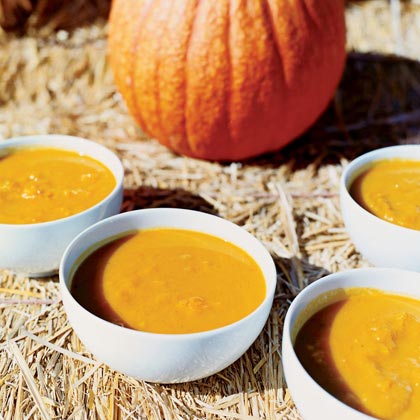
Pumpkin Soup
A warm treat to start everyone off while the turkey rests.
Ingredients: 6 cups pumpkin mash (either make your own with a sliced up pumpkin or can be found in cans at the grocery store), ~1 cup cream (light or heavy depending on how thick you want the soup), 1 yellow onion, olive oil, cumin, allspice (nutmeg, cinnamon, and ginger are all easily found separately too). Optional spice: cardamom.
Dice onion and saute in olive oil at bottom of a stew pot until clear. Add pumpkin mash, stirring until well blended with onions throughout. Add cream and spices to liking. Simmer for at least one hour, stirring intermittently. Taste occasionally and season as appropriate.
Asparagus with Cranberries
Combine two awesome side-dishes without the sugar.
Ingredients: 1 bunch asparagus, 1/2 cup of cranberries, salt, pepper, olive oil
Bring a medium pot of water to boil. Cut the asparagus into 1 inch segments, and boil with cranberries for 3 to 5 minutes (add the flower end with only 2 minutes left to go to avoid mushiness).
Drain and toss with a little bit of olive oil and salt and pepper to taste.
Mashed Sweet Potatoes
Great as a holiday dish or a way to quickly adapt leftovers.
Ingredients: 4 sweet potatoes, 1 apple or pear, allspice (or nutmeg, cinnamon & ginger), salt and pepper to taste. Optional: butter, for consistency.
Wrap sweet potatoes in aluminum foil and bake until soft throughout. Remove skin and discard.
In the same oven, bake a peeled apple or pear until soft.
Dice up softened fruit and add to the sweet potatoes. Mash in your preferred method (a fork should do it if everything is cooked through enough), and add spices to taste. Optionally, add butter to make the blending process a little smoother.
Come by tomorrow for a fun fact about sweet potatoes versus yams!
More Thanksgiving posts from New Voices
Thanksgiving Recipes
A Second Helping of Thanksgiving
Vegan Thanksgiving
Pumpkin Soup
Ingredients: 6 cups pumpkin mash (either make your own with a sliced up pumpkin or can be found in cans at the grocery store), ~1 cup cream (light or heavy depending on how thick you want the soup), 1 yellow onion, olive oil, cumin, allspice (nutmeg, cinnamon, and ginger are all easily found separately too). Optional spice: cardamom.
Dice onion and saute in olive oil at bottom of a stew pot until clear. Add pumpkin mash, stirring until well blended with onions throughout. Add cream and spices to liking. Simmer for at least one hour, stirring intermittently. Taste occasionally and season as appropriate.
Special note on spices: freshly ground or zested spices will carry more flavor than dried spices. That being said, nutmeg is incredibly strong in any form and should added incrementally to taste. Always let simmer an additional five to ten minutes after adding more spices.
Asparagus with CranberriesCombine two awesome side-dishes without the sugar.
Ingredients: 1 bunch asparagus, 1/2 cup of cranberries, salt, pepper, olive oil
Bring a medium pot of water to boil. Cut the asparagus into 1 inch segments, and boil with cranberries for 3 to 5 minutes (add the flower end with only 2 minutes left to go to avoid mushiness).
Drain and toss with a little bit of olive oil and salt and pepper to taste.
Mashed Sweet Potatoes
Ingredients: 4 sweet potatoes, 1 apple or pear, allspice (or nutmeg, cinnamon & ginger), salt and pepper to taste. Optional: butter, for consistency.
Wrap sweet potatoes in aluminum foil and bake until soft throughout. Remove skin and discard.
In the same oven, bake a peeled apple or pear until soft.
Dice up softened fruit and add to the sweet potatoes. Mash in your preferred method (a fork should do it if everything is cooked through enough), and add spices to taste. Optionally, add butter to make the blending process a little smoother.
Come by tomorrow for a fun fact about sweet potatoes versus yams!
More Thanksgiving posts from New Voices
Thanksgiving Recipes
A Second Helping of Thanksgiving
Vegan Thanksgiving
Labels:
Food for Thought,
health,
holiday
Monday, November 22, 2010
Vegan Thanksgiving
You can't think about Thanksgiving without thinking about food, and since we at New Voices are all about healthy minds and bodies, we want to keep your food focused thoughts on some healthy alternatives this Thanksgiving week. This quickly led us to long time friend of New Voices, Dana Loy. Today, Dana will be sharing her experience in celebrating this poultry-centric holiday as a vegan.
After looking through the Trader Joe's turkey-gravy-and-stuffing advertisement mailed to my house in early November, I came to the official conclusion that Thanksgiving is the least vegan-friendly holiday ever.
After all, the crowning achievement of any holiday table in America is a golden, roasted fowl--the bigger, the better. Fortunately, it's easier to survive Thanksgiving as a vegan than one would initially think. Over the past two years, it's been nothing but fun for me to dispel people's stereotypical notions of "vegan Thanksgiving" as a slab of Tofurkey and a plateful of limp broccoli.
Perhaps the most essential tools in any vegan Thanksgiving arsenal are replacement foods. Earth Balance buttery spread is a staple in my refrigerator; it comes in both stick and tub form, perfect for spreading on rolls and for baking into cookies and pies. Tofutti makes a vegan sour cream that works especially well when blended into mashed potatoes (or dolloped onto nachos any other time of the year).
Soy milk is an excellent dairy substitute for any creamy dish; for nuttier flavors or different nutritional benefits, almond milk and hemp milk are personal favorites and particularly good in cinnamon-y baked goods. Egg replacements can run the gamut from ground flaxseed or oil to applesauce or silken tofu and are easy to find with a quick Internet search. (Just don't tell anyone about the tofu--I've found it has a surprisingly negative affect on omnivores' appetites.) And of course, flavorful vegetable broth is an easy substitute for chicken, beef, or turkey broth. Armed with these products, most of which are available at your local grocery, co-op, or health food store, you're able to substitute vegan ingredients in traditional recipes to veganize almost any Thanksgiving dish you can imagine.
Any dish, that is, except for the turkey. What to do for a main dish? Personally, I'd rather just eat the side dishes with no main course. The sides are the best part of Thanksgiving anyways! If you really want a main dish to fill you up, I'd suggest a stuffed acorn squash, a veggie pot pie with sliced portabello mushrooms, or for a meatier substitute, a seitan-based recipe (such as Vegan Yum Yum's Seitan Roulade with Chestnut Stuffing).
Once the initial shock of Thanksgiving without a turkey subsides, you'll find that there's a whole host of animal-free substitutes just begging to find a way onto your holiday dinner plate. Although you may seem overwhelmed heading into Thanksgiving as a vegan, you'll quickly find that many other vegheads are in the same situation. Take a few deep breaths and plan your menu with your personal tastes in mind.
If you're hosting dinner and feel comfortable having meat in your house, you may want to ask some omnivore guests to bring a small turkey or order a pre-cooked turkey from a grocery store. If you're attending a dinner at a meat-eater's home, be sure to contact your host ahead of time and ask what's on the menu. Don't expect them to go out of their way to prepare special dishes just for you, but offering to provide them with some of the vegan ingredients mentioned above may lead to more animal-free dishes at the gathering.
If your host isn't amenable to using vegan ingredients, I'd suggest preparing a few vegan dishes to bring and share (I usually go with two sides and a dessert) so that you'll have something to eat without inconveniencing anyone. And who knows? Once people taste the pure goodness of vegan cooking, they might be willing to try some animal-free recipes themselves. Spread the vegan love!
Dana Loy is a PhD student at University of Wisconsin Madison in the Department of Curriculum and Instruction. Dana is a long time follower of New Voices and we're thrilled she took the time to be a guest blogger.
More Thanksgiving posts from New Voices
Thanksgiving Recipes
A Second Helping of Thanksgiving
| Oh no! Not vegan Thanksgiving! |
After all, the crowning achievement of any holiday table in America is a golden, roasted fowl--the bigger, the better. Fortunately, it's easier to survive Thanksgiving as a vegan than one would initially think. Over the past two years, it's been nothing but fun for me to dispel people's stereotypical notions of "vegan Thanksgiving" as a slab of Tofurkey and a plateful of limp broccoli.
Perhaps the most essential tools in any vegan Thanksgiving arsenal are replacement foods. Earth Balance buttery spread is a staple in my refrigerator; it comes in both stick and tub form, perfect for spreading on rolls and for baking into cookies and pies. Tofutti makes a vegan sour cream that works especially well when blended into mashed potatoes (or dolloped onto nachos any other time of the year).
Soy milk is an excellent dairy substitute for any creamy dish; for nuttier flavors or different nutritional benefits, almond milk and hemp milk are personal favorites and particularly good in cinnamon-y baked goods. Egg replacements can run the gamut from ground flaxseed or oil to applesauce or silken tofu and are easy to find with a quick Internet search. (Just don't tell anyone about the tofu--I've found it has a surprisingly negative affect on omnivores' appetites.) And of course, flavorful vegetable broth is an easy substitute for chicken, beef, or turkey broth. Armed with these products, most of which are available at your local grocery, co-op, or health food store, you're able to substitute vegan ingredients in traditional recipes to veganize almost any Thanksgiving dish you can imagine.
Any dish, that is, except for the turkey. What to do for a main dish? Personally, I'd rather just eat the side dishes with no main course. The sides are the best part of Thanksgiving anyways! If you really want a main dish to fill you up, I'd suggest a stuffed acorn squash, a veggie pot pie with sliced portabello mushrooms, or for a meatier substitute, a seitan-based recipe (such as Vegan Yum Yum's Seitan Roulade with Chestnut Stuffing).
Once the initial shock of Thanksgiving without a turkey subsides, you'll find that there's a whole host of animal-free substitutes just begging to find a way onto your holiday dinner plate. Although you may seem overwhelmed heading into Thanksgiving as a vegan, you'll quickly find that many other vegheads are in the same situation. Take a few deep breaths and plan your menu with your personal tastes in mind.
If you're hosting dinner and feel comfortable having meat in your house, you may want to ask some omnivore guests to bring a small turkey or order a pre-cooked turkey from a grocery store. If you're attending a dinner at a meat-eater's home, be sure to contact your host ahead of time and ask what's on the menu. Don't expect them to go out of their way to prepare special dishes just for you, but offering to provide them with some of the vegan ingredients mentioned above may lead to more animal-free dishes at the gathering.
If your host isn't amenable to using vegan ingredients, I'd suggest preparing a few vegan dishes to bring and share (I usually go with two sides and a dessert) so that you'll have something to eat without inconveniencing anyone. And who knows? Once people taste the pure goodness of vegan cooking, they might be willing to try some animal-free recipes themselves. Spread the vegan love!
Dana Loy is a PhD student at University of Wisconsin Madison in the Department of Curriculum and Instruction. Dana is a long time follower of New Voices and we're thrilled she took the time to be a guest blogger.
More Thanksgiving posts from New Voices
Thanksgiving Recipes
A Second Helping of Thanksgiving
Labels:
education,
Food for Thought,
guest post,
holiday
Friday, September 24, 2010
Family, Food, & Fun Friday
Kate's Memories
Have you noticed that it’s cooler in the mornings and the air is crisper? Fall is sneaking up on us! I love the fall. I am a hiker, and the fall is one of the best times of the year to get out on the trails. The trees are changing colors, the temperature is comfortable and the air just smells like autumn.
I distinctly remember hiking in Hocking Hills with my family when I was a kid at least once every fall. It was always such a treat—we packed a lunch, got out our hiking shoes, and piled in the car. On the trail, we would find the brightest leaves to press between wax paper or pick up the perfect walking stick along the way.
I had no idea that those hiking trips in my childhood would shape who I am today.
Growing up, my family of five was busy. Somehow, despite softball and swim team practices, my working mom going back to school and my dad commuting from Miami, we managed to eat together almost every night. Many of those dinners are now a blur, but some of the more memorable were pizza nights.
Sure, we all loved pizza (I am Italian-American after all!) but pizza night was special because we got to make our own. Together we'd add homemade sauce, pepperoni, olives, green peppers, mushrooms, and lots of cheese onto dough we'd smushed onto cookie sheets. Our pizzas were special because they: 1. messy 2. rectangular 3. brought us together.
Our advice
Studies show that kids from families that eat dinner together regularly are happier and healthier. So how can you make pizza night just as fun and doubly healthy? Here are some deliciously good-for-you options:
- Use whole wheat pizza dough or purchase a pre-made whole-wheat pizza dough (make sure there are no hydrogenated oils in the ingredients).
- Try low-fat/reduced-fat mozzarella (or other cheese) to reduces the fat and cholesterol.
- Make your own sauce: To sauteed onions and garlic add 1 can of crushed tomatoes, a teaspoon each of parsley, basil, and oregano, and a splash of milk (or pinch of baking soda). Delicious and less salt, sugar and preservatives than jarred sauce.
- Load the pizza with veggies to give an added health boost and fill you up.
- Put your pizza on the grill.
- Substitute chicken- or turkey-sausage or pepperoni for less fat and cholesterol.
- Or try this collection of healthy pizza recipes.
- You can take a walk in a nearby park or in your neighborhood to enjoy the changing colors of the trees.
- You can rake those leaves into a pile and jump into them with your kids and be a kid again, even if just for a moment.
As the weather cools, there are plenty of ways to stay active even indoors.
- Pull out your favorite music and dance around the house with your kids. You can stage your very own version of American Idol.
- Play Simon Says with your kids and see who can follow the fitness moves.
Labels:
entertainment,
Food for Thought,
health,
holiday
Thursday, September 23, 2010
Deaf Awareness Week
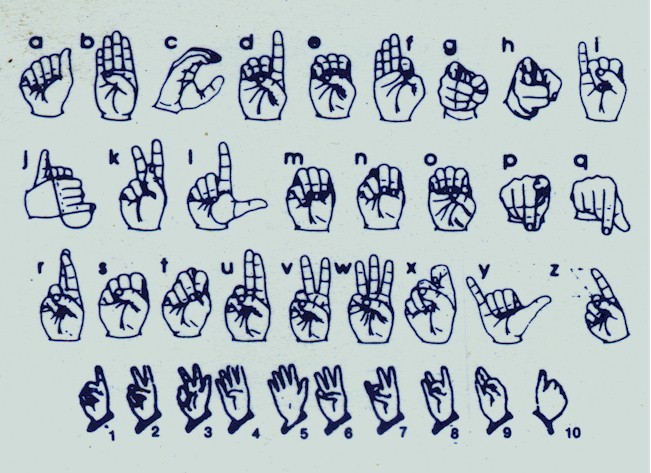
| Sign language alphabet |
- The air conditioner in my office building whirring.
- Keys on my computer's keyboard clicking.
- Colleagues down the hall quickly chatting.
When I step outside there'll be:
- Birds chirping.
- Bugs buzzing.
- Radios playing in passing cars as their engines purr (or putz) and their tires crunch minuscule gravel on the road.
This morning, I missed a call from my boss because I didn't hear my phone ring while on the metro and it caused a two hour period of intense work. All because I couldn't hear my phone for a few minutes in a tunnel.
But what if I could never hear my phone? What if I could never hear my doorbell ring, or my alarm clock go off, or that pesky alert-thing from Outlook that tells me it's time for my next meeting?
As we go about our hearing lives this week, take a moment to reflect on what it might be like to be deaf in today's society. Sure, research has done marvelous things to help people (like me) be able to hear and there are a number of fabulous ways that deaf Americans have adapted to living in a hearing society; but we are just that - a hearing society.
What would your day have been like if you couldn't hear today?
Labels:
Food for Thought,
holiday
Wednesday, September 22, 2010
Tuesday, August 10, 2010
Basic Instinct
Basic v Applied Research:Any experience in life can be reduced to groups of cells firing in your brain. Whether you move your foot, see the color green, smell a rose, or reflect on a childhood memory, neurons rapidly changing their electrical and chemical state are responsible.
In graduate school I had an opportunity to observe and record the firing patterns of individual neurons in a variety of brain regions. To measure the activity of a single brain cell in an non-anesthetized animal (which is important because drugs effect brain activity), an elegant technique called single-unit electrophysiology is employed. An electrode thinner than a human hair is slowly lowered into the brain, and the tiny changes in electrical properties expressed by neurons are amplified and recorded.
Over the course of a few years, and possibly at the expense of my sanity, I isolated and recorded the firing patterns of about three hundred visual neurons. This allowed me to characterize how cells in a specific brain region increased and decreased their activity, as well as better understand what nearby neurological areas the signals were transmitted to. Compared to trying to cure cancer or inventing a new fuel source, how important is this type of research?
Doing science for the sake of science is called basic research. It often has no obvious health or commercial application but is the source of most new scientific ideas. Basic research is usually descriptive or explanatory, and pushes a scientific or technical field forward by adding to the knowledge base and provoking new questions. Perhaps the most powerful example is modern computers, which would not exist without the 200 years worth of pure research in mathematics that preceded them.

In contrast to basic is applied research. Essentially, applied research is designed to solve practical problems of the modern world, rather than to acquire knowledge for knowledge's sake. Applied research is often aimed at somehow improving the human condition. Examples range from developing a drug that treats a specific disease to studying how urban environments can become more energy efficient. The benefits of applied research projects are more obvious and immediate, which helps them to be viewed positively by the general public and federal funding agencies.
It makes sense to want to improve health or stumble upon another multi-billion
dollar commercial application (yes, we're looking at you Gatorade), but is it fair for basic and applied researchers to fight for money from the same source? In the days of Sputnik and the Cold War, funding for basic research thrived, but with a squeezed economy and a struggle for funding in all research areas are basic researchers suffering more? The need to advocate for research, both basic and applied is more crucial now than ever.
Labels:
Food for Thought,
research
Friday, July 9, 2010
Bust Out the Grill this Weekend
The patio outside our office hovers in the 100's again today reminding us that it is definitely summer, and here at New Voices, we're all about seasonal good eating - both delicious and healthy (most of the time). When it comes to seasonal foods, nothing says summer like grilling.
Alissa on Steak
Here's a great article about entire meals for the summer, with a focus on grilling the perfect, mouth-watering steak. Reading this even made me crave a good steak (and I usually hate it!).
Heather on Fruits & Veggies
If you dislike doing dishes, grilling your side dish veggies and dessert can make clean up a breeze. Vegetables that taste great with a little olive oil and vinegar (try balsamic!) on the grill: asparagus, eggplant, and zucchini. Want a little sweet? Try grilling up sliced pineapple or cherry tomatoes. For the perfect combination of zing and spice, try stuffing pepperdews with sausage and a morsel of mozzarella and grill until they're caramelized. Healthy, quick, and perfect for summer get-togethers.
Ryan on Fish
Okay landlubbers - here's a little piece of Florida for the weekend. A friend of mine grills dolphin (mahi-mahi, not porpoise) using this recipe and it is fantastic. It would probably work well with any whitefish.
Use 2-3 inch chunks of fish (make sure the blood lines and skin are gone). Melt a stick of butter in a bowl and add finely grated parmesan cheese. You want to make a paste out of the bu
tter and cheese and it helps to make sure the melted butter has cooled (but is still liquid) before adding the cheese. Next add a generous amount of minced garlic, finely chopped onion, salt and pepper to the paste. Drop the chunks of dolphin into the paste, covering them. Then wrap a piece of bacon around the fish chunk, cover with more delicious butter/cheese paste, and use toothpicks to secure it. If you're feeling really wild, you can add a slice of onion or a chunk of tomato between the bacon and fish. Drop these fishy pieces of heaven on the grill for about 4 minutes per side. Bigger chunks might take a little longer. When you grill them, keep them away from the flame or heat source because the bacon burns easily.
That's what we like, what's your favorite thing to make on the grill?
Alissa on Steak
Here's a great article about entire meals for the summer, with a focus on grilling the perfect, mouth-watering steak. Reading this even made me crave a good steak (and I usually hate it!).
If you dislike doing dishes, grilling your side dish veggies and dessert can make clean up a breeze. Vegetables that taste great with a little olive oil and vinegar (try balsamic!) on the grill: asparagus, eggplant, and zucchini. Want a little sweet? Try grilling up sliced pineapple or cherry tomatoes. For the perfect combination of zing and spice, try stuffing pepperdews with sausage and a morsel of mozzarella and grill until they're caramelized. Healthy, quick, and perfect for summer get-togethers.
Ryan on Fish
Okay landlubbers - here's a little piece of Florida for the weekend. A friend of mine grills dolphin (mahi-mahi, not porpoise) using this recipe and it is fantastic. It would probably work well with any whitefish.
Use 2-3 inch chunks of fish (make sure the blood lines and skin are gone). Melt a stick of butter in a bowl and add finely grated parmesan cheese. You want to make a paste out of the bu
tter and cheese and it helps to make sure the melted butter has cooled (but is still liquid) before adding the cheese. Next add a generous amount of minced garlic, finely chopped onion, salt and pepper to the paste. Drop the chunks of dolphin into the paste, covering them. Then wrap a piece of bacon around the fish chunk, cover with more delicious butter/cheese paste, and use toothpicks to secure it. If you're feeling really wild, you can add a slice of onion or a chunk of tomato between the bacon and fish. Drop these fishy pieces of heaven on the grill for about 4 minutes per side. Bigger chunks might take a little longer. When you grill them, keep them away from the flame or heat source because the bacon burns easily.That's what we like, what's your favorite thing to make on the grill?
Labels:
Food for Thought
Wednesday, March 17, 2010
Pick Your Poison
Wine
It's good for your heart, it's got antioxidants, and it's pretty darn delicious too.
Rum
In addition to making a great fuel for a fire if you're ever stuck on a desert island with Johnny Depp, rum is derived from sugar cane juice, which can help relieve sore throats.
Green tea (well, it is all about the green today!)
Antioxidants abound in this non-alcoholic beverage as well, but green tea can also decrease your overall cholesterol.
Whiskey
Can't sleep? A shot of whiskey can help ease your transition to dreamland, especially when added to your hot beverage of choice.
Tequila
Taking a shot of tequila after dinner can help you digest your food faster. Long term studies have also shown that drinking moderate amounts of tequila can reduce your chances of dementia later in life.
Vodka
Did you ever notice it's hard to find peroxide when you get hurt? Turns out that if you can find your vodka first, it can also be used as a disinfectant.
*If you plan on celebrating with alcohol this St. Patrick's Day, please remember that health benefits have only been found when alcohol consumption is in moderation. Also, check with your city to see if there is a special taxi service available or choose a designated driver.
Labels:
Food for Thought,
health,
holiday
Monday, March 15, 2010
Give Me Chocolate or Give Me Death
There is nothing I enjoy more than eating chocolate. Chocolate bars, chocolate covered fruit, chocolate ice cream, chocolate candy, or chocolate cake… I am a true chocoholic.
Since it’s American Chocolate Week, I thought I’d celebrate by looking into the intimate details of how bad my addiction might be for me, how chocolate is made, and how far people will take their love of chocolate.
Hello. My name is Sarah, and I am a chocoholic.
Chocolate consumption has been linked to both positive and negative health effects. The cocoa bean used to make chocolate contains antioxidants which protect our body from damage. Chocolate also contains compounds that are shown to affect our mood by raising serotonin levels. However, these benefits need to be balanced against negative health effects from processing which can introduce high amounts of sugar and saturated fat. The healthiest choice is dark chocolate and is best in moderation.
Where do you come from? Where do you go? Where do you come from cacao?
Chocolate is made from cacao beans, which are grown on cacao trees. Did you know that cacao beans (also spelled cocoa beans) only grow within 10-15 degrees of the equator? Or that beans produced by a single tree can only make about 1 kg of chocolate per year? Also, the pods that contain the cocoa beans apparently grow directly from the tree’s trunk.
The cocoa bean is used to produce a variety of types of chocolate. The Food and Drug Association has determined standard percentages for key ingredients in different types of chocolate. One of the main ingredients in chocolate is chocolate liquor, which is made by fermenting, drying, and roasting cocoa beans. The beans are then separated from their shells and ground into a paste that is melted to produce the liquor. The liquor is about half cocoa solids and half cocoa butter and can then be used to make both milk and dark chocolate.
Milk chocolate must contain at least 10% chocolate liquor, while dark chocolate needs to be a minimum of 35% chocolate liquor. White chocolate is a bit different; it is made without using the cocoa solids. Instead of using the chocolate liquor, it is expected to contain at least 20% cocoa butter. On the other end of the spectrum is cocoa powder which is made by removing the cocoa butter.
I like it. I love it. I want some more of it.
People love chocolate so much it seems they will try putting it on absolutely ANYTHING. Weird chocolate covered items I stumbled across included chocolate covered bacon, chocolate covered jalapeño peppers, and insects dipped in chocolate including scorpions and giant ants. Bacon and jalapeño peppers I will probably try… bugs… no thank you.
What’s the strangest concoction you’ve eaten that includes chocolate? Since it is American chocolate week, which of the three well-known chocolate companies that got their start in America - Hershey’s, Mars, or Ghirardelli – is your favorite?
Since it’s American Chocolate Week, I thought I’d celebrate by looking into the intimate details of how bad my addiction might be for me, how chocolate is made, and how far people will take their love of chocolate.
Hello. My name is Sarah, and I am a chocoholic.
Chocolate consumption has been linked to both positive and negative health effects. The cocoa bean used to make chocolate contains antioxidants which protect our body from damage. Chocolate also contains compounds that are shown to affect our mood by raising serotonin levels. However, these benefits need to be balanced against negative health effects from processing which can introduce high amounts of sugar and saturated fat. The healthiest choice is dark chocolate and is best in moderation.
Where do you come from? Where do you go? Where do you come from cacao?
Chocolate is made from cacao beans, which are grown on cacao trees. Did you know that cacao beans (also spelled cocoa beans) only grow within 10-15 degrees of the equator? Or that beans produced by a single tree can only make about 1 kg of chocolate per year? Also, the pods that contain the cocoa beans apparently grow directly from the tree’s trunk.
The cocoa bean is used to produce a variety of types of chocolate. The Food and Drug Association has determined standard percentages for key ingredients in different types of chocolate. One of the main ingredients in chocolate is chocolate liquor, which is made by fermenting, drying, and roasting cocoa beans. The beans are then separated from their shells and ground into a paste that is melted to produce the liquor. The liquor is about half cocoa solids and half cocoa butter and can then be used to make both milk and dark chocolate.
Milk chocolate must contain at least 10% chocolate liquor, while dark chocolate needs to be a minimum of 35% chocolate liquor. White chocolate is a bit different; it is made without using the cocoa solids. Instead of using the chocolate liquor, it is expected to contain at least 20% cocoa butter. On the other end of the spectrum is cocoa powder which is made by removing the cocoa butter.
I like it. I love it. I want some more of it.
People love chocolate so much it seems they will try putting it on absolutely ANYTHING. Weird chocolate covered items I stumbled across included chocolate covered bacon, chocolate covered jalapeño peppers, and insects dipped in chocolate including scorpions and giant ants. Bacon and jalapeño peppers I will probably try… bugs… no thank you.
What’s the strangest concoction you’ve eaten that includes chocolate? Since it is American chocolate week, which of the three well-known chocolate companies that got their start in America - Hershey’s, Mars, or Ghirardelli – is your favorite?
Labels:
Food for Thought,
holiday,
random facts
Monday, March 8, 2010
A Personal Food Revolution
I am so excited for ABC’s new show, Food Revolution! Jamie Oliver, a British chef, will tackle the obesity epidemic in Huntington, West Virginia; the unhealthiest city in America. In six episodes, he will try to change how America eats, in our home kitchens, schools and jobs and make people more aware of their personal nutrition. I can’t wait until March 26!When people hear the word nutrition, they often only think of it in terms of weight loss. Nutrition isn’t just for those who want or need to lose weight, but it’s also important for daily functioning. Since I don’t eat red meat, I have to make a conscious effort to incorporate other sources of iron into my diet. If I don’t, I find that I get tired more easily.
I find it really hard to make time to make sure that I’m eating a proper diet, especially when it is so much easier to grab a meal from a fast food restaurant. Here are five tips that I’m using to try to eat a little bit healthier each day:
Try new ways to eat fruits and vegetables. I find it very hard to remember to get all of my servings in one day. Instead of picking up a daily cup of coffee, try a fruit smoothie. If you’re always on the go, try Fruit 2-Day. One bottle counts as two servings of fruit. I also like V8 Fusion; an 8-ounce serving gives you one serving of fruit and one serving of vegetables.
Shop at a farmer’s market. Farmer’s markets are the best places to get local and sometimes organic produce. The best times to shop are early weekend mornings, or mid-day during the week. Don’t forget to bring cash and a re-useable shopping bag!
Go meatless! It may seem drastic, but try skipping meat for one day a week. Research shows that going meatless once a week can lower rates of heart disease and help maintain a healthy weight. There are lots of great meatless recipes, or switch your usual meat with another protein such as salmon, soy products or lean cuts of chicken and turkey.
Grow a garden. I love the way fresh herbs taste! Cilantro, thyme, basil and mint can help spruce up your cooking and are relatively easy to grow your own herb garden on your windowsill. Besides helping flavor foods when cutting back on excess salt, fat and sugar, herbs may offer additional benefits of their own. Researchers are finding many herbs have antioxidants that may help protect against cancer and heart disease.
Splurge in moderation. Eating healthier doesn’t mean that we should cut out all of the things that make us happy. Try substituting your favorite comfort food for something healthier. For example, instead of having tubs of cookies and cream in my fridge, I try to always have fruit sorbet on hand.
This week, have a personal food revolution and try one of my tips for eating better. For more ideas and information on nutrition, check out the American Dietetic Association’s website. Happy healthy eating!
Labels:
Food for Thought,
health,
Opportunities,
public health
Monday, March 1, 2010
It's Peanut Butter Jelly Time!
Today is National Peanut Butter Day! This weekend I celebrated in advance and had two PB&J sandwiches; heavy on the peanut butter and the (reduced sugar) jelly. Here are some random facts about peanut butter:
• Americans eat about 700 million pounds of peanut butter each year.
• Women and children prefer creamy, while most men opt for chunky.
• People who become hysterical when peanut butter sticks to the roof of their mouth have 'arachibutyrophobia'.
Other than as a healthy snack or sandwich spread, did you know that peanuts have LOTS of uses? African American scientist, botanist, professor and inventor George Washington Carver is credited with conducting years of research on the peanut.
Carver’s 1916 research, How to Grow the Peanut and 105 Ways of Preparing it for Human Consumption, rescued the South’s economy. In the early 1900’s, boll weevils were destroying the cotton crops in Alabama. Farmers began to plant peanuts as their cash crop. Instead of cotton oil, mills were converted to make peanut oil.
During further research, Carver found more than 300 new uses for the peanut. He invented peanut-based foods, beverages, medicines, household products and cosmetics. Some of his most surprising inventions include laundry detergent, mayonnaise, diesel fuel, glue, rubber, shaving cream and hand lotion.
How do you plan on celebrating Peanut Butter Day?
Labels:
Food for Thought,
history,
holiday,
random facts
Monday, February 15, 2010
The View from Venus
Valentine’s Day has come and gone, but that doesn’t mean that we should stop thinking about hearts. Over the weekend I’m sure we all had our share of candy, chocolate and many other tasty treats in heart shaped forms. Although the human heart isn’t made of Godiva chocolate and doesn’t have a sweet message on one side of it, we still need it to live. Having a healthy heart is the key to a long and productive life. Heart disease (including heart attack and stroke) are among the top causes of death for people in the United States. Unfortunately, the statistics for women are even scarier. Heart disease is the number one killer of women in the United States.This week on New Voices, we will be focusing on women’s heart health (both literal and figurative) in our new series: The View from Venus. The topics that we will cover this week include: healthy body image, healthy relationships, mental health and cardiac health.
Labels:
Food for Thought,
health
Thursday, December 3, 2009
How To: Communicate with Food
Whenever I’m trying to describe something that is new or difficult to understand, I try to relate it to something else that my audience already understands. In my family, one of the best metaphors is food.
In a lot of ways, cooking is similar to lab work. Some experiments require precise timing, while in others the specificity of ingredients (materials) is more important. In both instances, if you want to recreate the final product, you have to take measurements, record each step, and think of variables that could effect the outcome next time (what if I use a different pan or the produce isn’t as fresh?).
But metaphors are not the only way to communicate with food. Sharing meals is a great way to learn to talk about what you do in an informal way. Without the networking pressures of a conference or academic setting, you’ll more freely be yourself, and your passion for your work will be obvious in how you talk about it. (Just be careful not to gesticulate with food on the end of your fork.) Moreover, sharing details over meals gives everyone time to listen and absorb as well as participate in the discussion.
Just a little food for thought for those of you looking for ways to more effectively communicate your ideas.
Labels:
Food for Thought,
How-To,
science communication
Tuesday, November 17, 2009
An Education for Our Educators
I was never much interested in science as a kid. I loved English… I read, I wrote, and I dreamed of being a writer when I grew up. Ms. Krueger changed that. She turned my attention to science, showing me not only that it was fun, but convincing me that I was good at it. She encouraged me to explore, ask questions, and praised me for a job well done. She made me feel proud of what I could do. In short, she empowered me.
Science was and is a challenging discipline for me; it never came easy. It’s this challenge that I love. There’s nothing like the feeling of success at finally decoding a concept that you’ve been working to understand for minutes, hours, or maybe even days. I got my first taste of this feeling in Ms. Krueger’s class. And now, twenty years later, I have a Ph.D. in neuroscience and a career in science policy.
As I was relating this to my mom, she mentioned my 5th grade math teacher, another favorite of mine. Although I never knew it, she revealed that during a parent-teacher conference years ago, he told her that I was not destined for a career in science. I’ve thought about that conversation a lot since then.
What would have happened if I had never had a Ms. Krueger in my life to encourage me to develop my interest in science? What if my fate had rested with those like my 5th grade teacher, who decided that because science was a difficult subject for me, it was not in my future, so best not to encourage it? Would I be a scientist still? I doubt it.
These thoughts then turned to myself, and my teaching career. Had I pre-judged my students, and in doing so, kept doors closed to them that should have been opened?
It is a strong part of human nature to observe and make judgments. I wonder how often those in a position of authority, such as teachers, role models, and mentors, have done just that, and in doing so suppressed rather than exposed opportunities. So, to those of you in these positions, remember my story the next time you are facing a student who may not excel in a subject, who might even struggle a bit, but looks to you all the same for inspiration and guidance. As shapers of the next generation of scientists, mathematicians, engineers, and writers, remember to always strive to open new doors, and never close them. You never know where a little bit of enthusiasm and encouragement will lead.
Labels:
education,
Food for Thought
Tuesday, November 10, 2009
I Want to Change the World
When I was a kid I wanted to be an astronaut. Maybe it was because I grew up in Florida and could see shuttle launches from my backyard. Or maybe it was because my family was addicted to science fiction like Star Wars and Star Trek. Getting to be the first woman to set foot on another terrestrial body was my entire mission in life. I even pretended astronaut ice cream tasted good (hint: if you eat it dry, it doesn't).
It turns out that because of a medical issue, I'll probably never get to go to space. For years I hoped that, like my hero Alan Shepard, I would outgrow it. But I've since resigned myself to a life here on Earth. It used to disappoint me, but my best friend told me something once that it took me a long time to believe: you don't have to be the president or an astronaut or have some powerfully huge job to make a difference in the world.
I imagine that many of you readers want to change the world, too. We can:
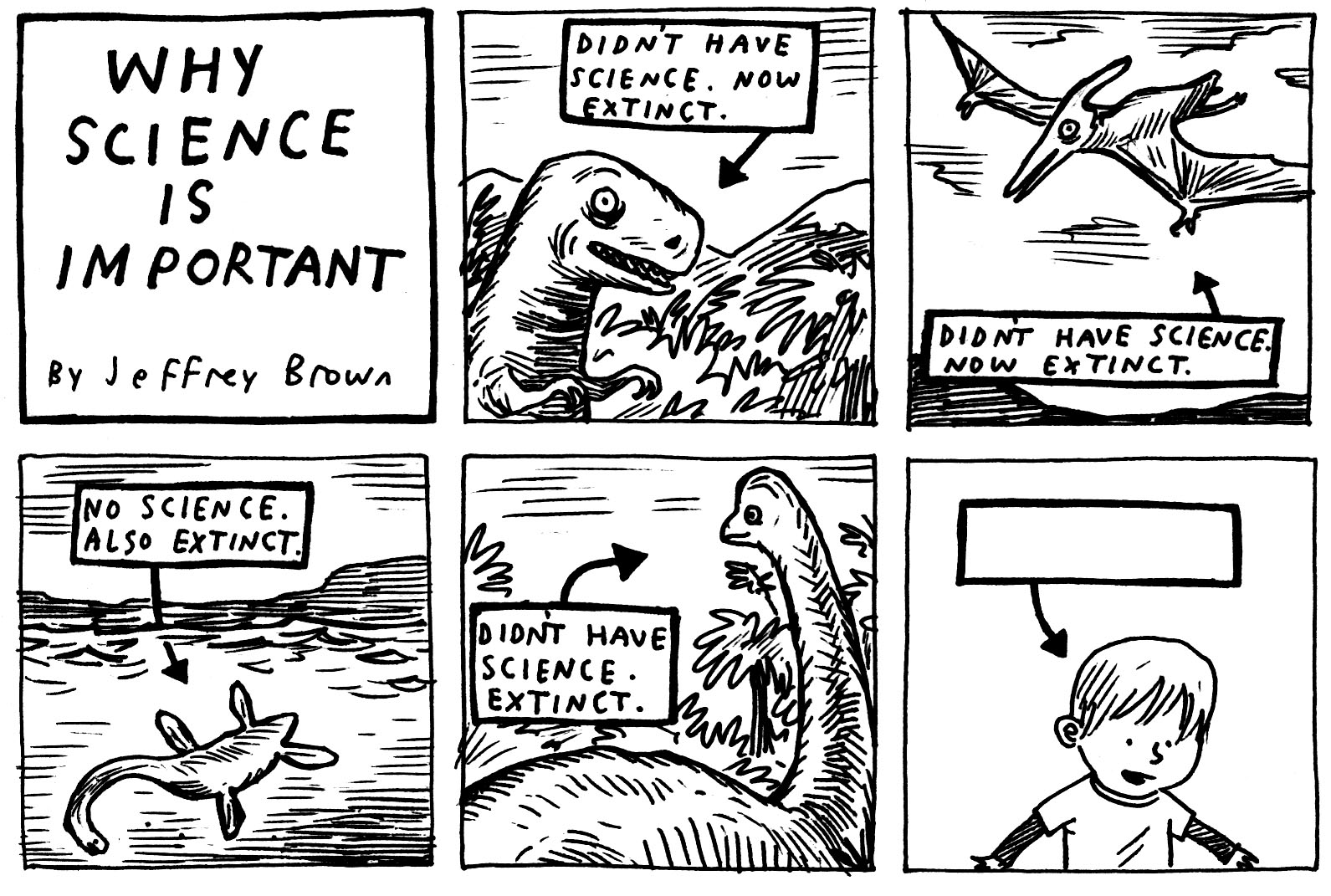
Hat tip to Ed Yong for the link to today's image.
I imagine that many of you readers want to change the world, too. We can:
- Arm our legislators with facts so they can make good policy decisions.
- Speak out against injustice. Silence is the enemy.
- Provide the next generation with the tools to do amazing things.
Hat tip to Ed Yong for the link to today's image.
Labels:
advocacy,
Food for Thought,
Opportunities
Subscribe to:
Posts (Atom)