Wednesday, June 9, 2010

Profiling New Voices

When we talk about New Voices, who are we talking about? What makes someone a New Voice?

Simply put, a New Voice is anyone who wants to speak out about science and research. All of the authors of the New Voices blog qualify, as do you - our readers.

To put some faces with the title, we'll be introducing you to New Voices around the country this summer. If you're interested in being interviewed (just a few quick questions about what you do, where you do it, and what makes it interesting), drop us a line in the comments or email me at hbenson [at] researchamerica.org.

Bookmark and Share

Tuesday, June 8, 2010

World Oceans Day

Photo credit: Heather Benson

For most of my life, I've lived within an hour of the Atlantic Ocean. I visit often (the picture is from my favorite beach in Ocean City, NJ) and consider myself pretty knowledgeable about tides, erosion, currents, and marine life. But it's going to take a lot more than the view from the shore to ever fully understand the world's oceans.

According to the Ocean Project the world ocean:
The water beyond our shores has been getting media attention lately as a result of the BP oil spill (read: ecological disaster). So much of what is happening in the Gulf of Mexico right now is the result of not appreciating the intricacies of the marine environment, especially depth and corresponding pressure.

There are many things you can do to help clean-up in the Gulf and protect our oceans - many without ever leaving your house, including donating directly to saving wildlife:
Donors can send a text message with the code "WILDLIFE" to 20222 to automatically give a $10 donation to help wildlife affected by the oil spill.
Disasters aren't the only time to pay attention to 97% of the earth's water though, and research scientists are constantly at work trying to map and learn about the ocean. So far, we're familiar with about 5% of the world's ocean. That leaves another 95% to go, in case any of you are looking for promising careers of the future.

Most of us will only ever experience the ocean from the beach. Rolling waves, sweet salt air, sand between our toes. But if we don't protect the ocean, conserve and champion our shores and marine life, our children may not be able to enjoy the 71% of Earth covered by water as we have.

Photo credit: Heather Benson

Bookmark and Share

Monday, June 7, 2010

Professional Check-Up

There are lots of things that have a once a year feel to them:
  • Filing taxes for your financial health
  • Getting a regular check-up with your doctor
  • Spring cleaning for maintaining your domestic life
But what about your professional wellness? Annual reviews are a good indicator about how a specific job is going, but it doesn’t always encompass the scope of your full professional life or long-term career. Since June is Professional Wellness Month, we thought we'd share a few ideas on maintaining your professional health.

Update your resume regularly.
Resumes aren't just for applying for new positions. Keeping your resume updated makes applying for grants, submitting presentation proposals, and networking much easier, since you always have something ready to share.

Stay in touch with your contacts.
It's always good to stay in touch, since you never know when a contact is going to become important. If you don't have time for actually meeting with your contacts in person, using online programs like LinkedIn (and sending messages to check-in from time to time) can make all the difference.

Maintain a work/life balance.
Everything in moderation is a pretty applicable cliche when it comes to time management. You know how stress from work can come home with you and vice versa. Maintaining a balance between the two makes you a better person as well as a more effective professional.


Bookmark and Share

Friday, June 4, 2010

Open Thread Friday

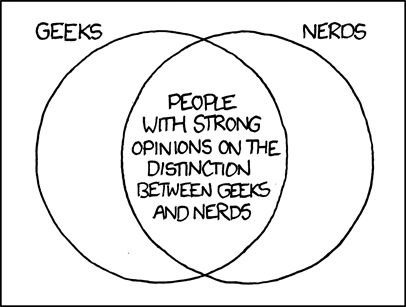
Comic credit: xkcd.com

First, we've got a follow-up comic to Ryan's post last week. Second, we're opening the floor to thoughts on the science issues of today.

May the discussion begin.

Bookmark and Share

Thursday, June 3, 2010

Introducing Two New Voices for the Summer

Name: Alissa Ortman
Position: Research!America Science Policy Intern
Education: BA in Neuroscience from Smith College
Previous experience: Undergraduate research on stem cells
Educational Technology Consultant at Smith College
Fun fact: Alissa woke up at or before 4:40 a.m. six days a week for three years during college. To row a boat. On a cold river. That's dedication.


Name: Ryan Davison
Position: Research!America Science Policy Fellow
Education: PhD in Behavioral Neuroscience at University of Alabama at Birmingham
MS in Experimental Psychology from Appalachian State University
BS in Psychology from Appalachian State University
Previous experience: Adjunct Professor, The George Washington University
Post doctoral Research Fellow, Department of Medicine, Georgetown University
Science Policy Fellow, National Academy of Science
Fun fact: Ryan starred in Edward Scissorhands with Johnny Depp and Winona Ryder. Unfortunately, after two weeks of filming at his school, only a few seconds of the footage made it into the theatrical release and Ryan could only be seen on the cutting room floor.

Bookmark and Share

Wednesday, June 2, 2010

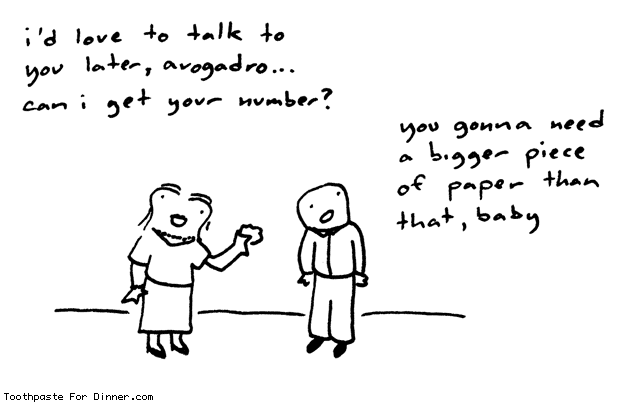
6.02 x 10^23

Comic credit: Toothpaste for Dinner

The date is 06/02/10 today. Pretty sure this requires no further explanation. Have a good one!

Bookmark and Share

Tuesday, June 1, 2010

Last Words

Image credit: Sarah Gallagher, Columbia University Commencement 2010

My final post has been difficult to write because it marks the end of an important chapter of my life. However, this is nowhere near the end of my journey in policy, so these are only my last words as a science policy fellow for Research!America.

May 18th, I had the opportunity to attend the commencement ceremony for my PhD. I actually defended in July and received my degree in the mail last October. However, 'walking' 10 months after my defense ended up being very fitting.

I finished graduate school mere months after the economy crashed and unemployment skyrocketed. At that point, I had applied to over 50 positions, but did not get a single interview. Since then, I have had two incredible opportunities: I was a legislative intern for a Congressman and a science policy fellow for Research!America.

Having decided to forgo the standard chemistry track of a post-doctoral position, I needed to gain experience since my graduate studies had not given me the chance to explore policy earlier. The opportunities I accepted were vital and enabled me to become a marketable candidate for jobs I truly wanted.

One year later, May 2010, these experiences have allowed me to obtain my dream position. This fall I will be a AAAS Fellow for the EPA. Having a clear next path for my career made commencement more meaningful. Graduating this year was appropriate because it marked a true life transition.

My fellowship with Research!America helped me to better understand the role of science in policy and more importantly, the role I see myself filling in the process.

At the end of April, I posted a poll to determine where you, our readers, thought scientists belonged in the policy-making process. The results showed that most believed the most important capacity is as a science advisor.

There is a lot of value to all of the other options listed in the poll. As lawmakers, a scientist would be able to choose issues they decide to tackle. As a lobbyist, scientists can bring credibility to their work pushing science policy decisions that they understand in depth. Instead of just sitting on the sidelines, why aren't more scientists compelled to pursue a career path that enables them to influence policy?

Here is a list of reasons I believe scientists can find the transition to policy difficult:
  1. Jargon – Scientists speak another language. I've gotten my fair share of blank stares when discussing technical topics. The stares are mostly because I have forgotten which words should be common knowledge and which are a foreign language. Learning how to communicate science in a digestible manner for all audiences is a skill I have been working to develop.

  2. Conditionals – It is rare that A = B. I always want to use phrases like "is thought to" or "can be" to communicate an appropriate level of uncertainty. However, these conditional phrases can confuse the overall message. It is essential for scientists to learn how to communicate topics clearly, while at the same time maintaining accuracy.

  3. Research and Grant Writing Take Up Time (…all of it) – Principle investigators have the life-consuming obligation of running a lab. Therefore, the experts in the field often find they are too busy to find time for political engagement. For recent graduates, like me, research is not viewed as ‘credible’ work experience, which makes the transition to science policy extremely difficult.

  4. Science Policy Decisions Aren't Based Solely on Science – The all-time most frustrating realization I had was that non-science factors can weight heavily on science policy decisions. As I discussed in my series, TSCA enables the EPA to regulate chemicals when they pose and unreasonable risk of harm to human health or the environment. However, it also requires the EPA to take the most inexpensive approach, which doesn't necessarily mean it is the most public health conscious approach. While this is extremely frustrating, we still need scientists to fight for issues they believe in and keep the most effective solutions on the agenda.
Here is the main reason why scientists need to get involved:
Scientists Know the Issues Best – Lawmakers need a group of knowledgeable people who are able to dedicate a significant amount of time to specific issues.
My career path is definitely non-traditional for a scientist. And it is even less traditional that I decided to get my Ph.D. because of my interest in policy. A year in, I can definitely say I would encourage any scientist who has ever considered policy work to give it a try.


New Voices wishes Sarah the best in her science policy journey and congratulates her on her upcoming AAAS fellowship.


Bookmark and Share

Monday, May 31, 2010

Memorial Day

Whether abroad...
...or at home...
... we celebrate and remember those who have given their lives so that we may live and be free.

Bookmark and Share

Friday, May 28, 2010

You might be a brain tumor if ...

You might be a brain tumor if you...
  • Cause severe headaches
  • Regularly make people nauseous
  • Dilate single pupils
  • Induce episodes of fainting or loss of consciousness
  • Provoke seizures
  • Make personalities change
  • Encourage profound lethargy
Still not sure? You are definitely a brain tumor if you're the:
  • second leading cause of cancer‐related deaths in children under age 20.
  • second leading cause of cancer‐related deaths in males up to age 39.
  • second leading cause of cancer‐related deaths in females under age 20.
  • fifth leading cause of cancer‐related deaths in females ages 20–39.6
May is National Brain Tumor Awareness month so New Voices is taking the opportunity to briefly review the condition.

Two general types of cells exist in the brain – neurons, which are classical “brain cells”, and glial cells, which are by and large responsible for supporting neurons. While a wide variety of brain tumors have been identified, they most commonly result from an abnormal or uncontrolled growth of glial cells, called a glioma. If gliomas are composed of cancerous cells they are malignant, whereas non cancerous gliomas are benign. Of the thousands of Americans diagnosed each year with malignant gliomas, approximately half are alive one year after diagnosis, and only 25% after two years.

Prevalence
In 2008, more than 52,000 Americans were diagnosed with either a malignant or benign brain tumor. The incidence of malignant brain tumors appears to increase steadily with age, for the least number of cases are seen in individual younger than 20 (4.5 per 100,000 persons) and the greatest in those 75—84 (57 per 100,000 persons).

Causes
While age, race, gender, genetic mutations and exposure to certain environmental toxins have all been implicated in some brain tumor cases, research has yet to conclusively define the causes. Interestingly, there is mounting evidence that cell phone use might increase chances of affliction. Two highly credible and recent studies have found a clear risk associated between cell phone use and prevalence of brain tumors.

Bookmark and Share

Thursday, May 27, 2010

Lots of Links

On the web and in the news....
  1. Craig Venter and his team created the first synthetic cell.
  2. BP continues to try to contain the underwater oil spill in the Gulf of Mexico.
  3. Groups use scratch cards to help authenticate medicines in Africa
  4. Ask President Obama's science advisor, John Holdren, a question
  5. Google's Pacman logo effects productivity?
  6. The Lazarus Effect (check out the video below)


Bookmark and Share