Friday, December 11, 2009

Lessons from Great Uncle Milton

According to Great Uncle Milton, this child is a "carrier monkey."

December is a time for holiday cheer: family get-togethers, office parties, decorations, general merriment, and Great Uncle Milton* refusing to eat at a table with “carrier monkey” younger relatives.

Now, my niece and nephew are constantly exposed to germs at daycare, and because of this, they get sick. It’s not their fault and it certainly isn’t fun for them, but by getting sick their immune system builds up antibodies (proteins in body that attack diseases), so they can STOP being carrier monkeys.
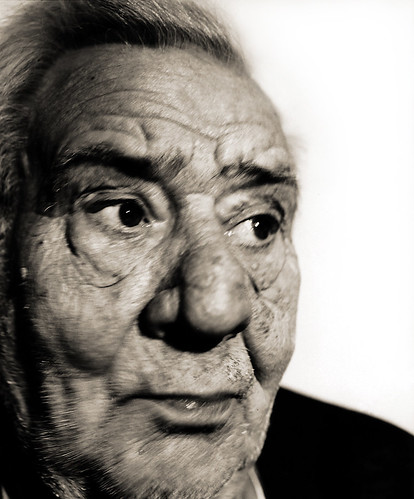
However, my ear-hair-sprouting great uncle doesn’t really seem interested in that argument. So this year – just for him – we’re starting our holiday celebrations at New Voices (and maybe with the family?) with a lesson on hand washing.

There's an excess of research proving just how effective hand washing is at keeping illness away. We also know that throughout the day, we touch all kinds of things that hold unknown germs. In the past thirty seconds, I’ve taken a sip of water from my mug on my desk, typed on my keyboard, used my mouse, and in a moment of thought, rested my head on my hand. How many germs did I just transfer from all of those surfaces to my face?

An even scarier thought: money changes hands on a daily basis. Have you ever considered where that five dollar bill that the lunch lady just returned with your change (after you washed your hands) has been?
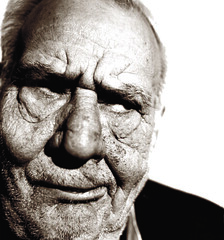
Oh gosh, I’m turning into Great Uncle Milton. Back to the lesson.

Hands should be washed anytime you’ve increased your exposure to germs: after you’ve touched raw food or used the bathroom, and before eating – for starters.

At this point, you’re thinking that this is ridiculous. You’re an adult and you know how to wash your hands. But if you were totally honest with yourself, you’d have to admit to maybe just running your hands under the faucet for a quick rinse from time to time?

Here’s what you should be doing:
  1. Remove any jewelry and wet your hands with warm water
  2. Rub your hands together with soap for 20-30 seconds (many suggest singing “Happy Birthday” or “Twinkle, Twinkle Little Star”)
  3. Be sure to wash between your fingers and under your nails and you're rubbing.
  4. Rinse you hands with warm water
  5. Dry thoroughly with a towel


The above routine removes 99% of germs. The soap is the most important factor, breaking the bonds that hold germs to your skin. Water alone just isn’t going to do it.

Remember, germs are on every surface (not just on the shorter members of the family), so keeping your oft-used electronics (think cell phone or laptop) and other surfaces clean can help decrease your daily exposure to illness.
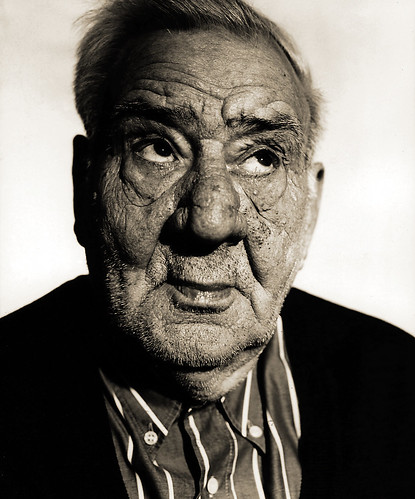
We all want to stay healthy over the holidays; if for no other reason than eggnog doesn’t taste as good when you’re all stuffed up. And trust me, you’re going to need that eggnog if Great Uncle Milton is coming.


*No one here at New Voices has any family member named Milton, and we feel awfully bad for anyone named Milton, since they are always getting picked on in fictional stories about great-uncles.


Images of "Great Uncle Milton" (not his real name) are courtesy of hiro008.

Thursday, December 10, 2009

Adventures in Cuba

I was excited about the opportunity to go to Cuba since so few Americans get the chance. However, getting there is not easy, and although the U.S. and Cuba are less than 100 miles apart the distance between the two countries is almost immeasurable.

Our adventure - I was traveling with Karen Goraleski, who leads our Paul G. Rogers Society for Global Health Research - began in Miami, where there was mass confusion about checking-in and our charter left over an hour late. We would soon learn that this was pretty much par for the course on this trip. After 12 hours of traveling, including about an hour standing in a sea of blue plastic-wrapped bags (to prevent pilfering) waiting for our luggage, we made it to the hotel to find that it was overbooked. The hotel eventually came up with a solution, but this was not the way we wanted to start our trip.

We made our way to the Palacio de Convenciones the next morning for our meeting on tracking resources for health research. The Global Forum for Health Research officially started that evening with an opening ceremony planned by our Cuban hosts.

Cuba's Minister of Public Health, Jose Ramon Balaguer Cabrera (right) and Vice President Jose Ramon Fernandez Alvarez (center) both addressed the Forum. Together they spoke for more than an hour and a half about the Revolution and their health system. Interesting at first and then very, very tedious. Cuba does produce a large number of doctors and have some very good stats on measures such as infant mortality and vaccination rates, but their public health message is watered-down when the toilets in the convention center didn't have seats and then you were lucky to find soap in the bathroom (I don't usually rely on hand sanitizer, but I was really happy to have a small bottle in my purse!).

Although we spent most of our time at the Global Forum, we had a free afternoon to explore Havana. We opted to take a guided tour since our time was so limited. It, like most things in Cuba, started very late.

Our first stop on the tour was Plaza de la Revolucion where many political rallies take place and many government offices are located. The Ministry of Interior building features the image of Che Guevara, with the slogan "Hasta la Victoria Siempre" or "Forever Onwards Towards Victory." Guevara was a major figure in the Cuban Revolution and the first Minister of the Interior appointed by Fidel Castro.

This billboard commemorating the 50th anniversary of the Revolution when Fidel Castro claimed control of Cuba was on the perimeter of Plaza de la Revolucion - just one of many examples of propaganda supporting the regime that we saw.

Our next stop was a cigar shop, but we took the opportunity to look around the area rather than risk being stopped in the Miami airport. This photo captures a lot of what we saw in what seemed to be a neighborhood where average Habaneros live, work and go to school.

The tour made its way to El Capitolio, where the Cuba legislature met from the 1930s-1950s. Today, it houses the Cuban Academy of Sciences. This stop provided some of the starkest contrasts for us. The beautiful El Capitolio building and surrounding parks were on one side of the street.
While this building was directly opposite on the other side of the street. As evidenced by the laundry hanging from the balconies, people live in this building. We could tell that it was once very beautiful, but years of neglect and hurricanes have taken their toll.

However, Cuba, with the help of UNESCO, slowly has been restoring La Habana Vieja or Old Havana. The Castillo de la Real Fuerza borders the Plaza de Armas. The sculpture on the watchtower is called La Giraldilla and is the symbol of the city of Havana.
The ceiba tree in the picture above marks where Havana, then called Villa de San Cristobal, was founded on November 16, 1519. We were in Havana on the 490th anniversary, although we did not get to see the annual gathering where residents walk around the tree three times, dropping coins in the hope that their wishes will come true.


The Hotel Santa Isobel is a great example of one of the restored buildings in La Habana Vieja.

As the sun began to set, we stopped at some of Ernest Hemingway's haunts, including La Bodeguita del Medio and the Hotel Ambos Mundos. I used the last few moments of daylight to capture the photo above from the roof of the hotel.

Overall, my trip to Havana was fascinating, and I really enjoyed meeting many Cubans who were very friendly and always willing to chat. It will be an experience to remember that gave me a tremendous appreciation for so many things that as an American I took for granted before my trip.

Wednesday, December 9, 2009

Our Woman in Havana

Presenting at the Global Forum for Health Research held at the Palacio de Convenciones in Havana, Cuba.

So I'm not a spy, but I did have what will likely be a once in a lifetime opportunity to go to Havana, Cuba. I recently attended the Global Forum for Health Research, which I was able to do as a U.S. citizen under a general license to attend a professional meeting organized by an international organization.

Because of the work that Research!America does tracking the U.S. investment in health research, we were invited to participate in a day-long meeting that brought together other experts in the field of tracking resources for health research. I have been studying the U.S. investment in health research for more than five years now, so it was interesting to meet others from around the world doing similar work. The participants came from a variety of backgrounds with a range of perspectives about tracking health research resources. Some—like Research!America—focused on country-level spending, others looked at disease-specific research and still others took a more global view.

I think one thing that all of the meeting attendees could agree on is that tracking investments in health research, and specifically research for global health, is a challenge and that more information about what is being spent on research for health around the world is needed. As is often the case in meetings like this, more questions than answers were generated. Some of the key questions include:
  • What is the definition of research? Should infrastructure, salaries, capital investments and other research enabling activities be included?
  • Is there a difference between “health research” and “research for health?”
  • Which countries/organizations are tracking health research investments?
  • How can we establish guidelines for cross-country comparisons of their investments in health research?
  • How can this data be most effectively used for advocacy?
  • Should methodology differ when the data will be used in advocacy?

In addition to this meeting, I also had the opportunity to participate in a panel discussion titled “Who’s Investing and Who Cares?” that was moderated by New England Journal of Medicine Editor-in-Chief, Jeffrey Drazen, MD. I shared our data on the U.S. investments in health research and global health research, some of our public opinion polling that shows that Americans do care about the issue and information about Research!America’s Paul G. Rogers Society for Global Health Research.

Attending the Global Forum for Health Research also allowed me to meet an interesting array of people from around the world, all working in some way on global health, and to learn more about topics outside the realm of my day-to-day work, such as product development partnerships, incentives for global health research and the Cuban health system. Much more to come in my post tomorrow about the travel experience, Cuba and photos from a brief tour of Havana.

Tuesday, December 8, 2009

A Literal Look into H.M.'s Mind

Discoveries take time, and scientists must be meticulous in the steps leading to these discoveries. I like to think of science as building a house. First you lay the foundation, the most important part of the process. Then you add to the foundation piece by piece, following a carefully laid out plan.

As you put the plan to action, and the house begins to take shape, you might need to make a few adjustments to make sure that the kitchen or family room is just right. Over time, the result is the house of your dreams, and while it might have taken a bit longer than you expected, all of the waiting suddenly becomes worthwhile.

Today, I'm going to follow up on a story I began to tell you last week, that truly embodies the discovery process. As you may remember, we were discussing the contribution that H.M. made to science during his lifetime. On December 2, 2008, H.M. died, and in his death he continues to contribute to science. He donated his brain so that researchers could continue to learn from his life.

By donating his brain, researchers can now examine the structures of his brain and relate it to observational data that they have collected over the past 50 years. They can look at the distribution of different components of these regions, and relate these structural observations to their behavioral notes. The possibility for advancing our understanding of the brain, damage to the brain, and the formation of memories is immeasurable.

The process of obtaining and preparing his brain for research has been a long, hard task. Researchers only get one shot at processing the tissue correctly. It began a year ago, where upon his death, H.M.'s brain was scanned with magnetic resonance imaging (MRI) to provide one final set of brain images while it was still in the skull. The brain was then removed and the tissue preserved for two months in formalin. Once the body dies, the tissue does as well. By preserving it, we insure that the tissue won't break down over time, but remains intact in a state akin to suspended animation.

Once completed, the preserved brain was moved to the University of California at San Diego as the newest addition to the Brain Observatory. The Brain Observatory is a fairly young research institute that acts as a library of human brain tissue. It is collecting donated brains from both healthy and diseased individuals, and hopes to create an online digital library of these specimens. This library will be available to anyone interested in the brain. Thus, this library will allow researchers to ask countless questions about the brain while allowing access to the public as well, providing a resource to provide further education about the brain and the scientific discovery driving our knowledge of this complex organ.

On December 3, 2009, after a year of preparation, the Brain Observatory was able to finally slice H.M.’s brain into smaller sections, a 30-hour procedure. This event was video-streamed online. Each slice measured 70 microns in thickness, resulting in anywhere from 26,000 - 36,000 slices for a human brain.

Some of these slices have been selected for digitizing. This entails mounting each slice on a slide and then staining each tissue with a particular dye. Each dye labels a specific component of the brain, such as brain cells (neurons) or support cells for the neurons. The slides will then be digitized and made available online to all who are interested. (To see the slicing process, click here).

By selecting a sampling of slices, rather than using them all, researchers create a series of images akin to a child's flip book. Just like these books, which tell a sequential story as you flip through, these sequential slide images provide researchers with a complete series of H.M.'s brain. An added advantage to using only a sampling of the brain slices for imaging is that the remaining tissue can be preserved and used for other experiments. This is a common technique that researchers use to "get more bang for their buck," since tissue like H.M.'s can be difficult to obtain.

It took a year - almost to the day - to even begin slicing H.M.'s brain for analysis. Digitizing the images will take months, or maybe longer. That may seem like a long time, but the discovery process is just beginning. This is the foundation for a house of research that is yet to come.

Monday, December 7, 2009

He Said, She Said

I love quotes. Historical quotes, movie quotes, random things my friends blurt out, basically anything. I have collections of them in different places, most obviously in my daily movie quote "away" message and on the post-its stuck to the map above the desk in my office.

I collect quotes, because they come in handy for so many things in writing.

1. Quotes can say the thing you want to say but in a way you maybe never would have thought to say it; and isn't that nice, easy to read thing way the heck better than all my rambling to get to the same basic point?

2. Quotes from leaders (in your field or historically) can bolster a message.

3. Quotes can serve as a piece of evidence.

My library of quotes is pretty large at this point, and I do have quite a few favorites from Thomas Edison's "ways not to make a light bulb" to Star Wars' "Let the wookie win." But instead of just sharing those with you, I want to hear from you!

What are your favorite quotes? What do you find yourself using fairly regularly?

And as a bonus for today's post, the trailer for He Said, She Said.

Friday, December 4, 2009

Remembering the Man Who Forgot


If you’ve ever taken an intro psychology class, you’ve probably heard of patient H.M. For years H.M. suffered from epileptic seizures. They got so bad that in the 1950s, he opted to undergo an experimental surgery. This surgery removed a portion of his brain, and the theory was that in doing so, would cure his epileptic seizures.

The surgery was a success, as far as the seizures were concerned, but his doctors were surprised by the “side effects” of the surgery. H.M. became an anterograde amnesiac. Basically, he lost the ability to create new long-term memories.

However, H.M. was able to turn this misfortune into an opportunity for others. Rather than fade into obscurity, H.M. opted to continue working with doctors and researchers. Through this 50 year collaboration came a wealth of information that advanced our understanding of the brain and memory formation, ultimately informing neuroscience research and shaping health care today.

Before H.M., it was thought that memory was a generalized process of the brain. His case provided scientist with the first evidence that contradicted this thought. If memories were generalized, the removal of a portion of the brain should not have obliterated memory formation. The fact that for H.M., the direct result of his surgery was the loss of long-term memory showed conclusively that memories were a function of specific brain regions.

Beyond this, doctors were now able to identify that there were also categories of memory. H.M. retained his procedural memory and short-term memory capabilities, but lost long-term memory formation.

For example, while H.M. could remember how to ride a bike (a memory referred to as a muscle memory because it involves an action of the muscles), he couldn't remember HOW he learned to ride a bike. His procedural memory was intact, and he had a decent short-term memory, but he couldn't convert those short-term memories to long-term. If you asked him what he had for breakfast two hours after he ate, he wouldn't be able to answer you, and beyond that, he wouldn't even remember eating breakfast!

What is most interesting about H.M.'s case is that although it was generally accepted that he could not form long-term memories, there were exceptions to the rule. For example, he remembered the assassination of John F. Kennedy, something that given his condition, he shouldn't have remembered.

We know that the brain can be adaptable. For example, a person who is blind generally develops a more keen sense of hearing, and this happens because the area responsible for vision adapts, becoming sensitive to detecting sound. This finding with H.M. has researchers wondering if the same phenomenon occurs with memories. Can other brain regions "fill in" for lost or damaged memory regions; or was his limited ability to form long-term memories present because there were some memory-associated brain tissue left behind from the surgery?

H.M. died December 2, 2008, but his contribution to science lives on. This man spent 50 years of his life working with scientists and researchers so that we can better understand the brain, and in doing so, helped advance the means by which we treat patients with for those with brain injuries, impairments, and other neurological disorders.

But his story doesn't end here. He donated his brain to science, giving researchers the ability to physically examine the structures of his brain. We can now relate the years of observational data that H.M. contributed to the actual physical structures of his brain. This donation could potentially undercover an entirely new level of understanding as to how the brain and memory formation works.

Often when we hear of breakthroughs in medical research, we tend to forget that there are real people behind these advances; people who selflessly donate their time and their bodies to help discover medications like Aspirin, Prozac (for mental health), and Lipitor (for cholesterol).

As a researcher, I'm constantly thinking about how research findings translate to medical miracles for our diverse human population. This is something that I've been focused on during my time at Research!America, and a topic that I will revisit in later posts.

For now, I'd like to take a moment to thank all of those people who have enrolled in clinical research trials, and to encourage others to learn about these trials. H.M. is one example of the difference that one person can make by volunteering for clinical research.

Visit us Tuesday to learn more about how H.M. is contributing to the field even after his death.

Thursday, December 3, 2009

How To: Communicate with Food

For your next chemistry-themed party, an idea from BuzzFeed.

Whenever I’m trying to describe something that is new or difficult to understand, I try to relate it to something else that my audience already understands. In my family, one of the best metaphors is food.

In a lot of ways, cooking is similar to lab work. Some experiments require precise timing, while in others the specificity of ingredients (materials) is more important. In both instances, if you want to recreate the final product, you have to take measurements, record each step, and think of variables that could effect the outcome next time (what if I use a different pan or the produce isn’t as fresh?).

But metaphors are not the only way to communicate with food. Sharing meals is a great way to learn to talk about what you do in an informal way. Without the networking pressures of a conference or academic setting, you’ll more freely be yourself, and your passion for your work will be obvious in how you talk about it. (Just be careful not to gesticulate with food on the end of your fork.) Moreover, sharing details over meals gives everyone time to listen and absorb as well as participate in the discussion.

Just a little food for thought for those of you looking for ways to more effectively communicate your ideas.

Wednesday, December 2, 2009

You Can Help Make Research a Higher National Priority

Advocates nationwide are expressing their gratitude for the recent revitalization of research by writing letters of thanks to President Obama. If you haven’t, you can join them. As we urge the president to continue to make research a priority in Fiscal Year 2011, we must also reach out to our members of Congress.

Ask your members of Congress to get on the record about where they stand on supporting research online at Your Congress-Your Health and thank those who have already responded.

Patients, scientists and other research advocates across the U.S. must join together to urge Congress to support innovation and invest in research to improve health. Visit http://www.yourcongressyourhealth.org/ today and join the thousands of Americans each week who are helping make research a higher national priority.

Tuesday, December 1, 2009

World AIDS Day 2009

The AIDS Memorial Quilt was established in 1987 as a telling symbol of the way HIV and AIDS effects people - it is one disease that manifests itself differently in each person. Similarly, the quilt squares all teach, memorialize, or reflect the social ramifications of a virus that has embedded itself in the world's psyche and too many of its citizens.

According to the UNAIDS report released last week, 33.4 million people are living with HIV, and in 2008 alone, 2.7 million new infections were reported while 2 million people died of AIDS worldwide. However, there is hope. New HIV infections have been reduced worldwide by 17% over the past eight years.

HIV is unique as a disease because it is a retrovirus. Not retro like bell bottom jeans and disco music, but certainly backwards. For an initial infection, instead of the DNA coding for the RNA (which tells the proteins to be lethal to cells) like a normal virus; HIV uses a reverse process where the RNA tells the DNA what to do, and the DNA then creates the codes for the deadly proteins. If that sounds confusing, this more thorough explanation should help.


HIV was only the second known retrovirus at the time of its discovery, so we can thank quick thinking researchers for the origination of anti-retroviral drugs. The development of anti-retrovirals has made HIV a much more manageable disease.

Research has certainly made HIV much less of a death sentence to those who have access to anti-viral therapies, but it still is not a cure, and millions of people die each year from HIV/AIDS. While HIV prevention programs have made an impact on reducing the number of people infected, there is a need for a preventative treatment.

Current research is focusing on the development of a vaccine against HIV. There have been many challenges to finding a safe vaccine because of the nature of HIV.

HIV appears to be a master of change. Currently, there are many known strains of the virus, and possibly other unknown strains. This variability makes it difficult to develop a vaccine that will target all of these subcategories of the virus.

Development of vaccines is a timely process. From the first polio epidemic, it was 61 years until a vaccine was developed. It was 19 years from the first case of Hepatitis A to the implementation of a vaccine. So for researchers to report some promising data suggesting that they might have discovered a viable AIDS vaccine in just over 2 decades is amazingly fast for such a complex disease.

Researchers are cautiously optimistic, as there have been previous trials of other vaccines that showed promise, only to fail with more testing. However, regardless of if this newest vaccine fails or succeeds, researchers will have more information to use in developing therapies to combat this virus.

This World AIDS Day, we remember those who've been lost to this disease and look forward to a future post where we can definitively say that HIV/AIDS is no more.

Monday, November 30, 2009

Understanding Diabetes

On each Monday throughout November, we've discussed diabetes in recognition of Diabetes Awareness Month. We've focused on the personal stories of those diagnosed with type I and type II diabetes, and offered some recipe alternatives for the Thanksgiving holiday.

However, we have yet to talk about the differences between the types of diabetes. Just like the Thanksgiving turkeys that we all enjoyed over the holidays, either baked, smoked or even (bravely) fried, not every diabetes diagnosis is the same.

The terms type I and type II diabetes may be familiar to you, but do you know what they mean? I myself often forget. So today, I thought it might be time for a refresher, and while we're at it, let's discuss gestational diabetes as well.


Type I Diabetes
Type I diabetes, previously referred to as juvenile diabetes, results from your body being unable to produce insulin. Insulin is a hormone released in the body that allows the cells to take in glucose, which provides the cells with energy.

Historically, this type of diabetes is thought to appear in juveniles and young adults, but truly, it may be diagnosed at any age.

The most common treatment to manage type I diabetes is insulin injections. Although the body can't produce insulin itself, by injecting it into the body, cells can use this source of insulin to help to absorb glucose. Other methods of treatment include a pancreas transplant (since the pancreas is the organ that houses the insulin producting Islets of Langerhans cells), or a transplant of the Islets themselves.


Type II Diabetes
Type II diabetes is a metabolic disorder in which either the body doesn't produce enough insulin, or once produced, the body can't use the insulin properly. When insulin is released, it binds to proteins called receptors located on the cell. Once the receptors receive the insulin, the cell can then absorb glucose. In some patients with type II diabetes, the receptors that recognize the produced insulin don't work, so glucose can't enter the cell even though insulin is present.

In this case, the best therapy is attention to lifestyle. Exercise, a healthy diet, and weight loss are the best means by which to decrease the chance of onset of this disease and to control it once it is diagnosed. In doing so, blood sugar levels can be closely controlled.

Further, there are oral medications available that can help to control blood sugar in a variety of ways. This can be through increasing insulin production, making the cells more sensitive to the presence of insulin, or inhibiting the breakdown of starches into glucose.

Gestational Diabetes
Gestational diabetes is more rare, as it is a condition associated with pregnancy. It is diagnosed in ~135,000 pregnant women each year. It appears around gestational week 28 and continues through the pregnancy.

This condition occurs in pregnant women with no prior history of diabetes. During their pregnancy, they experience elevated glucose levels and other diabetic symptoms. It is thought that this is due to the release of hormones that accompany the pregnancy, which act to block the actions of insulin in the woman's body.

Although this condition does not cause birth defects, it can have health consequences for the baby, including an increased risk for type II diabetes later in life.

All of these types of diabetes has one thing in common, the need to control blood glucose (sugar) levels. The following video can explain better than I why sugar is so important to the body.


Final Thoughts
Although diabetes can be well controlled with attention to lifestyle and medication, there is still a need for understanding and acceptance of those diagnosed with this condition. For children, this can be especially important, as those diagnosed at an early age might feel that they are different because they can't have all of the treats that their friends eat, and need to have daily medication to manage their condition. But, those diagnosed are no different from a non-diabetic individual. While they do have certain medical precautions to take, they can still excel at sports, academics, or any other activity that they choose. In general, they can lead a very healthy, normal life.

Further, it is important to understand the hereditary nature of diabetes. Type I diabetes has a strong genetic component, with some environmental influence. Type II has the opposite; a strong environmental factor, but with genetic influence. Those with a family history of type II appear to be more at risk for developing it, given the proper environmental conditions.

According to the American Diabetes Association, nearly 27 million people have been diagnosed with some type of diabetes in the U.S. If not managed, this disease can lead to severe health complications, including loss of vision, amputation of limbs, and kidney failure.

To learn more about diabetes, please visit the American Diabetes Association website.