Monday, June 14, 2010

Become a Hero in 60 minutes

Today is World Blood Donor Day, and if you haven’t donated lately, I hope you take some time today to set up an appointment at a blood drive near you.

One of the first things people think about or ask when talking about blood donation is "what is your/my blood type?"

At the turn of the last century, an Austrian scientist named Karl Landsteiner noticed why some people had fatal reactions to blood transfusions. He realized that when you mixed the blood of two different people you sometimes get clumping or agglutination. He also discovered that these clumps not only were dangerous, but that the reaction that caused them was immunological. He determined that there were different "blood groups." These became known as the blood types of today.

In the first years of life people develop antibodies to the antigens found on blood different from their own. For example, someone with type B (like me) develops antibodies against the A antigen found on the blood cells of someone with type A. Type O blood has no antigens and so develops antibodies against both A and B, and someone with type AB develops no antibodies because they have A and B antigens.

The type(s) of antigens you have on your blood cells is determined genetically. You inherit it from your parents. However, since both your parents contribute, there is no guarantee that you will end up with either of your parent’s blood types.

When someone receives blood that isn’t compatible with their own, their blood’s antibodies see the new blood as foreign. This triggers an immune reaction that starts fighting off the "invaders." This causes the new blood cells to be forced into clumps that start to die. These dying clumps of cells then release toxins into the blood stream that can cause severe problems up to and including death.

So now, thanks to Landsteiner, we know which people can receive which types of blood (see chart below). Therefore blood transfusions are very successful, which is good for the up to 5 million Americans every year who need life-saving blood from someone else.


If you, like me, are a part of the 38% of the American public eligible to donate blood, I hope you do. I know every time I do I almost pass out. But I keep going back. Why? Because each time you donate blood you can save up to three lives.

Just imagine, if you donated every two months (as often as allowed), you could save up to 18 lives a year. If you did that for 30 years, that’s over 500 lives you could save. You could be quite the superhero. All from one hour and one pint of your blood a few times a year. Can you help? Sign up now!

Image Credits:
The University of Utah at http://learn.genetics.utah.edu/content/begin/traits/blood/
The American Red Cross at http://www.redcrossblood.org/learn-about-blood/blood-types

Bookmark and Share

Friday, June 11, 2010

Always Use Protection

Photo Credit: Fatinha Santos*

A few summers ago I went to the beach with my friends and after we went swimming, I fell asleep on my stomach for an hour and a half. When I woke up, I was noticeably red and realized I had forgotten to reapply sunscreen on my legs. I used an after-sun aloe gel a few times a day, but four days later—right when I was expecting my burn to start to dissipate—I woke up to find the backs of my legs covered in blisters. I had gotten a second degree burn from an hour and a half in the sun unprotected.

This experience is particularly distressing for me, knowing that according to the Skin Cancer Foundation, “one blistering sunburn in childhood or adolescence, or five sunburns total over the course of one’s life, more than doubles a person's chances of developing melanoma later in life.” For the fair-skinned of us, it is not uncommon to meet this criterion. It may also be why skin cancer is the most common type of cancer in the U.S. today.

June is ‘Cancer from the Sun’ month. With the official start of summer just around the corner, there isn’t a better time to talk about how to protect yourself from harmful ultraviolet (UV) rays.

The most commonly used protection is sunscreen. But many who wear sunscreen wonder what an SPF number really means. Does it even matter?

It does. Research has shown that higher SPF (Sun Protection Factor) is different. SPF 15 sunscreens filter out 93% of UVB rays, while SPF 30 protects against 97% and SPF 50 against 98%. Though these changes might seem slight, it can mean the difference between burning or not with prolonged exposure. In addition to protection against the UVB rays that mutate DNA and burn skin, make sure your sunscreen protects against the UVA rays that create free radicals and age skin.

Not sure which products are best at protecting against the sun’s UV rays? Here’s the Skin Cancer Foundation’s list of products that get its Seal of Protection.

And don’t think getting a tan inside is any better. It’s actually much worse.

Even just one forgetful day in the sun can be irrevocably damaging to your skin, and 1 in 5 Americans will get skin cancer in their lifetime. Let’s to try to change that troubling statistic by grabbing the sunscreen, and heading on out to enjoy the summer.


*Can you tell which one is me? With all the protective sun gear? Smith Crew Spring Break, on the lake where the '96 Olympics rowing was held, Gainesville, GA, March 2010

Bookmark and Share

Thursday, June 10, 2010

Colorless Green Ideas Sleep Furiously*

In 1861, a patient known only by Tan, as that was the single word he was able to clearly speak, underwent an autopsy. The French physician performing the procedure, Paul Broca, identified damage to a specific region on the left side of Tan’s brain. Broca concluded that the affected area was where the brain cells responsible for producing speech were located. It turns out that Broca was correct, and this region of the brain that controls speech production is now called Broca’s area. Patients that speak in a broken, choppy, or very limited capacity often do so because of damage to Broca’s area. These patients are said to have Broca’s aphasia. An example of this debilitating condition can be seen here.

Aphasia is essentially a term used to describe any language impairment. Aphasias can be expressive in nature, like in the case of Broca's, but sensory aphasias are also commonly encountered. A sensory aphasia causes individuals to no longer understand the meaning of language and is often due to neurological damage in a specific brain region known as Wernicke’s area.

A contemporary of Broca, a German physician named Carl Wernicke (pronounced Vern-nick-key), was also interested in how brain disease affects speech and language. His research identified the specific area of the brain responsible for processing the meaning of language, an area now known as Wernicke’s area. While patients with Wernicke’s aphasia do not lose the ability to speak, they do lose the ability to understand the meaning of language. A Wernicke's aphasiac will babble unintelligibly, and speak using a jumble of meaningless phrases, described as a “word salad”. An example of Wernicke's aphasia can be seen here.

It is doubtful that you would be unaware of having an aphasia as symptoms are obvious and include:

  • inability to pronounce words, not due to muscle paralysis or weakness
  • inability to name objects
  • poor enunciation
  • inability to repeat a phrase
  • persistent repetition of phrases
  • agrammatism (inability to speak in a grammatically correct fashion)
  • dysprosody (alterations in inflexion, stress, and rhythm)
  • speaking in incomplete sentences
  • inability to read
  • inability to write
June is Aphasia Awareness Month - you can now consider yourself aware but for more information, look to the National Aphasia Association.


*Noam Chomsky's famous example of a word salad. It demonstrates that randomly chosen words that while arranged in a phrase that appears to give them meaning, actually carry no significance.

Bookmark and Share

Wednesday, June 9, 2010

Profiling New Voices

When we talk about New Voices, who are we talking about? What makes someone a New Voice?

Simply put, a New Voice is anyone who wants to speak out about science and research. All of the authors of the New Voices blog qualify, as do you - our readers.

To put some faces with the title, we'll be introducing you to New Voices around the country this summer. If you're interested in being interviewed (just a few quick questions about what you do, where you do it, and what makes it interesting), drop us a line in the comments or email me at hbenson [at] researchamerica.org.

Bookmark and Share

Tuesday, June 8, 2010

World Oceans Day

Photo credit: Heather Benson

For most of my life, I've lived within an hour of the Atlantic Ocean. I visit often (the picture is from my favorite beach in Ocean City, NJ) and consider myself pretty knowledgeable about tides, erosion, currents, and marine life. But it's going to take a lot more than the view from the shore to ever fully understand the world's oceans.

According to the Ocean Project the world ocean:
The water beyond our shores has been getting media attention lately as a result of the BP oil spill (read: ecological disaster). So much of what is happening in the Gulf of Mexico right now is the result of not appreciating the intricacies of the marine environment, especially depth and corresponding pressure.

There are many things you can do to help clean-up in the Gulf and protect our oceans - many without ever leaving your house, including donating directly to saving wildlife:
Donors can send a text message with the code "WILDLIFE" to 20222 to automatically give a $10 donation to help wildlife affected by the oil spill.
Disasters aren't the only time to pay attention to 97% of the earth's water though, and research scientists are constantly at work trying to map and learn about the ocean. So far, we're familiar with about 5% of the world's ocean. That leaves another 95% to go, in case any of you are looking for promising careers of the future.

Most of us will only ever experience the ocean from the beach. Rolling waves, sweet salt air, sand between our toes. But if we don't protect the ocean, conserve and champion our shores and marine life, our children may not be able to enjoy the 71% of Earth covered by water as we have.

Photo credit: Heather Benson

Bookmark and Share

Monday, June 7, 2010

Professional Check-Up

There are lots of things that have a once a year feel to them:
  • Filing taxes for your financial health
  • Getting a regular check-up with your doctor
  • Spring cleaning for maintaining your domestic life
But what about your professional wellness? Annual reviews are a good indicator about how a specific job is going, but it doesn’t always encompass the scope of your full professional life or long-term career. Since June is Professional Wellness Month, we thought we'd share a few ideas on maintaining your professional health.

Update your resume regularly.
Resumes aren't just for applying for new positions. Keeping your resume updated makes applying for grants, submitting presentation proposals, and networking much easier, since you always have something ready to share.

Stay in touch with your contacts.
It's always good to stay in touch, since you never know when a contact is going to become important. If you don't have time for actually meeting with your contacts in person, using online programs like LinkedIn (and sending messages to check-in from time to time) can make all the difference.

Maintain a work/life balance.
Everything in moderation is a pretty applicable cliche when it comes to time management. You know how stress from work can come home with you and vice versa. Maintaining a balance between the two makes you a better person as well as a more effective professional.


Bookmark and Share

Friday, June 4, 2010

Open Thread Friday

Comic credit: xkcd.com

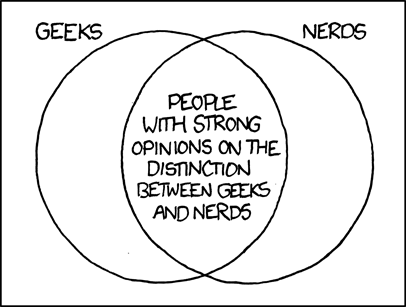
First, we've got a follow-up comic to Ryan's post last week. Second, we're opening the floor to thoughts on the science issues of today.

May the discussion begin.

Bookmark and Share

Thursday, June 3, 2010

Introducing Two New Voices for the Summer

Name: Alissa Ortman
Position: Research!America Science Policy Intern
Education: BA in Neuroscience from Smith College
Previous experience: Undergraduate research on stem cells
Educational Technology Consultant at Smith College
Fun fact: Alissa woke up at or before 4:40 a.m. six days a week for three years during college. To row a boat. On a cold river. That's dedication.


Name: Ryan Davison
Position: Research!America Science Policy Fellow
Education: PhD in Behavioral Neuroscience at University of Alabama at Birmingham
MS in Experimental Psychology from Appalachian State University
BS in Psychology from Appalachian State University
Previous experience: Adjunct Professor, The George Washington University
Post doctoral Research Fellow, Department of Medicine, Georgetown University
Science Policy Fellow, National Academy of Science
Fun fact: Ryan starred in Edward Scissorhands with Johnny Depp and Winona Ryder. Unfortunately, after two weeks of filming at his school, only a few seconds of the footage made it into the theatrical release and Ryan could only be seen on the cutting room floor.

Bookmark and Share

Wednesday, June 2, 2010

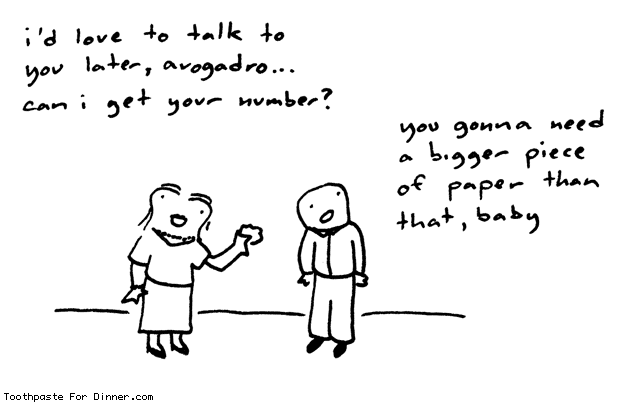
6.02 x 10^23

Comic credit: Toothpaste for Dinner

The date is 06/02/10 today. Pretty sure this requires no further explanation. Have a good one!

Bookmark and Share

Tuesday, June 1, 2010

Last Words

Image credit: Sarah Gallagher, Columbia University Commencement 2010

My final post has been difficult to write because it marks the end of an important chapter of my life. However, this is nowhere near the end of my journey in policy, so these are only my last words as a science policy fellow for Research!America.

May 18th, I had the opportunity to attend the commencement ceremony for my PhD. I actually defended in July and received my degree in the mail last October. However, 'walking' 10 months after my defense ended up being very fitting.

I finished graduate school mere months after the economy crashed and unemployment skyrocketed. At that point, I had applied to over 50 positions, but did not get a single interview. Since then, I have had two incredible opportunities: I was a legislative intern for a Congressman and a science policy fellow for Research!America.

Having decided to forgo the standard chemistry track of a post-doctoral position, I needed to gain experience since my graduate studies had not given me the chance to explore policy earlier. The opportunities I accepted were vital and enabled me to become a marketable candidate for jobs I truly wanted.

One year later, May 2010, these experiences have allowed me to obtain my dream position. This fall I will be a AAAS Fellow for the EPA. Having a clear next path for my career made commencement more meaningful. Graduating this year was appropriate because it marked a true life transition.

My fellowship with Research!America helped me to better understand the role of science in policy and more importantly, the role I see myself filling in the process.

At the end of April, I posted a poll to determine where you, our readers, thought scientists belonged in the policy-making process. The results showed that most believed the most important capacity is as a science advisor.

There is a lot of value to all of the other options listed in the poll. As lawmakers, a scientist would be able to choose issues they decide to tackle. As a lobbyist, scientists can bring credibility to their work pushing science policy decisions that they understand in depth. Instead of just sitting on the sidelines, why aren't more scientists compelled to pursue a career path that enables them to influence policy?

Here is a list of reasons I believe scientists can find the transition to policy difficult:
  1. Jargon – Scientists speak another language. I've gotten my fair share of blank stares when discussing technical topics. The stares are mostly because I have forgotten which words should be common knowledge and which are a foreign language. Learning how to communicate science in a digestible manner for all audiences is a skill I have been working to develop.

  2. Conditionals – It is rare that A = B. I always want to use phrases like "is thought to" or "can be" to communicate an appropriate level of uncertainty. However, these conditional phrases can confuse the overall message. It is essential for scientists to learn how to communicate topics clearly, while at the same time maintaining accuracy.

  3. Research and Grant Writing Take Up Time (…all of it) – Principle investigators have the life-consuming obligation of running a lab. Therefore, the experts in the field often find they are too busy to find time for political engagement. For recent graduates, like me, research is not viewed as ‘credible’ work experience, which makes the transition to science policy extremely difficult.

  4. Science Policy Decisions Aren't Based Solely on Science – The all-time most frustrating realization I had was that non-science factors can weight heavily on science policy decisions. As I discussed in my series, TSCA enables the EPA to regulate chemicals when they pose and unreasonable risk of harm to human health or the environment. However, it also requires the EPA to take the most inexpensive approach, which doesn't necessarily mean it is the most public health conscious approach. While this is extremely frustrating, we still need scientists to fight for issues they believe in and keep the most effective solutions on the agenda.
Here is the main reason why scientists need to get involved:
Scientists Know the Issues Best – Lawmakers need a group of knowledgeable people who are able to dedicate a significant amount of time to specific issues.
My career path is definitely non-traditional for a scientist. And it is even less traditional that I decided to get my Ph.D. because of my interest in policy. A year in, I can definitely say I would encourage any scientist who has ever considered policy work to give it a try.


New Voices wishes Sarah the best in her science policy journey and congratulates her on her upcoming AAAS fellowship.


Bookmark and Share